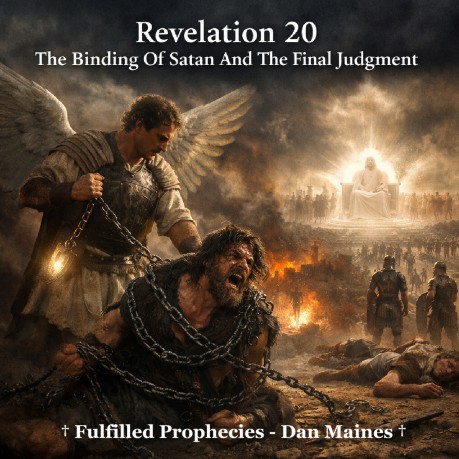
Revelation 20 The Binding Of
Satan And The Final Judgment Introduction † Revelation 20 continues the story of Christ's
victory over His enemies and the final removal of the old covenant
order. This chapter is often misunderstood because many assume it
describes a future earthly millennium. But when we read it in the
context of Scripture and the events surrounding AD 70, it clearly
describes the restraint of Satan, the vindication of the saints, and
the final judgment upon the covenant world that rejected the Messiah. † Jesus repeatedly warned that judgment was
coming upon that generation. In Matthew 23:36 He said all these
things will come upon this generation. Revelation reveals how those
warnings were fulfilled as the old covenant age came to its end and
Christ's kingdom stood fully established. † The imagery in this chapter draws heavily
from earlier prophetic writings, especially Daniel and Ezekiel. When
we allow Scripture to interpret Scripture, the meaning becomes
consistent with the fulfilled perspective. Revelation 20:1-2 Then I saw an angel coming down from heaven, holding the key of
the abyss and a great chain in his hand. And he took hold of the
dragon, the serpent of old, who is the devil and Satan, and bound him
for a thousand years. † The angel holding the key represents
authority from heaven. Keys represent authority to open and shut, to
permit and to restrain. Christ Himself declared that He holds the
keys of death and Hades (Revelation 1:18), showing His complete
authority over the spiritual realm. † The binding of Satan is not describing
literal chains. It represents the restraint of his power to deceive
the nations as he once did. Through Christ's victory at the cross,
Satan's authority was limited so the gospel could spread to the
nations. † Jesus explained this principle during His
ministry when He said a strong man must first be bound before his
house can be plundered (Matthew 12:29). Christ was describing His
victory over Satan and the beginning of the enemy's defeat. † The thousand years represents completeness
rather than a literal number. Scripture often uses large numbers
symbolically. Psalm 50:10 says God owns the cattle on a thousand
hills, meaning all hills. In the same way the thousand years
represents the full period connected to Christ's triumph and the
transition from the old covenant world. † Jesus said during His earthly ministry that
now judgment is upon this world, now the ruler of this world will be
cast out (John 12:31). This shows the defeat and restraint of Satan
was already beginning through Christ's work. † Hebrews 2:14 says that through death He might
render powerless him who had the power of death, that is, the devil.
This confirms that Satan's defeat was accomplished through the cross. Revelation 20:3 And he threw him into the abyss, and shut it and sealed it over
him, so that he would not deceive the nations any longer, until the
thousand years were completed, after these things he must be released
for a short time. † The abyss represents a place of confinement
for spiritual powers. The image communicates restriction and
limitation placed upon Satan's activity. † The purpose of the restraint is clearly
stated. Satan would no longer deceive the nations the way he once
did. Before Christ the nations were largely in darkness, but after
the resurrection the gospel began spreading rapidly throughout the
Roman world. † Paul confirmed this when he wrote that the
gospel which you heard was proclaimed in all creation under heaven
(Colossians 1:23). The restraint of Satan allowed the message of
Christ to spread quickly across the nations before the destruction of
Jerusalem. † The short release represents the final surge
of rebellion before judgment. Paul said the mystery of lawlessness is
already at work (2 Thessalonians 2:7), showing that forces of
deception were increasing during the first century leading up to
Jerusalem's fall. Revelation 20:4 Then I saw thrones, and they sat on them, and judgment was given
to them. And I saw the souls of those who had been beheaded because
of their testimony of Jesus and because of the word of God, and those
who had not worshiped the beast or his image, and had not received
the mark on their foreheads and on their hands, and they came to life
and reigned with Christ for a thousand years. † The thrones represent authority given to the
faithful saints. Christ promised His followers that they would share
in His rule and judgment. † This fulfills Daniel 7:22 where judgment was
given to the saints of the Most High. Revelation reveals the
fulfillment of that prophecy as the faithful are vindicated after
suffering persecution. † The martyrs described here are believers who
refused allegiance to the beast. They would not submit to Roman
emperor worship or the political pressures that demanded loyalty to
the empire. † Their coming to life describes their
vindication and participation in Christ's reign. Their faithfulness,
even unto death, results in honor and authority in Christ's kingdom. † Paul told believers that God raised us up
with Him and seated us with Him in the heavenly places in Christ
Jesus (Ephesians 2:6). This confirms that the reign of the saints is
a present spiritual reality. Revelation 20:5-6 The rest of the dead did not come to life until the thousand years
were completed. This is the first resurrection. Blessed and holy is
the one who has a part in the first resurrection, over these the
second death has no power, but they will be priests of God and of
Christ and will reign with Him for a thousand years. † The first resurrection refers to
participation in the life of Christ. Those who belong to Him share in
resurrection life through faith and union with Him. † Jesus taught this truth when He said I am the
resurrection and the life, the one who believes in Me will live even
if he dies (John 11:25). Life in Christ continues beyond physical
death because believers are united with the risen Lord. † The second death refers to eternal separation
from God. Those who belong to Christ are protected from this judgment
because they share in His life. † Believers are called priests of God and
Christ. This fulfills the promise that God's people would serve as a
royal priesthood with direct access to Him. Revelation 20:7-8 When the thousand years are completed, Satan will be released from
his prison, and will come out to deceive the nations which are at the
four corners of the earth, Gog and Magog, to gather them together for
the war, the number of them is like the sand of the seashore. † Gog and Magog are symbolic names drawn from
Ezekiel 38-39. They represent enemies gathered in rebellion against
God's people. † In the context of Revelation this imagery
reflects the final uprising of covenant enemies before Jerusalem's
destruction. † Josephus recorded that massive crowds were
gathered in Jerusalem during the final siege, many deceived by false
prophets who promised deliverance from the Roman armies. † During the Jewish War many nations from
throughout the Roman world were present in Jerusalem for the feasts
and were caught in the conflict when the siege began. Josephus
records vast multitudes gathered in the city, reflecting the imagery
of enemies gathered like the sand of the sea (Josephus Wars 6.9.3). Revelation 20:9 And they came up on the broad plain of the earth and surrounded
the camp of the saints and the beloved city, and fire came down from
heaven and devoured them. † The beloved city refers to Jerusalem. It was
central to the covenant story but had become the center of rejection
against the Messiah. † The surrounding of the city reflects the
Roman siege of Jerusalem that took place in AD 70. † Fire from heaven represents divine judgment
carried out through earthly instruments. Rome became the tool God
used to bring judgment upon the rebellious nation. † Jesus predicted this destruction when He said
not one stone here will be left upon another which will not be torn
down (Matthew 24:2). Revelation 20:10 And the devil who deceived them was thrown into the lake of fire
and brimstone, where the beast and the false prophet also are, and
they will be tormented day and night forever and ever. † The lake of fire represents the complete
defeat of Satan and the destruction of the systems that opposed
Christ. † The beast represents the Roman authority
under Nero while the false prophet represents apostate religious
leadership that promoted allegiance to the beast. † Their destruction fulfills the promise of
Genesis 3:15 where the serpent would ultimately be crushed through
the work of the Messiah. Revelation 20:11-12 Then I saw a great white throne and Him who sat upon it, from
whose presence earth and heaven fled, and no place was found for
them. And I saw the dead, the great and the small, standing before
the throne, and books were opened, and another book was opened, which
is the book of life, and the dead were judged from the things which
were written in the books, according to their deeds. † The great white throne represents the
authority of Christ as the judge of all. † The imagery of heaven and earth fleeing
reflects the passing away of the old covenant order. † The books represent God's perfect record of
human deeds. Nothing escapes His judgment. † Daniel 7:10 describes this same scene where
the court sat and the books were opened before the Ancient of Days. † Jesus said heaven and earth will pass away,
but My words will not pass away (Matthew 24:35). In the same context
He was speaking about the destruction of Jerusalem, confirming that
this language refers to the end of the old covenant order. Revelation 20:13-14 And the sea gave up the dead who were in it, and death and Hades
gave up the dead who were in them, and they were judged, each one of
them according to their deeds. Then death and Hades were thrown into
the lake of fire. This is the second death, the lake of fire. † The sea, death, and Hades giving up the dead
shows that God's authority extends over every realm. † The destruction of death represents the
removal of its covenant power. † Paul explained this victory when he wrote the
last enemy that will be abolished is death (1 Corinthians 15:26). † Paul also wrote death is swallowed up in
victory (1 Corinthians 15:54), showing the fulfillment of this
promise through Christ's triumph. Revelation 20:15 And if anyone's name was not found written in the book of life, he
was thrown into the lake of fire. † The book of life represents those who belong
to Christ and share in His salvation. † Paul referenced this same book when he spoke
of fellow workers whose names are in the book of life (Philippians
4:3). † This verse reminds us that salvation is found
only through Christ and that those who reject Him face judgment. Historical References † Josephus described the massive crowds trapped
inside Jerusalem and the burning of the temple during the Roman siege
(Wars 5.1.5; 6.4.5; 6.9.3). † Tertullian wrote that the faithful martyrs
share in Christ's reign because they remained loyal even unto death
(Against Marcion 3.24). † Clement of Rome affirmed that God keeps
record of all human deeds and judges with perfect justice (1 Clement
28). How It Applies To Us Today † Christ reigns now as King. His authority is
not waiting for a future kingdom but is already established through
His resurrection. † The faithfulness of the martyrs reminds us
that standing for truth is worth any cost. † Satan's defeat shows that evil will never
have the final word. † Our confidence rests in Christ because those
whose names are written in the book of life share in His victory. Q & A Appendix Q Does the thousand years refer to a literal
future millennium? A No. Scripture often uses large numbers
symbolically. Psalm 50:10 says God owns the cattle on a thousand
hills, meaning all hills. In the same way the thousand years
represents the complete period connected with Christ's victory and
the transition from the old covenant age. Q When was Satan bound? A Jesus explained this during His ministry when
He said how can anyone enter the strong man's house and carry off his
property unless he first binds the strong man (Matthew 12:29).
Christ's victory over sin and death began the restriction of Satan's
authority. Q What is the first resurrection? A The first resurrection refers to participation
in the life of Christ. Jesus said I am the resurrection and the life,
the one who believes in Me will live even if he dies (John 11:25).
Believers share in resurrection life through union with Him. Q Who are Gog and Magog? A Gog and Magog come from Ezekiel 38-39 and
represent enemies gathered in rebellion against God's people. In
Revelation this imagery reflects the hostile forces that came against
Jerusalem before its destruction. Q If Satan was restrained, how did the gospel
spread across the Roman world? A Revelation says Satan was restrained so he
would not deceive the nations in the same way as before (Revelation
20:3). This allowed the gospel to spread rapidly across the Roman
world, which Paul confirmed when he said the gospel was proclaimed in
all creation under heaven (Colossians 1:23). Q If the thousand years ended around the judgment
of Jerusalem, why does Revelation mention Satan being released? A Revelation says Satan would be released for a
short time to deceive the nations before the final judgment upon the
covenant city (Revelation 20:3, 7-8). This corresponds to the intense
deception and rebellion that erupted in the years leading up to the
Jewish War. Jesus warned that false prophets and deception would
increase during that time (Matthew 24:11, 24). Josephus recorded that
false prophets inside Jerusalem were promising deliverance while the
city was surrounded by Roman armies (Josephus, Wars 6.5.2). Q What does it mean that the saints reigned with
Christ for a thousand years? A The reign of the saints refers to their
participation in Christ's kingdom authority. Scripture teaches that
believers already share in Christ's rule. Paul wrote that God raised
us up with Christ and seated us with Him in the heavenly places
(Ephesians 2:6). The martyrs in Revelation are shown reigning because
their faithfulness was vindicated when Christ judged their
persecutors. Q Why does Revelation describe the judgment using
books that are opened? A The imagery of books being opened reflects
covenant accountability before God. Daniel saw the same vision when
the court sat and the books were opened before the Ancient of Days
(Daniel 7:10). This language shows that God judges with perfect
knowledge and justice, remembering every deed and every act of
faithfulness. Q How do we know the great white throne judgment
is connected to the end of the old covenant world? A Revelation describes heaven and earth fleeing
from God's presence during this judgment (Revelation 20:11). Jesus
used the same language when speaking about the end of the old
covenant age, saying heaven and earth would pass away but His words
would not pass away (Matthew 24:35). The imagery reflects the passing
away of the covenant world centered on the temple system when
Jerusalem was destroyed. Q If Satan was judged in Revelation 20, what does
that mean for us today? A Revelation shows the final defeat of the devil
when he is thrown into the lake of fire after the judgment connected
to Jerusalem's fall (Revelation 20:10). The adversary's role as the
accuser tied to the old covenant system has been brought to an end.
Christ defeated the devil through His death and resurrection, as
Hebrews says He rendered powerless the one who had the power of
death, that is, the devil (Hebrews 2:14). The victory of Christ is
complete, and the adversary no longer holds the authority he once
exercised in the old covenant age. And the second Q&A should also be sharpened to stay consistent
with your teaching. Q If death was destroyed in Revelation 20, why do
people still physically die? A The destruction of death refers to the end of
death's dominion over God's people. Under the old covenant humanity
remained under the power of death because access to life had not yet
been fully opened. Through Christ that barrier was removed. Paul
wrote that the last enemy to be abolished is death (1 Corinthians
15:26) and that death is swallowed up in victory (1 Corinthians
15:54). Believers now share in resurrection life in Christ, which is
why Jesus said the one who believes in Him will live even if he dies
(John 11:25). Q If Revelation 20 teaches a future thousand year
kingdom on earth, why does Jesus say His kingdom is not of this
world? A Jesus clearly said My kingdom is not of this
world (John 18:36). The kingdom of Christ is not a political earthly
empire but a spiritual reign over His people. Scripture consistently
describes Christ reigning from heaven after His resurrection. Peter
said Jesus was raised up and seated at the right hand of God (Acts
2:32-33). The reign described in Revelation 20 therefore refers to
Christ's heavenly rule and the participation of the saints in that
reign, not a future earthly millennium. Q If the millennium is a future kingdom, how
could the saints already be reigning with Christ in the first
century? A The New Testament repeatedly says believers
already share in Christ's reign. Paul wrote that God raised us up
with Him and seated us with Him in the heavenly places in Christ
Jesus (Ephesians 2:6). John also said that Jesus made us to be a
kingdom and priests to His God and Father (Revelation 1:6). These
statements show the reign of the saints was already a present reality
in the first century, which fits the fulfilled understanding of
Revelation 20. Q If the thousand year reign is still in our
future, how can the book of Revelation say the events in it were
about to happen? A Revelation opens and closes with clear time
statements. The book begins by saying the revelation was given to
show the things which must soon take place (Revelation 1:1), and it
ends by saying the time is near (Revelation 22:10). Those statements
were written to the seven churches in the first century. If the
millennium described in Revelation 20 were thousands of years in the
future, those time statements would make no sense. The consistent
explanation is that the events of Revelation were unfolding in the
first century and culminated with the judgment that ended the old
covenant age. † This is the fulfilled perspective we proclaim at
Fulfilled Prophecies †
By Dan Maines
Source Index
† Revelation 20; Genesis 3:15; Matthew 12:29;
Matthew 24:2, 35; John 11:25; John 12:31; Philippians 4:3; 1
Corinthians 15:26, 54; Colossians 1:23; 2 Thessalonians 2:7; Daniel
7:10, 22; Ephesians 2:6
† Josephus, Wars of the Jews 5.1.5; 6.4.5;
6.9.3; Tertullian, Against Marcion 3.24; Clement of Rome, 1 Clement
28
Links