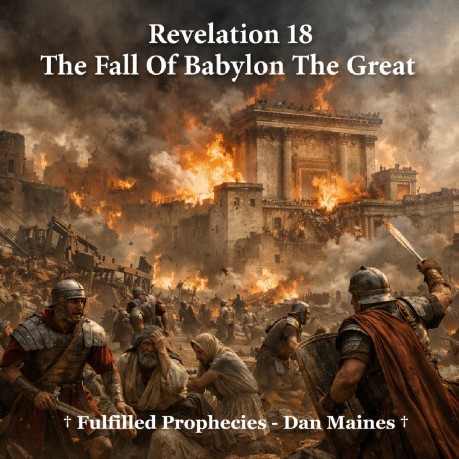
Revelation 18 The Fall Of
Babylon The Great Introduction † Revelation 18 continues the judgment that
began earlier in the book, showing the complete collapse of covenant
Babylon. From the fulfilled perspective, this chapter describes the
destruction of Jerusalem in AD 70, the same city Jesus said would be
judged for killing the prophets. † Jesus warned that all the righteous blood
shed on the earth would come upon that generation. When we read
Revelation 18 we are seeing that judgment unfold exactly as He said
it would. † The language in this chapter comes directly
from the Old Testament prophets when they described covenant judgment
on cities like Babylon and Tyre. John uses the same prophetic
language because Jerusalem had become the covenant harlot. Revelation 18:1-2 After these things I saw another angel coming down from heaven,
having great authority, and the earth was illuminated from his glory.
And he cried out with a mighty voice, saying, "Fallen, fallen is
Babylon the great! She has become a dwelling place of demons, a
prison of every unclean spirit, and a prison of every unclean and
hateful bird." † The proclamation fallen, fallen echoes Isaiah
21:9 where the fall of Babylon was announced. John applies the same
language to Jerusalem to show the certainty of her judgment. † The description of demons and unclean spirits
reflects the spiritual corruption of the city. The place that once
housed God's temple had become filled with rebellion and violence. † Josephus describes Jerusalem during the siege
as filled with madness and internal destruction as factions within
the city turned against one another. Revelation 18:3 For all the nations have fallen because of the wine of the passion
of her sexual immorality, and the kings of the earth have committed
acts of sexual immorality with her, and the merchants of the earth
have become rich from the excess of her luxury. † In prophetic language sexual immorality
represents covenant unfaithfulness. Jerusalem was supposed to be
faithful to God but instead pursued political alliances and rejected
the Messiah. † Jeremiah 51:7 described Babylon as a golden
cup in the Lord's hand making the nations drunk. Revelation uses the
same imagery to describe the influence of Jerusalem's corruption. † Josephus records that the leaders of the city
lived in luxury and plundered wealth even while the nation was
collapsing. Revelation 18:4-5 I heard another voice from heaven, saying, "Come out of her,
my people, so that you will not participate in her sins and receive
any of her plagues. For her sins have piled up as high as heaven, and
God has remembered her offenses." † This call shows that God's people were not
meant to share in the judgment of Jerusalem. † Early believers obeyed this warning and left
the city before the Roman siege began. † Eusebius records that the church fled
Jerusalem and escaped to Pella before the destruction started. Revelation 18:6-7 Pay her back even as she has paid, and give back to her double
according to her deeds; in the cup which she has mixed, mix twice as
much for her. To the extent that she glorified herself and lived
luxuriously, to the same extent give her torment and mourning; for
she says in her heart, "I sit as a queen and I am not a widow,
and I will never see mourning." † Jerusalem believed she was secure because the
temple stood within her walls. † This arrogance mirrors Isaiah 47:8 where
Babylon claimed she would never see mourning. † Josephus records that many leaders mocked the
idea that the city could fall because they believed God would never
allow the temple to be destroyed. Revelation 18:8 For this reason in one day her plagues will come: plague and
mourning and famine, and she will be burned up with fire; for the
Lord God who judges her is strong. † The phrase one day emphasizes the suddenness
of the judgment once it began. † Josephus records that famine spread
throughout the city during the siege as food supplies collapsed. † The temple was ultimately burned with fire by
the Roman army under Titus. Revelation 18:9-10 And the kings of the earth, who committed acts of sexual
immorality and lived luxuriously with her, will weep and mourn over
her when they see the smoke of her burning, standing at a distance
because of the fear of her torment, saying, "Woe, woe, the great
city, Babylon, the strong city! For in one hour your judgment has
come." † The lament shows the influence Jerusalem once
had across the region. † Yet when judgment came the nations could only
watch from a distance. † Tacitus recorded that the destruction of
Jerusalem became widely known throughout the Roman empire. Revelation 18:11-13 And the merchants of the earth weep and mourn over her, because no
one buys their cargo any more, cargo of gold, silver, precious
stones, pearls, fine linen, purple, silk, scarlet, every kind of
citron wood, every article of ivory, every article made from precious
wood, bronze, iron, marble, cinnamon, spice, incense, perfume,
frankincense, wine, olive oil, fine flour, wheat, cattle, sheep,
cargo of horses, carriages, slaves, and human lives. † The long list of goods highlights the wealth
that flowed through Jerusalem. † The mention of slaves and human lives exposes
the corruption of the system. † Josephus records the horrific suffering that
overtook the city during the famine. Revelation 18:14-17 The fruit you longed for has left you, and all things that were
luxurious and splendid have passed away from you, and people will no
longer find them. The merchants of these things, who became rich from
her, will stand at a distance because of the fear of her torment,
weeping and mourning, saying, "Woe, woe, the great city, she who
was clothed in fine linen and purple and scarlet, and adorned with
gold, precious stones, and pearls; for in one hour such great wealth
has been laid waste!" † The destruction of the city shows how quickly
earthly wealth can vanish. † Ezekiel 27 used similar language when
describing the fall of Tyre. † Jerusalem trusted in status and wealth rather
than repentance. Revelation 18:18-19 And every shipmaster, every passenger and sailor, and all who make
their living by the sea, stood at a distance, and were crying out as
they saw the smoke of her burning, saying, "What city is like
the great city?" And they threw dust on their heads and were
crying out, weeping and mourning, saying, "Woe, woe, the great
city, in which all who had ships at sea became rich from her
prosperity; for in one hour she has been laid waste!" † The lament of the sailors highlights
Jerusalem's wide economic connections. † Merchants and travelers constantly moved
through the city. † Josephus records that news of the destruction
spread rapidly across the empire. Revelation 18:20 Rejoice over her, heaven, and you saints and apostles and
prophets, because God has pronounced judgment for you against her. † Heaven rejoices because the blood of the
saints has been avenged. † Revelation 6:9-10 shows the martyrs crying
out for justice. † Revelation 18 shows that their blood has now
been avenged. Revelation 18:21-23 Then a strong angel picked up a stone like a great millstone and
threw it into the sea, saying, "So will Babylon, the great city,
be thrown down with violence, and will never be found again. And the
sound of harpists, musicians, flute players, and trumpeters will
never be heard in you again; and no craftsman of any craft will ever
be found in you again; and the sound of a mill will never be heard in
you again; and the light of a lamp will never shine in you again; and
the voice of the groom and bride will never be heard in you again;
for your merchants were the powerful people of the earth, because all
the nations were deceived by your witchcraft." † The millstone imagery comes from Jeremiah 51
where Babylon was symbolically thrown into the sea. † The silence described here represents
complete devastation. † Josephus recorded that the destruction of the
city was so thorough that visitors could hardly believe it had once
been inhabited. Revelation 18:24 And in her was found the blood of prophets and of saints, and of
all who have been slaughtered on the earth. † Jesus said Jerusalem was the city that killed
the prophets. † Luke 13:33 confirms that prophets perished in
Jerusalem. † The destruction of the city fulfilled
Christ's warning. Historical References † Josephus recorded the famine, violence, and
destruction during the Roman siege of Jerusalem. † Tacitus confirmed that the fall of Jerusalem
became widely known across the Roman world. † Eusebius recorded that the early church fled
Jerusalem before the siege began. † Sulpicius Severus recorded that the temple
and city were completely destroyed under Titus. How It Applies To Us Today † Earthly wealth and religious status cannot
protect anyone who rejects truth. † The call to come out of Babylon reminds
believers to separate from corruption and false religion. † God's judgment proves that His word is always
fulfilled. † The destruction of the old covenant city
makes way for the New Jerusalem where God's people now dwell. Q & A Appendix Q Why does Revelation call Jerusalem Babylon? Q Did Christians really leave Jerusalem before
the destruction? Q Why does heaven rejoice over the city's fall? Q What does this judgment prove? Q Why does Revelation say Babylon fell in one
hour if the siege of Jerusalem lasted months? Q How do we know Babylon cannot be Rome instead
of Jerusalem? Q Why does Revelation describe merchants mourning
over the city? Q What does the millstone thrown into the sea
symbolize? Q Why can't Babylon in Revelation 18 be a future
world economic system? Q Why does the blood of the prophets prove
Babylon is Jerusalem? Q How does the merchants list in Revelation 18
connect to the temple system in Jerusalem? † This is the fulfilled perspective we proclaim at
Fulfilled Prophecies † © Fulfilled Prophecies - Dan Maines. Source Index † Revelation 18; Isaiah 21:9; Isaiah 47:7-8;
Jeremiah 51:7, 63-64; Ezekiel 16; Ezekiel 27; Luke 13:33; Matthew
23:35-38; Revelation 6:9-10 † Josephus Wars 5.1.1; 6.2.1; 6.3.4; 6.4.5;
6.8.2; 6.8.5; 6.9.1; 6.9.3; 6.9.4; Tacitus Histories 5.13; Eusebius
Ecclesiastical History 3.5.3; Sulpicius Severus Chronicle 2.30
By Dan Maines
A
Because Jerusalem had become the covenant harlot like ancient
Babylon. Jesus identified Jerusalem as the city that killed the
prophets, Matthew 23:37-38.
A Yes. Early believers fled to
Pella before the Roman siege according to Eusebius.
A
Because God vindicated the prophets and saints whose blood had been
shed, Revelation 6:9-10.
A
It proves that Jesus' prophecy about that generation was fulfilled
exactly as He said.
A
The phrase one hour emphasizes the sudden collapse of the city once
the judgment reached its climax. When the Romans breached the
defenses and the temple burned, the entire system collapsed quickly.
The language reflects prophetic imagery showing how rapidly the city
fell once God's judgment was complete, Revelation 18:10, 17; Matthew
24:21-22.
A Jesus clearly identified
Jerusalem as the city guilty of killing the prophets. Revelation
18:24 says the blood of prophets and saints was found in Babylon.
That matches what Jesus said about Jerusalem, not Rome. Scripture
directly identifies the guilty city, Matthew 23:35-37; Luke 13:33.
A Jerusalem had become a major
center of trade connected to temple commerce and pilgrimage traffic.
Merchants profited from the religious system and the constant flow of
travelers into the city. When Jerusalem was destroyed that economic
system collapsed, Revelation 18:11-17; John 2:14-16.
A The millstone represents complete
and irreversible judgment. Jeremiah used the same symbol when
describing the fall of ancient Babylon. Revelation shows that
Jerusalem's covenant system was permanently ended when the city was
destroyed, Jeremiah 51:63-64; Revelation 18:21.
A Because Revelation
says the judgment would happen soon to the original readers. The book
opens by saying the things revealed must soon take place and the time
is near. A prophecy that was near for the first century church cannot
suddenly be pushed thousands of years into the future. The
destruction of Jerusalem in AD 70 fits the time statements exactly,
Revelation 1:1, 3; Matthew 24:34.
A Revelation 18:24 says
the blood of prophets and saints was found in Babylon. Jesus clearly
said Jerusalem was the city that killed the prophets and that all the
righteous blood would come upon that generation. That direct
statement from Christ identifies the guilty city as Jerusalem, not
Rome or a future city, Matthew 23:35-37; Luke 13:33.
A
Jerusalem had become a massive religious marketplace connected to the
temple. Pilgrims traveled there from all over the Roman world
bringing money and trade goods. Merchants profited from sacrifices,
animals, and temple commerce. Jesus drove the money changers out of
the temple because they had turned God's house into a place of
business. When the city and temple were destroyed that entire
economic system collapsed, John 2:14-16; Revelation 18:11-13.
Links