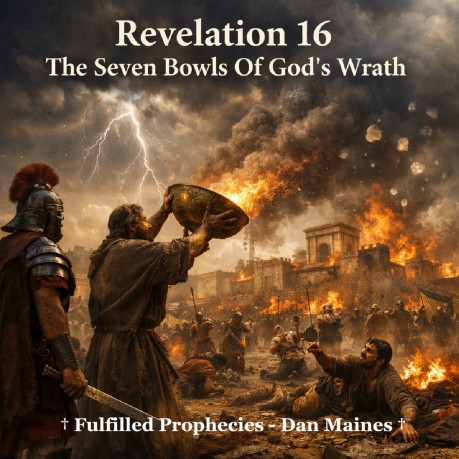
Revelation 16 The Seven Bowls
Of God's Wrath Introduction † Revelation 16 continues the vision of
covenant judgment that was about to fall upon Jerusalem. The seven
bowls represent the final stage of the judgments already introduced
through the seals and trumpets. Each bowl intensifies the message
that God was bringing the Old Covenant age to its end through the
destruction of the city that rejected His Son. † These judgments follow the same pattern as
the plagues poured out upon Egypt in the days of Moses. Just as God
once judged Egypt for oppressing His people, He now judged Jerusalem
for rejecting and killing the Messiah and persecuting His church. † Jesus Himself warned that these things would
happen within that generation. The bowl judgments therefore show the
fulfillment of Christ's prophecy and the closing of the Old Covenant
world. Revelation 16:1 Then I heard a loud voice from the temple, saying to the seven
angels, "Go and pour out on the earth the seven bowls of the
wrath of God." † The command comes from the temple in heaven,
showing that these judgments originate from God's authority and
justice. This isn't random destruction, it's divine judgment against
covenant breakers. † The bowls are covenant judgments, paralleling
the plagues of Egypt. They are poured out upon the land, Greek ge,
meaning the land of Israel. † The bowl judgments mirror the covenant curses
promised in the Law if Israel broke the covenant. Moses warned that
God would bring plagues, disease, siege, and devastation upon the
land if the nation rejected Him. Leviticus 26; Deuteronomy 28. † Josephus records the unparalleled horrors of
Jerusalem's destruction, confirming the intensity of these judgments
during the Roman war. Revelation 16:2 So the first angel went and poured out his bowl on the earth; and
a harmful and painful sore afflicted the people who had the mark of
the beast and who worshiped his image. † The sores recall the sixth plague of Egypt in
Exodus. The connection shows that God is again judging a rebellious
nation. † These sores represent the spiritual
corruption of those who aligned themselves with the beast system, the
imperial power of Rome and its worship of Caesar. † Josephus describes the moral collapse of
Jerusalem's leaders and factions during the war, revealing the deep
corruption that had overtaken the city. Revelation 16:3 The second angel poured out his bowl into the sea, and it became
blood like that of a dead person, and every living thing in the sea
died. † This imagery reflects the first plague of
Egypt when the Nile turned to blood. The symbolism emphasizes
widespread death and devastation. † In prophetic language the sea often
represents the nations. The Jewish revolt spread violence and
bloodshed throughout the region. † Josephus describes the Sea of Galilee filled
with bodies after Roman attacks, demonstrating the horrifying reality
behind this imagery. Revelation 16:4-6 Then the third angel poured out his bowl into the rivers and the
springs of waters; and they became blood. And I heard the angel of
the waters saying, "Righteous are You, the One who is and who
was, the Holy One, because You judged these things; for they poured
out the blood of saints and prophets, and You have given them blood
to drink. They deserve it." † The rivers becoming blood symbolize divine
justice. Those who shed innocent blood now receive judgment in kind. † Jesus directly accused Jerusalem of killing
the prophets and persecuting God's messengers. † Jesus declared that all the righteous blood
shed on the earth would come upon that generation in Jerusalem.
Matthew 23:35-36. † Josephus describes rivers of blood flowing
during the Roman siege, confirming the severity of the conflict and
the scale of death in the city. Revelation 16:7 And I heard the altar saying, "Yes, Lord God, the Almighty,
true and righteous are Your judgments." † The altar represents the prayers of the
martyrs seen earlier in Revelation. † In Revelation 6 the martyrs cried out for
justice. Here we see their prayers answered. † This shows that the destruction of Jerusalem
was not unjust cruelty but righteous judgment carried out by God. Revelation 16:8-9 The fourth angel poured out his bowl upon the sun, and it was
given power to scorch people with fire. And the people were scorched
with fierce heat; and they blasphemed the name of God who has the
power over these plagues, and they did not repent so as to give Him
glory. † The scorching sun represents intense
suffering and divine pressure placed upon the rebellious nation. † Instead of repentance, the people hardened
their hearts and blasphemed God. † Josephus records that even as famine,
violence, and suffering increased, many in Jerusalem continued in
rebellion and lawlessness. Revelation 16:10-11 Then the fifth angel poured out his bowl on the throne of the
beast, and his kingdom became darkened; and they gnawed their tongues
because of pain, and they blasphemed the God of heaven because of
their pain and their sores, and they did not repent of their deeds. † Darkness recalls the ninth plague of Egypt
and symbolizes collapse, confusion, and despair. † The throne of the beast refers to Rome's
ruling power that controlled the region through local authorities. † Tacitus records famine, disease, and chaos
spreading across Judea during the war. Revelation 16:12 The sixth angel poured out his bowl on the great river Euphrates,
and its water was dried up, so that the way would be prepared for the
kings from the east. † The Euphrates historically marked the
boundary of invading empires. † The drying of the river recalls Cyrus
conquering Babylon after diverting the Euphrates. Isaiah 44:27-28. † In this context it represents the pathway
opened for Rome's armies and their allied forces to advance toward
Judea. Revelation 16:13-14 And I saw coming out of the mouth of the dragon, and out of the
mouth of the beast, and out of the mouth of the false prophet, three
unclean spirits like frogs; for they are spirits of demons,
performing signs, which go out to the kings of the entire world, to
gather them together for the war of the great day of God, the
Almighty. † The frogs directly recall the plague of frogs
in Egypt. Exodus 8:2. † In Egypt the frogs invaded houses, beds,
ovens, and kneading bowls, spreading everywhere as a plague across
the land. † In Revelation the frogs symbolize unclean
spirits spreading deception everywhere, influencing rulers and
nations. † Frogs were considered unclean creatures under
the Law, reinforcing the idea that these spirits represent spiritual
corruption and deception. Leviticus 11:10. † The spirits come out of the mouths of the
dragon, the beast, and the false prophet, showing that the deception
spreads through speech, propaganda, and false teaching. † This shows a coordinated system of deception
between Satan, Roman power, and corrupt religious leadership in
Israel that led the nation toward destruction. † Josephus records that false prophets inside
Jerusalem were encouraging the people to continue resisting Rome,
promising that God would deliver them if they remained in the city. † Josephus explains that these false prophets
persuaded the people to stay in the temple expecting miraculous
deliverance, which kept the population trapped until the Romans
destroyed the city. Josephus, Wars 6.5.2. † These demonic influences stirred the rulers
and nations toward the final conflict that resulted in Jerusalem's
destruction. Additional Explanation About The Frogs † The frogs in Revelation 16 intentionally
mirror the second plague of Egypt. In Exodus the frogs came out of
the river and invaded every part of the land, entering houses,
bedrooms, beds, ovens, and kneading bowls. Exodus 8:3. The plague
showed that corruption and uncleanness had spread everywhere across
the nation. † In Revelation the frogs represent unclean
spirits spreading deception everywhere across the land and among the
nations. Just as the frogs filled Egypt, these demonic influences
filled the political and religious world surrounding the Jewish war. † Frogs were unclean creatures under the Law.
Israel was commanded to avoid unclean creatures because they
symbolized spiritual corruption. Leviticus 11:10. By describing the
spirits as frogs, the vision shows that the messages coming from the
dragon, the beast, and the false prophet were spiritually corrupt and
deceptive. † The text specifically says the frogs come out
of the mouths of the dragon, the beast, and the false prophet. In
scripture the mouth represents speech, teaching, and proclamation.
This shows that the deception spreads through propaganda, false
prophecy, and persuasive messages that stir the rulers of the world
toward war. † The dragon represents Satan working behind
the persecution of the church. Revelation 12:9. The beast represents
the Roman imperial authority that dominated the region. Revelation
13:1-8. The false prophet represents the corrupt religious leadership
that supported the beast and opposed Christ. Revelation 13:11-15. † Together these three sources formed a system
of deception that influenced rulers and nations during the Jewish
war. The demonic propaganda encouraged rebellion, stirred the
nations, and drew them into the conflict that ended with Jerusalem's
destruction. † Josephus records that false prophets inside
Jerusalem were telling the people that God would perform miracles and
deliver the city if they remained inside the temple. Josephus, Wars
6.5.2. These lies kept the population trapped in the city even as the
Romans surrounded it. † Josephus explains that these deceivers
persuaded the people to ignore the warnings of destruction and to
trust in false signs and promises. This perfectly matches the
description in Revelation of demonic spirits performing signs to
gather the rulers and nations to the great war. † The frogs therefore symbolize the spread of
spiritual deception that led the nation into catastrophe. Instead of
listening to Christ's warning to flee the city, many believed the
false prophets and remained in Jerusalem until the final judgment
came upon it. Further Explanation About The Frogs And The Exodus Pattern † The frogs also reveal that the bowl judgments
intentionally follow the pattern of the Exodus plagues. In Egypt the
plague of frogs came early in the sequence of judgments. In
Revelation the frog imagery appears just before the final gathering
to the great war, showing that God was repeating the Exodus pattern
in His judgment on Jerusalem. † The Exodus story showed God delivering His
people while judging the nation that oppressed them. In the same way,
the book of Revelation shows God preserving the church while judging
the city that rejected the Messiah and persecuted the saints. † The frogs therefore serve as a reminder that
Jerusalem had become like Egypt. Just as Pharaoh hardened his heart
during the plagues, the leaders of Jerusalem hardened their hearts
even as judgment surrounded them. † Jesus Himself used this comparison when He
described Jerusalem as guilty of the blood of the prophets and warned
that judgment would come upon that generation. Matthew 23:35-36. † Revelation earlier identifies Jerusalem with
the language of Egypt when it describes the great city as the place
where the Lord was crucified and calls it spiritually Sodom and
Egypt. Revelation 11:8. † This means the frog imagery is not random
symbolism. It is part of a deliberate Exodus pattern that shows God
judging a rebellious nation and delivering His people. † The same God who judged Egypt in the days of
Moses was now judging Jerusalem in the generation that rejected
Christ. † The frogs therefore represent more than
deception. They mark Jerusalem as a new Egypt, a nation under divine
judgment because it refused to listen to God's warnings. Revelation 16:15 "Behold, I am coming like a thief. Blessed is the one who
stays awake and keeps his clothes, so that he will not walk about
naked, and people will not see his shame." † Christ interrupts the vision with a warning
to remain watchful. † His coming like a thief echoes His teaching
in the Gospels about the sudden arrival of judgment. † Jesus warned His disciples to stay awake
because His coming in judgment would arrive suddenly within their
lifetime. Matthew 24:34; Matthew 24:42-44. Revelation 16:16 And they gathered them together to the place which in Hebrew is
called Har-Magedon. † Har-Magedon refers to the mountain of
Megiddo, a place associated with decisive battles in Israel's
history. † The term symbolizes the climactic
confrontation where God's judgment reaches its final stage. † The Roman siege of Jerusalem became the
decisive conflict that ended the Old Covenant system. Revelation 16:17-18 Then the seventh angel poured out his bowl upon the air, and a
loud voice came out of the temple from the throne, saying, "It
is done." And there were flashes of lightning and sounds and
peals of thunder; and there was a great earthquake such as there had
not been since mankind came to be on the earth, so great an
earthquake was it, and so mighty. † The words It is done signal the completion of
God's covenant judgment. † Earthquake language throughout scripture
symbolizes political and covenantal upheaval. † The fall of Jerusalem marked the final
collapse of the Old Covenant order and the full transition into the
New Covenant kingdom. Revelation 16:19-21 The great city was split into three parts, and the cities of the
nations fell. Babylon the great was remembered before God, to give
her the cup of the wine of His fierce wrath. And every island fled,
and no mountains were found. And huge hailstones, weighing about a
talent each, came down from heaven upon people; and people blasphemed
God because of the plague of the hail, because the plague was
extremely severe. † The great city refers to Jerusalem, which
earlier in Revelation is identified as the place where the Lord was
crucified. Revelation 11:8. † Josephus records that Jerusalem was divided
into rival factions who fought each other inside the city walls
during the siege. † The hailstones likely correspond to the
massive stones launched by Roman catapults into the city, some
weighing close to a talent. Historical References † Josephus recorded that the siege of Jerusalem
brought famine, internal violence, and unimaginable suffering upon
the city. † Tacitus described the devastation of Judea
and the collapse of the Jewish revolt. † Eusebius recorded that the Christians in
Jerusalem remembered Jesus' warning and fled the city before the
Roman siege, preserving the church while judgment fell on Jerusalem. How it applies to us today † God's judgments are just and certain. † The fall of Jerusalem proves Christ's words
cannot fail. † The bowls reveal that rebellion and idolatry
bring wrath, while faithfulness brings preservation. † The church today rests secure in Christ's
finished work, knowing His kingdom is unshakable. Q & A Appendix Q Why are the bowl judgments similar to the
plagues of Egypt? A Because God was repeating the pattern of
covenant judgment. Just as Egypt was judged for oppressing God's
people, Jerusalem was judged for rejecting the Messiah and
persecuting the church. Exodus 7:20-21; Exodus 9:9-11; Revelation
16:1-2. Q Who is the great city in Revelation 16? A The great city is Jerusalem, identified earlier
in Revelation as the place where the Lord was crucified. Revelation
11:8; Revelation 16:19. Q What does Armageddon represent? A Armageddon symbolizes the climactic battle of
God's judgment against Jerusalem during the Roman war that ended in
AD 70. Revelation 16:16; Matthew 24:34. Q What does the declaration It is done mean? A It means the completion of covenant judgment
and the full transition from the Old Covenant system to the New
Covenant kingdom established by Christ. Revelation 16:17; Hebrews
8:13. Q Why do many people think these judgments are
still future? A Because the symbolic prophetic language is
often taken literally and the time statements are ignored. Jesus
clearly said these events would happen within that generation, and
history confirms their fulfillment in the destruction of Jerusalem.
Matthew 24:34; Revelation 1:1; Revelation 22:6. Q Why are frogs used to describe the unclean
spirits in Revelation 16? A The frogs recall the plague of frogs in Egypt
when God judged Pharaoh. Just as the frogs spread across the land of
Egypt, the unclean spirits in Revelation symbolize deception
spreading across the land and among the nations during the time of
judgment. Exodus 8:2-6; Revelation 16:13-14. Q Why do the frogs come out of the mouths of the
dragon, beast, and false prophet? A The mouth represents speech and proclamation in
scripture. The frogs coming from their mouths show that deception was
spread through false teaching, propaganda, and lying signs that
stirred the rulers and nations toward the war that ended with
Jerusalem's destruction. Revelation 13:11-15; Revelation 16:13-14. Q What do the frogs reveal about the role of
false prophets during the Jewish war? A The frogs symbolize the false prophets who
deceived the people of Jerusalem with promises of divine deliverance.
Josephus records that these deceivers persuaded the people to remain
in the city and temple expecting miraculous signs, which kept the
population trapped until the Romans destroyed Jerusalem. Revelation
16:13-14; Josephus, Wars 6.5.2. Q Why does Revelation connect the frogs with the
plagues of Egypt? A Revelation intentionally mirrors the Exodus
plagues to show that God was judging Jerusalem in the same way He
once judged Egypt. Just as Egypt oppressed God's people and faced
divine judgment, Jerusalem rejected the Messiah and persecuted the
church, bringing covenant judgment upon the city. Exodus 8:2-6;
Revelation 11:8; Revelation 16:13-14. Q What does the frog imagery teach us about
spiritual deception? A The frogs show how deception spreads through
false messages and corrupt leadership. When people follow lies
instead of God's truth, it leads to destruction. The fall of
Jerusalem shows the danger of believing false prophets instead of
listening to the warnings of Christ. Matthew 24:15-18; Revelation
16:13-14. † This is the fulfilled perspective we proclaim at
Fulfilled Prophecies † © Fulfilled Prophecies - Dan Maines. Source Index † Revelation 16; Exodus 7:20-21; Exodus 8:2;
Exodus 9:9-11; Exodus 10:21-23; Leviticus 11:10; Leviticus 26;
Deuteronomy 28; Matthew 23:35-37; Matthew 24:34; Matthew 24:42-44;
Isaiah 44:27-28; Revelation 1:1; Revelation 6:9-10; Revelation 11:8;
Revelation 16:1-21; Revelation 22:6; Hebrews 8:13 † Josephus, Wars 3.4.2; 3.10.9; 4.4.5; 4.6.3;
5.1.1; 5.6.3; 5.10.5; 5.13.6; 6.5.2; 6.9.4; Tacitus, Histories 5.13;
Eusebius, Ecclesiastical History 3.5
By Dan Maines
Links