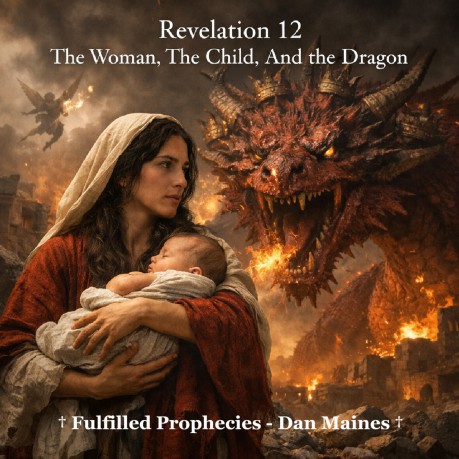
Revelation 12 The Woman, The
Child, And The Dragon Introduction † Revelation 12 reveals the spiritual battle
behind the coming of the Messiah and the persecution of the early
church. John shows the conflict between God's covenant people and the
power of Satan that attempted to stop the plan of redemption. † The symbols used here come directly from the
Old Testament prophets. Sun, moon, stars, beasts, and dragons were
common prophetic imagery used to describe nations, rulers, and
covenant events. John is not introducing new symbols, he is
continuing the same prophetic language. † When we read this chapter from the fulfilled
perspective, the timeline becomes clear. Israel brings forth the
Messiah, Satan attempts to destroy Him, Christ triumphs and is
enthroned in heaven, and the faithful remnant is preserved during the
events leading to the destruction of Jerusalem. Revelation 12:1-2 A great sign appeared in heaven: a woman clothed with the sun, and
the moon under her feet, and on her head a crown of twelve stars; and
she was pregnant, and she cried out, being in labor and in pain to
give birth. † The woman represents faithful Israel, the
covenant community through whom the Messiah came. The twelve stars
echo the twelve tribes of Israel, Genesis 37:9. † The imagery mirrors Joseph's dream where the
sun, moon, and stars represented the covenant family of Israel. John
is intentionally using that same symbolism to show that the Messiah
comes from Israel. † Paul confirms this directly when he explains
that Christ came from Israel according to the flesh, showing the
fulfillment of God's covenant promises, Romans 9:4-5. † The prophets also used the imagery of a woman
in labor to describe Israel bringing forth salvation. Isaiah spoke of
Zion giving birth before labor pains came, showing the arrival of
God's deliverance through the covenant people (Isaiah 66:7-8). † Micah also connected the labor imagery with
the coming Messiah, describing the ruler who would come from
Bethlehem and shepherd God's people (Micah 5:2-3). Revelation 12:3-4 Then
another sign appeared in heaven: and behold, a great red dragon
having seven heads and ten horns, and on his heads were seven
crowns. And his tail *swept away a third of the stars of heaven and
hurled them to the earth. And the dragon stood before the woman who
was about to give birth, so that when she gave birth he might devour
her Child.
† The dragon is Satan, working through worldly
empires. Seven heads and ten horns echo Daniel's beast imagery
(Daniel 7:7). † Throughout Scripture Satan often works
through earthly rulers who oppose God's purposes. In the first
century this opposition was clearly seen through the Roman
authorities and the corrupt leadership in Jerusalem that rejected the
Messiah. † Herod's attempt to destroy the infant Jesus
fits this picture of the dragon waiting to devour the child (Matthew
2:16). † The sweeping of the stars reflects Satan's
influence over rulers and powers aligned against God's plan. In
prophetic language stars often symbolize rulers or authorities
(Isaiah 14:12-13). Revelation 12:5 And she gave birth to a son, a male child, who is to rule all the
nations with a rod of iron; and her child was caught up to God and to
His throne. † The male child is Christ, fulfilling Psalm
2:9, which declared that the Messiah would rule the nations with a
rod of iron. † John compresses the mission of Christ into a
single statement. The birth of the Messiah, His victory over death,
and His ascension to God's throne are presented together to emphasize
His triumph. † The ascension demonstrates Christ's
authority. After the resurrection He was exalted to the right hand of
God where He reigns over all authority (Acts 2:32-36). † The same rod of iron language appears again
later in Revelation describing Christ's reign over the nations,
confirming that the child in this passage is the Messiah (Revelation
19:15). Revelation 12:6 Then the woman fled into the wilderness where she had a place
prepared by God, so that she would be nourished there for 1,260 days. † The wilderness represents divine protection.
Just as God preserved Israel in the wilderness during the Exodus, He
preserved the faithful believers during the crisis leading to
Jerusalem's fall. † Jesus warned believers to flee when they saw
the signs of the coming judgment (Matthew 24:15-16). † Early church history confirms that believers
obeyed this warning. Eusebius records that Christians fled Jerusalem
and settled in Pella before the Roman siege began (Ecclesiastical
History 3.5.3). † Epiphanius also confirms that the Jerusalem
church escaped to Pella before the destruction of the city,
preserving the faithful remnant (Panarion 29.7.7). Revelation 12:7-9 And there was war in heaven, Michael and his angels waging war
with the dragon. The dragon and his angels waged war, and they did
not prevail, and there was no longer a place found for them in
heaven. And the great dragon was thrown down, the serpent of old who
is called the devil and Satan, who deceives the whole world; he was
thrown down to the earth, and his angels were thrown down with him. † This war in heaven represents the victory of
Christ over Satan through His death and resurrection. † Jesus declared this victory when He said that
He saw Satan fall like lightning from heaven (Luke 10:18). † Before the cross Satan functioned as the
accuser. After the cross that authority was removed because Christ
paid the full price for sin. † Hebrews explains that Christ's death rendered
the devil powerless and broke the authority he held through death
(Hebrews 2:14). † Jesus also declared that the ruler of this
world would be cast out when judgment came through His work (John
12:31). † Paul explains that through the cross Christ
disarmed the rulers and authorities and made a public display of
victory over them (Colossians 2:14-15). Revelation 12:10-11 Then I heard a loud voice in heaven, saying, Now the salvation,
and the power, and the kingdom of our God and the authority of His
Christ have come, for the accuser of our brothers and sisters has
been thrown down, the one who accuses them before our God day and
night. And they overcame him because of the blood of the Lamb and
because of the word of their testimony, and they did not love their
life even when faced with death. † This proclamation announces that the kingdom
of Christ has arrived. His authority is now established. † Satan's accusations are silenced by the blood
of Christ. The sacrifice of the Lamb removes every charge that stood
against God's people. † The early believers overcame through faithful
testimony. Their victory came through loyalty to Christ even in the
face of persecution. † The martyrs seen earlier in Revelation
demonstrate this victory as they remained faithful even unto death
(Revelation 6:9-11). † The book itself confirms the nearness of
these events by declaring that the things revealed would soon take
place and that the time was near (Revelation 1:1, 3). Revelation 12:12 For this reason, rejoice, you heavens and you who dwell in them.
Woe to the earth and the sea, because the devil has come down to you
with great wrath, knowing that he has only a short time. † Heaven rejoices because Christ has triumphed
and the authority of the Messiah has been established. † Satan's removal from his position of
accusation means that his remaining activity is limited and
desperate. † The statement that he has only a short time
confirms the first century setting of the prophecy. The judgment
events connected with Jerusalem were approaching quickly. † Paul wrote to the believers in Rome that the
God of peace would soon crush Satan under their feet, showing the
nearness of the fulfillment during their lifetime (Romans 16:20). Revelation 12:13-16 And when the dragon saw that he was thrown down to the earth, he
persecuted the woman who gave birth to the male child. But the two
wings of the great eagle were given to the woman, so that she could
fly into the wilderness to her place, where she was nourished for a
time, times, and half a time, away from the presence of the serpent.
And the serpent hurled water like a river out of his mouth after the
woman, so that he might cause her to be swept away with the flood.
But the earth helped the woman, and the earth opened its mouth and
drank up the river which the dragon had hurled out of his mouth. † The imagery of eagle's wings recalls the
language God used when describing how He delivered Israel from Egypt
and carried them to safety (Exodus 19:4). † Just as God protected Israel in the
wilderness during the Exodus, He preserved the faithful believers
during the time of turmoil leading to the fall of Jerusalem. † The flood imagery represents overwhelming
persecution and chaos unleashed by the dragon through earthly powers. † Josephus describes the immense bloodshed,
violence, and turmoil that consumed Jerusalem during the Roman siege,
illustrating the kind of destructive flood that came upon the city
(Josephus, Wars 6.5.3). Revelation 12:17 So the dragon was enraged with the woman, and went off to make war
with the rest of her children, who keep the commandments of God and
hold to the testimony of Jesus. † Having failed to destroy the Messiah and
unable to eliminate the faithful remnant, the dragon directs his rage
toward the wider church. † The early church experienced intense
persecution throughout the Roman Empire, especially during the reign
of Nero. † Tacitus records that Christians were blamed
for the fire of Rome and brutally persecuted under Nero's rule,
confirming the historical reality of this conflict (Tacitus, Annals
15.44). Historical References † Eusebius recorded that Christians fled
Jerusalem before the Roman siege and relocated to Pella, preserving
the faithful community (Ecclesiastical History 3.5.3). † Epiphanius also confirmed that the Jerusalem
church escaped to Pella before the destruction of the city (Panarion
29.7.7). † Tacitus documented the persecution of
Christians under Nero, showing the historical context of the dragon's
war against the saints (Annals 15.44). † Josephus described the extreme violence,
bloodshed, and chaos that filled Jerusalem during the Roman siege
(Wars 6.5.3). How It Applies To Us Today † Christ has already triumphed over Satan. The
dragon has been cast down and Christ now reigns with authority. † The church overcomes not by earthly power but
through the blood of the Lamb and faithful testimony. † God preserved His people during the greatest
covenant transition in history, and His faithfulness continues today. † Our security is not found in earthly kingdoms
or political power but in the reign of Christ who rules from His
throne. Q & A Appendix Q Who is the woman in Revelation 12? Q Who is the dragon? Q Who is the male child? Q What does the war in heaven represent? Q Why is the imagery of sun, moon, and stars used
for Israel? Q Does Revelation 12 describe the end of the
world? Q What does the 1,260 days represent? Q Why does Revelation describe events as
happening in heaven if the events occurred on earth? Q Who are the rest of her children in Revelation
12:17? Q Why does the dragon persecute the church after
Christ ascends? † This is the fulfilled perspective we proclaim at
Fulfilled Prophecies † © Fulfilled Prophecies - Dan Maines. Source Index † Revelation 12; Genesis 37:9; Romans 9:4-5;
Daniel 7:7; Matthew 2:16; Psalm 2:9; Acts 2:32-36; Matthew 24:15-16;
Luke 10:18; Hebrews 2:14; Revelation 6:9-11; Romans 16:20; Exodus
19:4; John 12:31; Colossians 2:14-15; Revelation 1:1, 3; Isaiah
66:7-8; Micah 5:2-3 † Eusebius Ecclesiastical History 3.5.3;
Epiphanius Panarion 29.7.7; Tacitus Annals 15.44; Josephus Wars 6.5.3
By Dan Maines
A
The woman represents faithful Israel, the covenant people through
whom the Messiah came (Genesis 37:9; Romans 9:4-5).
A The
dragon is Satan working through earthly powers that oppose God's
purposes (Revelation 12:9; Daniel 7:7).
A
The male child is Jesus Christ, the Messiah who rules the nations
with a rod of iron (Psalm 2:9; Acts 2:32-36).
A
It represents Christ's victory over Satan through His death and
resurrection which removed Satan's role as accuser (Luke 10:18;
Hebrews 2:14).
A Because the same imagery appears
in Genesis 37:9 where Joseph's dream describes the covenant family of
Israel using the sun, moon, and stars.
A No. The chapter describes the conflict
surrounding the coming of Christ and the persecution of the early
church leading up to the judgment of Jerusalem in the first century
(Matthew 24:34; Romans 16:20).
A
The 1,260 days represent the limited period of tribulation leading up
to the fall of Jerusalem. This same period appears as time, times,
and half a time and forty two months in prophetic language, all
describing the same short period of intense persecution in the first
century (Daniel 7:25; Revelation 11:2-3; Revelation 13:5).
A
Revelation uses heavenly imagery to reveal the spiritual reality
behind earthly events. The war in heaven describes the spiritual
victory of Christ over Satan that resulted from the cross and
resurrection, even though the effects were seen in the persecution
and judgment that took place on earth (Luke 10:18; Colossians
2:14-15).
A The rest of her children are the
believers in Christ who keep the commandments of God and hold to the
testimony of Jesus. These are the members of the early church who
faced persecution after the Messiah had already been enthroned (Acts
14:22; Revelation 1:9).
A Because Satan knows his
authority has been broken and his time is short. After Christ's
victory, Satan's rage is directed toward the followers of Christ,
which explains the intense persecution the early church experienced
(Romans 16:20; Revelation 12:12).
Links