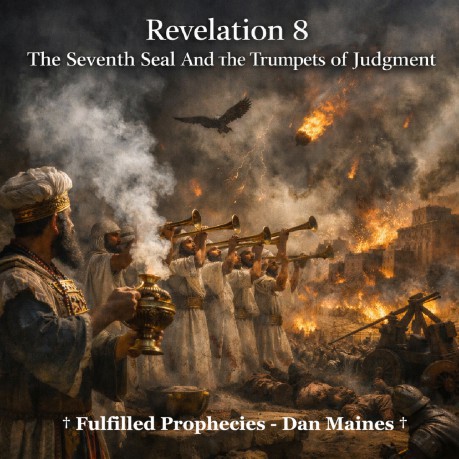
Revelation 8 The Seventh Seal
And The Trumpets Of Judgment Introduction † Revelation 8 brings us to the moment when the
final seal is opened and the trumpet judgments begin. Everything in
the previous visions has been moving toward this point. The saints
cried out for justice, the Lamb opened the seals, and now heaven
prepares for the response of God to the persecution of His people. † The imagery John records comes directly from
the temple system and the language of the prophets. Silence, incense,
trumpets, and fire from the altar were all part of Israel's worship
and prophetic warnings. This chapter shows that the covenant warnings
spoken through Moses, the prophets, and Christ Himself were reaching
their fulfillment. † From the fulfilled perspective, these events
describe the judgments that unfolded in the first century leading to
the destruction of Jerusalem in AD 70. Jesus said these things would
happen in that generation, and Revelation shows heaven preparing for
the judgment that would bring the old covenant age to its end
(Matthew 24:34). † The trumpet judgments follow the same pattern
Jesus described in the Olivet Discourse, wars, upheaval in the
heavens, and the surrounding of Jerusalem by armies, confirming that
Revelation is describing the same first century judgment (Matthew
24:6-8, Luke 21:20). Revelation 8:1 † The silence represents awe before the
outpouring of judgment. In Jewish temple practice silence accompanied
the offering of incense, a solemn moment before God acted. † Habakkuk 2:20 says † In the temple service the people stood
outside in silence while incense was offered inside the sanctuary.
Luke records this exact moment during the priestly service, showing
how familiar this imagery would have been to Jewish readers (Luke
1:9-10). † This silence marks the transition from the
opening of the seals to the trumpet judgments. Heaven pauses before
the judgments begin. Revelation 8:2 † Trumpets were instruments of warning and
judgment. In Israel they announced war and divine intervention
(Numbers 10:9). † The imagery echoes Joshua 6 where seven
priests blew seven trumpets before the walls of Jericho fell. † John uses that same imagery to show that
Jerusalem, like Jericho before it, stood under divine judgment. Revelation 8:3-4 † The altar imagery reflects the temple in
Jerusalem. The prayers of persecuted believers rise before God. † Psalm 141:2 says † Revelation earlier showed the martyrs crying
out for justice under the altar (Revelation 6:9-10). † This vision shows that those prayers are now
being answered. Revelation 8:5 † The same altar that received the prayers of
the saints now becomes the source of judgment. † Ezekiel 10:2 describes fire taken from the
temple and scattered over Jerusalem as a sign of destruction. † The thunder, lightning, and earthquake
language represents divine judgment being unleashed. † Josephus recorded that the temple itself was
consumed with fire during the Roman siege in AD 70. Revelation 8:6-7 † The first trumpet echoes the plague of hail
and fire that struck Egypt (Exodus 9:23-24). † These plagues also mirror the covenant curses
warned in the Law if Israel broke the covenant (Deuteronomy
28:22-24). † The repeated use of a third shows partial
judgment rather than total destruction. † Josephus recorded widespread fires and
devastation throughout Judea during the Roman siege. Revelation 8:8-9 † In prophetic language a mountain symbolizes a
kingdom or ruling power. † Jeremiah 51:25 calls Babylon a destroying
mountain that God would cast down. † The burning mountain imagery reflects the
collapse of a ruling power under judgment. † Josephus recorded naval battles on the Sea of
Galilee where ships were destroyed and the waters were filled with
blood. Revelation 8:10-11 † Falling stars symbolize the fall of rulers or
leaders. † Isaiah 14:12 uses this imagery to describe
the fall of a king. † Wormwood represents bitterness and judgment
(Jeremiah 9:15). † During the revolt corrupt leaders plunged the
nation into chaos and suffering. Revelation 8:12 † Darkened heavenly bodies symbolize political
collapse and the fall of ruling authorities. † Isaiah 13:10 used this imagery when
describing the fall of Babylon. † Joel also used the same language when
describing national judgment (Joel 2:10). † Josephus recorded that leaders were murdered
and the city descended into chaos during the war. Revelation 8:13 † The eagle warns that even greater judgment is
coming. † Eagles were the symbol carried by Roman
legions. † Moses warned Israel that if they broke the
covenant God would bring a nation against them like an eagle swooping
down (Deuteronomy 28:49). Matthew 24:28 † Jesus used this imagery to describe the Roman
armies surrounding Jerusalem. † Tacitus recorded that Roman standards bearing
the eagle were carried into battle during the siege. Historical References † Josephus described the fires consuming
Jerusalem and the destruction of the temple during the Roman siege. † Tacitus recorded the devastation that fell
upon Judea during the revolt. † Eusebius wrote that Christians remembered the
warning of Christ and fled Jerusalem before its destruction. † Victorinus connected the trumpet imagery with
divine judgments falling upon rebellious nations. † Clement of Alexandria wrote about the
destruction of Jerusalem confirming the words spoken by Christ. How It Applies To Us Today † God hears the prayers of His people and acts
in history. † Christ's prophecies were fulfilled exactly as
He said. † Nations that reject truth eventually collapse
under corruption. † The same God who judged Jerusalem continues
to rule over nations. Q & A Appendix Q Do the trumpet judgments describe the
destruction of the physical world? A No. The imagery follows the language of the Old
Testament prophets describing the fall of nations. Q Why does Revelation use Exodus and prophetic
imagery? A Because the destruction of Jerusalem was
another covenant judgment similar to those earlier
events. Q Did Jesus say these events would happen in the
first century? A Yes. Jesus placed the judgment of Jerusalem
within the generation that heard Him speak. Q Why does Revelation repeatedly mention a third
being destroyed? A The use of a third shows partial judgment
rather than total destruction. God was restraining the devastation
until the final collapse of Jerusalem in AD 70. Q Why are trumpets used to announce these
judgments? A In the Old Testament trumpets were used to warn
the people and announce battle or divine intervention. The trumpet
blasts in Revelation show that God was announcing judgment just as He
had warned in the Law. Q Why does Revelation use language similar to the
plagues of Egypt? A The judgments mirror the plagues of Egypt
because Jerusalem had become like Egypt by persecuting God's people.
Just as God judged Egypt for oppressing Israel, He judged Jerusalem
for rejecting the Messiah and persecuting the church. Q What does the silence in heaven show about
God's judgment? A The silence shows reverence and anticipation
before God acts. Just as the people were silent during the temple
incense offering, heaven pauses before the judgments begin. Q Why are the judgments described in symbolic
language? A The prophets often used symbolic language to
describe the fall of nations and rulers. Revelation follows the same
prophetic pattern. The imagery communicates the severity of the
judgment without describing the literal destruction of the
universe. Q Do the trumpet judgments describe events that
must still happen in the future? A No. Revelation opens by saying the events it
describes were about to take place for the first century readers. The
book was written to warn them about the coming judgment that would
soon fall on Jerusalem. Q Does the darkening of the sun, moon, and stars
mean the universe will literally collapse? A No. The prophets regularly used cosmic language
to describe the fall of nations and rulers. It was symbolic language
understood by Jewish readers. Q Could Revelation 8 describe modern world wars
or global disasters? A No. Jesus clearly placed the judgment connected
with Jerusalem within the generation that heard Him speak. The Roman
siege of Jerusalem in AD 70 fulfilled these warnings exactly. † This is the fulfilled perspective we proclaim at
Fulfilled Prophecies † Source Index † Revelation 8; Matthew 24:6-8; Matthew 24:28;
Matthew 24:34; Luke 1:9-10; Luke 21:20; Psalm 141:2; Habakkuk 2:20;
Exodus 9:23-24; Deuteronomy 28:22-24; Deuteronomy 28:49; Jeremiah
9:15; Jeremiah 51:25; Isaiah 13:10; Isaiah 14:12; Joel 2:10; Ezekiel
5:2; Ezekiel 10:2; Revelation 6:9-10 † Josephus, Wars 3.9.3; 4.5.2; 4.6.3; 5.6.3;
6.4.5; Tacitus, Histories 5.13; Eusebius, Ecclesiastical History 3.5;
Victorinus, Commentary on the Apocalypse; Clement of Alexandria,
Stromata.
By Dan Maines
When the Lamb broke the
seventh seal, there was silence in heaven for about half an hour.
The Lord is in His
holy temple. Let all the earth be silent before Him.
And I saw the seven angels
who stand before God, and seven trumpets were given to them.
Another angel came and
stood at the altar, holding a golden censer; and much incense was
given to him, so that he might add it to the prayers of all the
saints on the golden altar which was before the throne. And the smoke
of the incense ascended from the angel's hand with the prayers of the
saints before God.
May my prayer be
counted as incense before You, the raising of my hands as the evening
offering.
Then the angel took the
censer and filled it with the fire of the altar, and hurled it to the
earth; and there were peals of thunder, sounds, flashes of lightning,
and an earthquake.
And the seven angels who
had the seven trumpets prepared themselves to sound them. The first
sounded, and there was hail and fire mixed with blood, and it was
hurled to the earth; and a third of the earth was burned up, and a
third of the trees were burned up, and all the green grass was burned
up.
The second angel sounded,
and something like a great mountain burning with fire was hurled into
the sea; and a third of the sea became blood, and a third of the
creatures which were in the sea and had life, died; and a third of
the ships were destroyed.
The third angel sounded,
and a great star fell from heaven, burning like a torch, and it fell
on a third of the rivers and on the springs of waters. The name of
the star is called Wormwood; and a third of the waters became
wormwood, and many people died from the waters, because they were
made bitter.
The fourth angel sounded,
and a third of the sun, a third of the moon, and a third of the stars
were struck, so that a third of them would be darkened, and the day
would not shine for a third of it, and the night in the same way.
Then I looked, and I heard
an eagle flying in midheaven, saying with a loud voice, Woe, woe, woe
to those who live on the earth, because of the remaining blasts of
the trumpet of the three angels who are about to sound.
Wherever the corpse is, there
the vultures will gather.
Isaiah
13:10
For the stars of heaven and their constellations will not
flash forth their light; the sun will be dark when it rises and the
moon will not shed its light.
Deuteronomy 28:49
The Lord will bring a nation
against you from afar, from the end of the earth, as the eagle swoops
down, a nation whose language you will not understand.
Matthew 24:34
Truly
I say to you, this generation will not pass away until all these
things take place.
Ezekiel 5:2
One
third you shall burn in the fire at the center of the city when the
days of the siege are completed, then you shall take one third and
strike it with the sword all around the city, and one third you shall
scatter to the wind.
Numbers 10:9
When you go to war in
your land against the adversary who attacks you, then you shall sound
an alarm with the trumpets, so that you will be remembered before the
Lord your God, and be saved from your enemies.
Revelation
11:8
And their dead bodies will lie on the street of the great
city which mystically is called Sodom and Egypt, where also their
Lord was crucified.
Habakkuk
2:20
The Lord is in His holy temple. Let all the earth be silent
before Him.
Isaiah 34:4
And all the heavenly lights will wear
away, and the sky will be rolled up like a scroll; all their lights
will also wither away as a leaf withers from the vine, or as one
withers from the fig tree.
Revelation 1:1
The Revelation of
Jesus Christ, which God gave Him to show to His bond-servants, the
things which must soon take place.
Isaiah 13:10
For the stars of
heaven and their constellations will not flash forth their light; the
sun will be dark when it rises and the moon will not shed its light.
Luke
21:20
But when you see Jerusalem surrounded by armies, then
recognize that her desolation is near.
© Fulfilled Prophecies - Dan
Maines.
Links