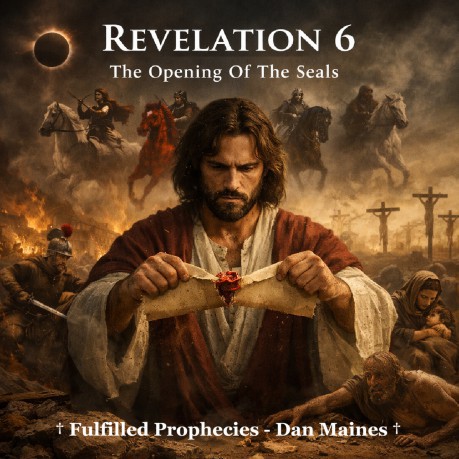
Revelation 6 The Opening Of
The Seals Introduction † Revelation 6 begins the opening of the scroll
that only the Lamb was worthy to open. Each seal reveals the
unfolding judgments that lead to the destruction of Jerusalem and the
end of the old covenant order. The Lamb who was slain is now revealed
as the one governing history and executing covenant judgment. Revelation 6:1-2 † The rider is best understood as a figure of
conquest rather than Christ Himself, since Christ is the one opening
the seals, and the sequence follows the same order Jesus gave in
Matthew 24, showing the riders represent unfolding judgments (Matthew
24:6-8). Revelation 6:3-4 † The red horse represents bloodshed and
internal violence spreading throughout the land. Peace is removed and
civil conflict erupts among the people. Revelation 6:5-6 † The scales symbolize rationing and controlled
distribution of food during a time of severe scarcity. Food must be
weighed carefully because supplies are limited. Revelation 6:7-8 † The pale horse gathers the previous judgments
into a combined catastrophe. War, famine, disease, and death sweep
through the land together. Revelation 6:9-11 † The martyrs appear beneath the altar because
sacrificial blood in the temple was poured out at the base of the
altar. Their deaths are portrayed as offerings presented before God
(Leviticus 4:7). Revelation 6:12-14 † The prophets frequently used cosmic language
to describe the downfall of nations. This imagery signals covenant
judgment rather than literal destruction of the universe. Revelation 6:15-17 † The cry for the mountains to fall on them
comes from Hosea's prophecy concerning judgment upon Israel (Hosea
10:8). Historical References † Josephus provides detailed eyewitness
descriptions of the Jewish war including civil violence, famine, and
the destruction of Jerusalem. How It Applies To Us Today † Christ rules over history. The Lamb who
opened the seals continues to reign over nations and kingdoms
today. Q & A Appendix Q: How do we know the seals refer to the first
century? Q: Why is cosmic language used if the world was
not literally ending? Q: Why are the martyrs under the altar? Q: Why does Revelation describe only six seals
here? Q: Why does the vision mention a fourth of the
earth instead of the whole world? Q: Is there Old Testament background for the four
horsemen? Q: Why do the people hide in caves and rocks
during the sixth seal? Q: What does it mean when the passage says the
great day of Their wrath has come? † This is the fulfilled perspective we proclaim at
Fulfilled Prophecies † Source Index † Revelation 6:1-17; Matthew 24:6-34; Matthew
23:34-36; Matthew 20:2; Matthew 24:30-34; Luke 21:20-22; Luke 23:30;
Hosea 10:8; Leviticus 4:7; Leviticus 26:25-26; Deuteronomy 28:21-24;
Ezekiel 14:21; Isaiah 13:10; Isaiah 34:4; Ezekiel 32:7-8; Joel
2:30-31; Acts 7; Acts 12; Revelation 19:11-16; Zechariah 1:8-11;
Zechariah 6:1-8 † Josephus, Jewish War 2.18, 4.3-4.5,
5.10.2-5.10.3, 6.5.3, 6.7.3, 6.9.4; Tacitus, Histories 5.13; Tacitus,
Annals 15.44; Tertullian, Apology 50
By Dan Maines
†
The sequence of the seals mirrors the order Jesus gave in the Olivet
Discourse. Wars, famine, pestilence, persecution, and cosmic signs
appear in the same pattern. This agreement between Matthew 24 and
Revelation 6 shows that both passages describe the same first century
crisis that ended with the fall of Jerusalem.
†
The Lamb's authority over the scroll proves that Christ was not a
victim of history. He was the ruler directing events that would bring
judgment upon the system that rejected Him.
Then I saw when the Lamb
broke one of the seven seals, and I heard one of the four living
creatures saying as with a voice of thunder, Come. I looked, and
behold, a white horse, and the one who sat on it had a bow, and a
crown was given to him, and he went out conquering and to conquer.
† The crown is given to the rider,
which shows temporary authority granted within God's judgment plan
rather than the rightful kingship that belongs to Christ alone.
†
Christ is later shown riding a white horse in Revelation 19, but
there He bears many crowns and a sword from His mouth. The
differences show that the rider in Revelation 6 represents conquest
permitted within God's judgment rather than Christ Himself
(Revelation 19:11-16).
† The horse imagery
also echoes Old Testament judgment symbolism where mounted forces are
associated with God's providential activity in the earth (Zechariah
1:8-11; Zechariah 6:1-8).
† The imagery of
conquest fits the Roman advance across Judea as rebellion spread
throughout the region. Josephus records Rome moving through the land
suppressing uprisings before the final siege of Jerusalem (Josephus,
Jewish War 2.18).
When He broke the second
seal, I heard the second living creature saying, Come. And another, a
red horse, went out, and to him who sat on it, it was granted to take
peace from the earth, and that people would kill one another, and a
great sword was given to him.
† The
word earth can often mean land in prophetic passages, and in this
context it fits the covenant land rather than the entire world.
†
Josephus describes violent factional warfare inside Jerusalem where
rival groups slaughtered each other even before the Roman siege fully
began (Josephus, Jewish War 4.3-4.5).
† Jesus
predicted these exact conditions when He warned that wars and rumors
of wars would precede the destruction of Jerusalem (Matthew 24:6).
When He broke the third
seal, I heard the third living creature saying, Come. I looked, and
behold, a black horse, and the one who sat on it had a pair of scales
in his hand. And I heard something like a voice in the center of the
four living creatures saying, A quart of wheat for a denarius, and
three quarts of barley for a denarius, and do not damage the oil and
the wine.
†
A denarius was the daily wage of a laborer. The price described here
means a man would spend an entire day's wage just to purchase enough
food for himself.
† Siege warfare regularly
produced extreme food shortages because grain supply routes were cut
off. This explains the measured rations and inflated prices described
in the vision.
† Josephus records that famine
inside Jerusalem became so severe that people fought violently over
scraps of food as starvation consumed the population (Josephus,
Jewish War 5.10.2-5.10.3).
† Jesus predicted
that famine would follow warfare during the events leading to
Jerusalem's fall (Matthew 24:7).
When the Lamb broke the
fourth seal, I heard the voice of the fourth living creature saying,
Come. I looked, and behold, an ashen horse, and the one who sat on it
had the name Death, and Hades was following with him. Authority was
given to them over a fourth of the earth, to kill with sword and
famine and plague, and by the wild animals of the earth.
† Sword, famine,
wild beasts, and plague follow the covenant judgment pattern already
established in the Law and the prophets (Leviticus 26:25-26;
Deuteronomy 28:21-24; Ezekiel 14:21).
† The
phrase a fourth of the earth indicates a limited judgment rather than
worldwide destruction, which fits a regional crisis centered in the
land.
† Tacitus and Josephus both record
massive death during the Jewish war caused by warfare, starvation,
and disease (Tacitus, Histories 5.13; Josephus, Jewish War 6.9).
†
The mention of wild animals reflects the breakdown of civilization as
cities collapsed and populations were destroyed.
When the Lamb broke the
fifth seal, I saw underneath the altar the souls of those who had
been killed because of the word of God, and because of the testimony
which they had maintained, and they cried out with a loud voice,
saying, How long, O Lord, holy and true, will You refrain from
judging and avenging our blood on those who live on the earth. And a
white robe was given to each of them, and they were told that they
were to rest for a little while longer, until the number of their
fellow servants and their brothers who were to be killed even as they
had been, was completed also.
† Their cry for justice
agrees with Jesus' warning that the blood of the righteous prophets
would come upon that generation that rejected the Messiah (Matthew
23:34-36).
† Early Christian history confirms
widespread persecution before Jerusalem fell. Stephen was stoned,
James was executed, and believers suffered repeated attacks for the
testimony of Christ (Acts 7; Acts 12).
†
Tacitus records Nero's persecution of Christians in Rome, confirming
that martyrdom was already taking place during this period (Tacitus,
Annals 15.44).
† The phrase a little while
longer shows that judgment was near rather than thousands of years
away.
And I looked when He
broke the sixth seal, and there was a great earthquake, and the sun
became as black as sackcloth made of hair, and the whole moon became
like blood, and the stars of the sky fell to the earth, as a fig tree
drops its unripe figs when shaken by a great wind. The sky was split
apart like a scroll when it is rolled up, and every mountain and
island was removed from its place.
†
The collapsing heaven imagery reflects the overthrow of established
orders, where heaven and earth language is used symbolically for
political and covenantal upheaval (Isaiah 13:10; Isaiah 34:4; Ezekiel
32:7-8).
† Jesus applied the same cosmic
language to the destruction of Jerusalem within the generation that
heard Him speak (Matthew 24:29-34).
†
Josephus reports unusual signs said to have appeared over Jerusalem
during the war, including a star shaped like a sword (Josephus,
Jewish War 6.5.3).
† Tacitus also mentioned
prodigies reported in Judea during that time (Tacitus, Histories
5.13).
Then the kings of the
earth, the eminent people, the commanders, the wealthy, the strong,
and every slave and free person hid themselves in the caves and among
the rocks of the mountains, and they said to the mountains and the
rocks, Fall on us and hide us from the sight of Him who sits on the
throne, and from the wrath of the Lamb, for the great day of Their
wrath has come, and who is able to stand.
† Jesus repeated this prophecy while
warning about Jerusalem's coming destruction (Luke 23:30).
†
Josephus records that people hid in caves, tunnels, and underground
chambers during the Roman siege trying to escape the slaughter
(Josephus, Jewish War 6.7.3; 6.9.4).
† The
declaration that the day of wrath has come shows that the judgment
long warned by the prophets and by Jesus was no longer future but had
arrived (Revelation 1:1-3).
† Tacitus
recorded disasters and unusual signs surrounding the Roman campaign
in Judea.
† Tertullian described the blood of
the martyrs as testimony to the truth of the gospel and evidence of
the early church's faithfulness under persecution.
† God's prophetic word is trustworthy.
The agreement between Jesus' prophecy, John's vision, and recorded
history confirms the reliability of Scripture.
†
God sees the suffering of His people. The martyrs beneath the altar
remind us that every sacrifice made for Christ is remembered.
†
Faithfulness remains our calling. The early church endured
persecution with courage, and believers today can live with
confidence in the reign of Christ.
A: Jesus gave the same sequence of
events and said they would occur within the generation that heard Him
speak (Matthew 24:6-34).
A: The prophets used
cosmic imagery to describe the fall of nations (Isaiah 13:10; Isaiah
34:4; Ezekiel 32:7-8).
A:
The imagery reflects the sacrificial system where blood was poured at
the base of the altar (Leviticus 4:7).
A: The seventh seal opens in Revelation 8
and introduces the trumpet judgments which continue the unfolding
judgment against Jerusalem.
A: The
judgment is limited rather than global and fits the regional crisis
centered in the land during the Jewish war.
A: Yes. Zechariah uses horsemen and
chariots connected with God's activity in the earth, and Ezekiel
lists sword, famine, wild beasts, and plague as covenant judgments,
which strongly parallels Revelation 6 (Zechariah 1:8-11; Zechariah
6:1-8; Ezekiel 14:21).
A: During the Roman
siege many people attempted to escape death by hiding in caves,
tunnels, and tombs around Jerusalem. Josephus records that people
fled into underground passages and caverns when the city was being
destroyed (Josephus, Jewish War 6.7.3; 6.9.4).
A: This
statement marks the moment when the judgment that had been warned
about by the prophets and by Jesus was finally recognized by the
people experiencing it. The destruction of Jerusalem revealed that
the wrath of the Lamb had arrived (Matthew 24:30-34; Luke 21:20-22).
© Fulfilled Prophecies - Dan
Maines.
Links