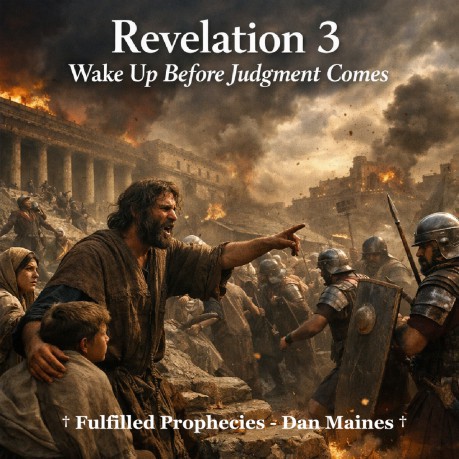
Revelation 3 Wake Up Before
Judgment Comes Introduction † Revelation 3 continues Christ's direct
messages to the churches of Asia. These were real congregations
living in the first century, facing real spiritual dangers during the
final years of the Old Covenant age. Christ wasn't speaking about
events thousands of years away. He was warning His own people in
their generation. † These churches lived in the shadow of the
coming covenant judgment that Jesus predicted in Matthew 24:34. Their
faithfulness mattered because the old order was about to pass away
and the kingdom of Christ was being fully established. † Each message shows the difference between
outward religion and true faith. Christ wasn't impressed with
reputation, wealth, or status. He was looking for living faith,
perseverance, and loyalty to His name. † The warnings and promises in this chapter
prove that the book of Revelation was addressing first century
believers who were about to face testing, persecution, and the
collapse of the old covenant world centered in Jerusalem. † The churches addressed in Revelation were
literal congregations in Asia Minor, and Christ's words were
immediately relevant to their spiritual condition and the events that
were about to unfold around them (Revelation 1:1, 3). Revelation 3:1 To the angel of the church in Sardis write: The One who has the
seven Spirits of God and the seven stars, says this: I know your
deeds, that you have a name that you are alive, and yet you are dead. † Sardis had a reputation for life, but Christ
said the truth was the opposite. Outward activity doesn't equal
spiritual life. A church can look successful and still be spiritually
dead (James 2:17). † The phrase seven Spirits of God represents
the fullness of the Holy Spirit's presence and authority working
through Christ. He sees the true condition of every congregation
(Revelation 1:4). † Sardis itself had a similar history. The city
once had great wealth and influence, but by the first century it had
declined greatly. Strabo described it as a city that once had glory
but later faded into weakness. Revelation 3:2-3 Be constantly alert, and strengthen the things that remain, which
were about to die; for I have not found your deeds completed in the
sight of My God. So remember what you have received and heard; and
keep it, and repent. Then if you are not alert, I will come like a
thief, and you will not know at what hour I will come to you. † Christ calls them to wake up. Spiritual
complacency was killing them. Their works were unfinished because
they had stopped living faithfully. † The warning that He would come like a thief
directly echoes His Olivet Discourse teaching (Matthew 24:42-43). † This language refers to the coming covenant
judgment upon Jerusalem and the end of the Old Covenant system (Luke
21:20-22). † The call to remember what they had received
shows that their problem was not ignorance but neglect. They had
already heard the truth but were failing to live it. Revelation 3:4-5 But you have a few people in Sardis who have not soiled their
garments; and they will walk with Me in white, for they are worthy.
The one who overcomes will be clothed the same way in white garments,
and I will not erase his name from the book of life, and I will
confess his name before My Father and before His angels. † Even in a spiritually dead church, Christ
preserves a faithful remnant. God has always worked through a remnant
throughout biblical history (Romans 11:5). † White garments symbolize purity and victory
in Revelation, representing those who remain faithful during
persecution (Revelation 7:14). † Christ promises to confess the faithful
before the Father, echoing His earlier promise during His earthly
ministry (Matthew 10:32). Revelation 3:6 The one who has an ear, let him hear what the Spirit says to the
churches. † This repeated phrase shows that the message
wasn't only for Sardis. Every church must listen carefully to
Christ's warning. † The Spirit was speaking through the prophetic
message of Revelation to prepare believers for what was about to
unfold in their lifetime (Revelation 1:1). † Hearing in this sense means responding with
obedience. Christ expected the churches to act on what they were
hearing. Revelation 3:7-8 And to the angel of the church in Philadelphia write: He who is
holy, who is true, who has the key of David, who opens and no one
will shut, and who shuts and no one opens, says this: I know your
deeds. Behold, I have put before you an open door which no one can
shut, because you have little power, and yet you have kept My word,
and have not denied My name. † Philadelphia was weak in worldly power but
strong in faithfulness. Christ values loyalty more than influence. † The key of David comes from Isaiah 22:22 and
represents the authority of the Messiah over God's kingdom. † The open door represents opportunity for
gospel work that no earthly authority could stop (1 Corinthians
16:9). † Christ commended them not for strength but
for faithfulness, showing that obedience matters more than power. Revelation 3:9 Behold, I will make those of the synagogue of Satan, who say that
they are Jews and are not, but lie, I will make them come and bow
down before your feet, and make them know that I have loved you. † These opponents were unbelieving Jews who
rejected Jesus and persecuted Christians. † Christ exposed them as a synagogue of Satan
because they opposed God's true covenant people. † The promise that they would bow down echoes
Isaiah 60:14 where the enemies of God's people acknowledge God's
favor on the faithful. Revelation 3:10-11 Because you have kept My word of perseverance, I also will keep
you from the hour of the testing, that hour which is about to come
upon the whole world, to test those who live on the earth. I am
coming quickly; hold firmly to what you have, so that no one will
take your crown. † The hour of testing was about to come. That
language places the prophecy in the near future for the first century
audience. † The phrase whole world refers to the Roman
world where the gospel had spread (Luke 2:1). † Christ's words I am coming quickly confirm
the nearness of the events described (Revelation 22:12). † This testing would expose the faithfulness of
believers during the turbulent years leading up to the destruction of
Jerusalem. Revelation 3:12 The one who overcomes, I will make him a pillar in the temple of
My God, and he will not go out from it anymore; and I will write on
him the name of My God, and the name of the city of My God, the new
Jerusalem, which comes down out of heaven from My God, and My new
name. † Becoming a pillar symbolizes permanent
belonging in God's temple. † The true temple is God's people, not the
physical temple in Jerusalem (Ephesians 2:19-22). † The New Jerusalem represents the new covenant
community where God dwells with His people. Revelation 3:13 The one who has an ear, let him hear what the Spirit says to the
churches. † Christ repeats the call again because
spiritual hearing requires humility and obedience. † These warnings were meant to prepare
believers to remain faithful through the coming covenant transition. Revelation 3:14-15 To the angel of the church in Laodicea write: The Amen, the
faithful and true Witness, the Beginning of the creation of God, says
this: I know your deeds, that you are neither cold nor hot; I wish
that you were cold or hot. † Laodicea's greatest problem was spiritual
indifference. † The city was known for its lukewarm water
supply piped in from distant hot springs. By the time it reached the
city it became unpleasant and tepid. † Strabo described this condition, which Christ
used as a powerful illustration of their spiritual state. Revelation 3:16-17 So because you are lukewarm, and neither hot nor cold, I will
vomit you out of My mouth. Because you say, I am rich, and have
become wealthy, and have no need of anything, and you do not know
that you are wretched, miserable, poor, blind, and naked. † Laodicea was extremely wealthy after
rebuilding from an earthquake without Roman aid. † Their wealth created a false sense of
independence and spiritual blindness. † Material prosperity can hide spiritual
poverty (Luke 12:15). Revelation 3:18-19 I advise you to buy from Me gold refined by fire so that you may
become rich, and white garments so that you may clothe yourself, and
the shame of your nakedness will not be revealed; and eye salve to
apply to your eyes so that you may see. Those whom I love, I rebuke
and discipline; therefore be zealous and repent. † Christ offered true riches, purity, and
spiritual sight. † Laodicea was famous for producing eye salve
through its medical school, which makes Christ's words especially
powerful. † God's rebuke shows His love, because
discipline is meant to restore His people (Hebrews 12:6). Revelation 3:20 Behold, I stand at the door and knock; if anyone hears My voice
and opens the door, I will come in to him and will dine with him, and
he with Me. † Christ invites restored fellowship with those
who repent. † This language reflects covenant fellowship
and acceptance. † The invitation shows Christ's patience and
mercy toward a compromised church. Revelation 3:21-22 The one who overcomes, I will grant to him to sit with Me on My
throne, as I also overcame and sat with My Father on His throne. The
one who has an ear, let him hear what the Spirit says to the
churches. † Overcomers share in Christ's reign. † Christ had already taken His throne through
His resurrection and ascension (Acts 2:30-33). † Believers share in His kingdom authority as
members of His covenant people (Revelation 1:6). Historical References † Irenaeus wrote that Christ's letters to the
churches revealed how He examines the hearts and faithfulness of
believers. † Clement of Alexandria taught that believers
must remain vigilant because spiritual complacency slowly destroys
faith. † Eusebius recorded that early Christians saw
these warnings as urgent calls to remain faithful during persecution. † Tertullian wrote that Christ evaluates the
faithfulness of His churches and calls them to repentance when they
drift into compromise. How it applies to us today † Reputation means nothing if faith isn't
alive. † Christ still calls His people to wake up and
remain faithful. † Wealth and comfort can blind believers to
their spiritual condition. † Christ opens doors for faithful believers
that no one can shut. † True victory belongs to those who overcome
through faith. † A church can have activity, programs, and
reputation and still be spiritually asleep if it abandons faithful
obedience to Christ. Q & A Appendix Q Was Christ speaking about events thousands of
years later? A No. Revelation states that the events would
happen soon and were near in time (Revelation 1:1, 3). Q What is the hour of testing? A It refers to the coming judgment and turmoil
surrounding the destruction of Jerusalem in AD 70 (Luke 21:20-22). Q What does it mean to overcome? A Overcoming means remaining faithful to Christ
despite persecution and pressure from the surrounding world (1 John
5:4). Q Why does Christ say I am coming quickly? A Because the warnings were given to first
century churches and the events were approaching in their lifetime
(Revelation 22:6-7, 12). Q Does the phrase synagogue of Satan mean all
Jews? A No. The phrase refers specifically to those
Jews in the first century who rejected Jesus as the Messiah and
persecuted believers. Paul explains that true Jewish identity is
defined by faith, not ancestry (Romans 2:28-29). Those who opposed
Christ were rejecting the very covenant they claimed to defend. Q What does it mean that Christ will not erase a
name from the book of life? A The book of life represents belonging to God's
covenant people and receiving the life that comes through Christ. The
promise assures faithful believers that Christ will openly
acknowledge them before the Father (Matthew 10:32). The focus is
assurance to overcomers, not a threat to the faithful. Q Why does Revelation emphasize overcoming so
often? A The early Christians were facing persecution,
social pressure, and the approaching turmoil of the Jewish-Roman war.
Christ repeatedly called them to overcome so they would remain
faithful during those trials (Revelation 2:10). Faithfulness during
testing demonstrated genuine allegiance to Christ. † This is the fulfilled perspective we proclaim at
Fulfilled Prophecies † Source Index † Revelation 3:1-22, Matthew 24:34, 42-43, Luke
21:20-22, Isaiah 22:22, Romans 11:5, Acts 2:30-33, Ephesians 2:19-22,
Luke 12:15, Hebrews 12:6, 1 Corinthians 16:9, Revelation 1:1, 3,
Revelation 22:6-7, 12, 1 John 5:4 † Strabo, Geography 13.4.5; Strabo, Geography
12.8.18; Irenaeus, Against Heresies; Clement of Alexandria, Stromata;
Eusebius, Ecclesiastical History; Tertullian, Apology
By Dan Maines
© Fulfilled Prophecies - Dan
Maines.
Links