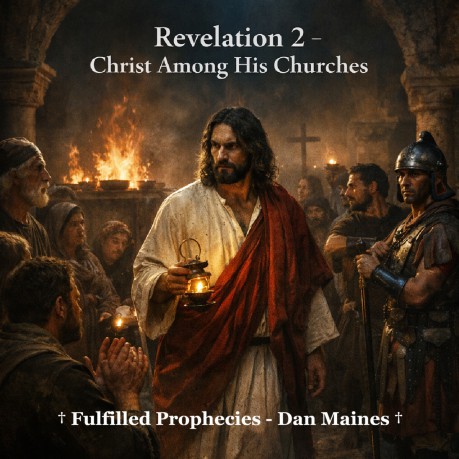
Revelation 2 - Christ Among
His Churches Introduction † Revelation chapter 2 records Christ examining
the spiritual condition of several real first century churches. These
weren't symbolic congregations from some distant future age. These
were real believers living in cities across Asia Minor while the
events leading to the destruction of Jerusalem were approaching. † The book of Revelation begins by saying the
things written in it were about to take place soon (Revelation 1:1,
3). That means these churches were living in the exact period when
those events were unfolding. Christ was warning them, correcting
them, and encouraging them to remain faithful. † These letters reveal something extremely
important. Jesus Christ wasn't distant from His church. He was
walking among them, observing their works, correcting their failures,
and rewarding their faithfulness. Revelation 2:1 † Christ's authority over His churches is
absolute. The seven stars represent the messengers of the churches
and the lampstands represent the churches themselves (Revelation
1:20). † Ephesus was one of the largest cities in Asia
Minor and contained the famous temple of Artemis, one of the wonders
of the ancient world (Acts 19:23-27). † Strabo described Ephesus as a major
commercial and religious center of the Roman province of Asia. Revelation 2:2-3 † Christ begins with commendation. He knew
their works, labor, and perseverance. Nothing done in His service
escapes His notice (Hebrews 4:13). † The Ephesian church tested those claiming to
be apostles. Paul had warned their elders that false teachers would
arise from within the church (Acts 20:29-30). † Their endurance demonstrates that
faithfulness isn't measured by comfort but by perseverance in truth. Revelation 2:4-5 † The church had strong doctrine but had lost
its original love and devotion. † Truth without love becomes empty religion (1
Corinthians 13:1-2). † The warning about removing the lampstand
means losing their place as a functioning church representing Christ. Revelation 2:6 † The Nicolaitans promoted compromise with
pagan practices. † Early church writer Irenaeus said they
encouraged participation in idolatry and immoral behavior. † Christ's statement that He hates their deeds
shows that grace never excuses sin. Revelation 2:7 † The tree of life points back to Eden where
humanity originally had access before the fall (Genesis 3:22-24). † Through Christ that access was restored. † Overcoming refers to remaining faithful
during the trials of that generation (1 John 5:4-5). Revelation 2:8-9 † Smyrna was a wealthy city, yet the Christians
there suffered poverty due to persecution. † Refusing emperor worship often resulted in
economic hardship. † Christ reminds them that He died and came
back to life, proving death itself had been defeated. Revelation 2:10-11 † The ten days represent a short defined period
of testing. † The crown of life was a powerful image in
Smyrna where athletic victors received crowns. † The second death refers to final separation
from God (Revelation 20:14). Revelation 2:12-13 † Pergamum was a major center of emperor
worship in the Roman Empire. † The phrase Satan's throne likely refers to
the dominance of pagan temples and imperial cult worship. † Antipas is remembered as an early Christian
martyr who remained faithful. Revelation 2:14-15 † The teaching of Balaam refers to the Old
Testament event where Israel was seduced into idolatry (Numbers
25:1-3). † Some believers in Pergamum were compromising
with pagan practices. † Cultural compromise has always been a major
danger for the church. Revelation 2:16-17 † The sword of Christ's mouth represents His
word of judgment (Hebrews 4:12). † Hidden manna represents God's spiritual
provision. † The white stone likely symbolized acquittal
in ancient courts. Revelation 2:18-19 † Thyatira was commended for growing in love,
faith, and service. † Christ's eyes like fire symbolize His ability
to see every motive. † Their increasing deeds demonstrate genuine
spiritual growth. Revelation 2:20-21 † Jezebel symbolizes corrupt teaching within
the church. † Like the Old Testament queen who corrupted
Israel, false teachers were leading believers into sin (1 Kings
16:31). † Christ gave time for repentance, showing His
patience before judgment. Revelation 2:22-23 † Christ's judgment against false teachers
demonstrates His authority. † He searches hearts and minds and knows every
motive (Jeremiah 17:10). † His justice is based on each person's deeds. Revelation 2:24-25 † A faithful remnant remained in the church. † Christ placed no additional burden on them
beyond remaining faithful. † His coming refers to the judgment events that
were approaching in that generation. Revelation 2:26-29 † This promise reflects Psalm 2:8-9 where the
Messiah rules the nations. † Believers share in Christ's authority because
they are united with Him. † The morning star represents Christ Himself
(Revelation 22:16). Historical References † Irenaeus recorded the immoral teachings of
the Nicolaitans. † Polycarp of Smyrna was later martyred there,
confirming the persecution the church faced. † Eusebius recorded the early persecutions that
took place across Asia Minor. How It Applies To Us Today † Christ still sees everything happening within
His church. † Sound doctrine must remain connected with
love. † Compromise with surrounding culture always
leads to corruption. † Faithfulness to Christ leads to life and
victory. Q & A Appendix Q Were these real historical churches? A Yes. These were real congregations located in
Asia Minor during the first century (Revelation 1:11). Archaeology
confirms the cities of Ephesus, Smyrna, Pergamum, and Thyatira
existed exactly where Revelation places them. Q What does overcoming mean in Revelation 2? A Overcoming refers to remaining faithful to
Christ during persecution, false teaching, and cultural pressure (1
John 5:4-5). Those believers were living during the trials leading up
to the judgment events of that generation. Q What is the second death mentioned in
Revelation 2:11? A The second death refers to final separation
from God (Revelation 20:14). Those who remained faithful to Christ
would never experience that judgment. Q Why does Jesus say He is walking among the
lampstands? A The lampstands represent the churches
(Revelation 1:20). Christ walking among them shows He is actively
present with His people, observing their works and correcting their
failures. Q Why does Jesus warn about removing the
lampstand? A The lampstand represents the church's place as
a light-bearing witness for Christ. If they refused to repent, they
would lose their standing and influence as a church (Matthew
5:14-16). Q Who were the Nicolaitans? A Early Christian writers such as Irenaeus said
the Nicolaitans promoted compromise with pagan idolatry and immoral
behavior (Irenaeus, Against Heresies 1.26.3). Christ specifically
said He hated their deeds. Q What does the tree of life represent in
Revelation 2:7? A The tree of life points back to Eden where
humanity originally had access before the fall (Genesis 2:9; Genesis
3:22-24). Through Christ, access to life was restored. Q Why is Pergamum called the place where Satan's
throne is? A Pergamum was a major center of emperor worship
and pagan temples in the Roman world. Believers living there were
surrounded by intense pressure to participate in idolatry. Q Who was Antipas? A Antipas was an early Christian martyr in
Pergamum who remained faithful to Christ even when facing death. His
example showed the level of persecution some believers faced. Q Why does Christ warn Thyatira about Jezebel? A Jezebel symbolizes corrupt teaching inside the
church. Just as the Old Testament Jezebel led Israel into idolatry,
false teachers in Thyatira were leading believers into compromise (1
Kings 16:31). Q What is the hidden manna mentioned in
Revelation 2:17? A Hidden manna represents God's spiritual
provision for the faithful, echoing the manna God provided Israel in
the wilderness (Exodus 16:14-15; John 6:32-35). Q What is the white stone mentioned in Revelation
2:17? A In ancient courts a white stone was often used
to represent acquittal or acceptance. The promise symbolizes Christ
declaring the believer accepted and vindicated. Q What is the morning star mentioned in
Revelation 2:28? A The morning star refers to Christ Himself
(Revelation 22:16). It represents the light of the new covenant age
that followed the passing of the old covenant system. † This is the fulfilled perspective we proclaim at
Fulfilled Prophecies † Source Index † Revelation 2:1-29; Genesis 3:22-24; Acts
19:23-27; Acts 20:29-30; Hebrews 4:12-13; 1 Corinthians 13:1-2; Psalm
2:8-9; Numbers 25:1-3; Jeremiah 17:10; 1 Kings 16:31; 1 John 5:4-5;
Revelation 20:14; Revelation 22:16 † Strabo, Geography 14.1.20; Irenaeus, Against
Heresies 1.26.3; Polycarp, Martyrdom of Polycarp 12-15; Eusebius,
Ecclesiastical History.
By Dan Maines
To the angel of the church in
Ephesus write: The One who holds the seven stars in His right hand,
the One who walks among the seven golden lampstands, says this:
I know your deeds and your
labor and perseverance, and that you cannot tolerate evil people, and
you have put those who call themselves apostles to the test, and they
are not, and you found them to be false; and you have perseverance
and have endured on account of My name, and have not become weary.
But I have this against
you, that you have left your first love. Therefore remember from
where you have fallen, and repent, and do the deeds you did at first;
or else I am coming to you and I will remove your lampstand from its
place, unless you repent.
But you have this, that you
hate the deeds of the Nicolaitans, which I also hate.
The one who has an ear, let
him hear what the Spirit says to the churches. To the one who
overcomes, I will grant to eat from the tree of life, which is in the
Paradise of God.
And to the angel of the
church in Smyrna write: The first and the last, who was dead, and has
come to life, says this: I know your tribulation and your poverty
(but you are rich), and the slander by those who say they are Jews,
and are not, but are a synagogue of Satan.
Do not fear what you are
about to suffer. Behold, the devil is about to throw some of you into
prison, so that you will be tested, and you will have tribulation for
ten days. Be faithful until death, and I will give you the crown of
life. The one who has an ear, let him hear what the Spirit says to
the churches. The one who overcomes will not be hurt by the second
death.
And to the angel of the
church in Pergamum write: The One who has the sharp two-edged sword
says this: I know where you dwell, where Satan's throne is; and you
hold firmly to My name, and did not deny your faith in Me, even in
the days of Antipas, My faithful witness, who was killed among you,
where Satan dwells.
But I have a few things
against you, because you have some there who hold to the teaching of
Balaam, who kept teaching Balak to put a stumbling block before the
sons of Israel, to eat things sacrificed to idols and to commit
sexual immorality. So you too, have some who in the same way hold to
the teaching of the Nicolaitans.
Therefore repent; or else
I am coming to you quickly, and I will wage war against them with the
sword of My mouth. The one who has an ear, let him hear what the
Spirit says to the churches. To the one who overcomes, I will give
some of the hidden manna, and I will give him a white stone, and a
new name written on the stone which no one knows except the one who
receives it.
And to the angel of the
church in Thyatira write: The Son of God, who has eyes like a flame
of fire, and His feet are like burnished bronze, says this: I know
your deeds, and your love, and faith, and service, and perseverance,
and that your deeds of late are greater than at first.
But I have this against
you, that you tolerate the woman Jezebel, who calls herself a
prophetess, and she teaches and leads My bond-servants astray so that
they commit sexual immorality and eat things sacrificed to idols. I
gave her time to repent, and she does not want to repent of her
sexual immorality.
Behold, I will throw her
on a bed of sickness, and those who commit adultery with her into
great tribulation, unless they repent of her deeds. And I will kill
her children with plague, and all the churches will know that I am He
who searches the minds and hearts; and I will give to each one of you
according to your deeds.
But I say to you, the
rest who are in Thyatira, who do not hold this teaching, who have not
known the deep things of Satan, as they call them, I place no other
burden on you. Nevertheless what you have, hold firmly until I come.
The one who overcomes,
and the one who keeps My deeds until the end, I will give him
authority over the nations; and he shall rule them with a rod of
iron, as the vessels of the potter are shattered, as I also have
received authority from My Father; and I will give him the morning
star. The one who has an ear, let him hear what the Spirit says to
the churches.
© Fulfilled Prophecies - Dan
Maines.
Links