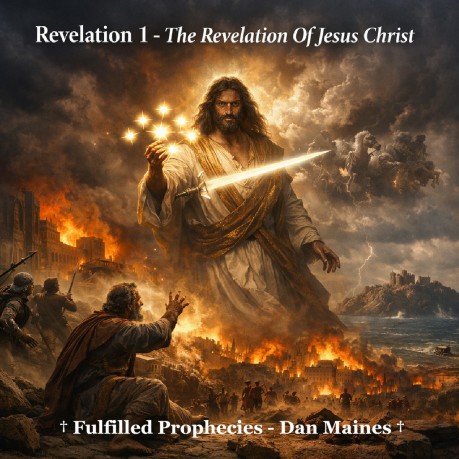
Revelation 1 - The Revelation
Of Jesus Christ Introduction † The book of Revelation is not a mystery about
events thousands of years in the future. The book tells us exactly
what it is about in the opening lines. It was a revelation given to
show Christ's servants what was about to happen in their time. The
timing statements are clear, repeated, and impossible to ignore. † Many people approach Revelation as if it were
written to people living 2000 years later, but the text itself says
the opposite. It was written to real churches facing real persecution
in the first century. Christ was revealing the approaching judgment
that was about to fall on the covenant-breaking nation that rejected
Him. † The opening chapter establishes the authority
of Christ, the nearness of the events, and the audience that would
experience these things. Everything that follows in the book must be
understood through this opening foundation. Revelation 1:1-2 The Revelation of Jesus Christ, which God gave Him to show to His
bond-servants, the things which must soon take place; and He sent and
communicated it by His angel to His bond-servant John, who testified
to the word of God and to the testimony of Jesus Christ, everything
that he saw. † The book begins with urgency. The things
revealed must soon take place. That language cannot honestly be
stretched into thousands of years. It meant exactly what it says, the
events were approaching in John's lifetime (Revelation 22:6). † Jesus used the same kind of time language
throughout the Gospels when He warned about the coming judgment on
Jerusalem. He repeatedly told His disciples those events would happen
within their generation (Matthew 24:34). † The prophecy was given to Christ's
bond-servants. That means the intended audience was the early
believers who were already suffering persecution and about to witness
the fulfillment of the warnings Jesus had spoken decades earlier
(Luke 21:20-22). † Eusebius records that John was exiled to
Patmos because of his testimony for Christ, which confirms the
historical setting of this revelation (Eusebius, Ecclesiastical
History 3.18). † The book both begins and ends with the same
statement that the events would happen soon, confirming that the
prophecy was about events approaching in the first century
(Revelation 1:1, Revelation 1:3, Revelation 22:6, Revelation 22:10). Revelation 1:3 Blessed is the one who reads, and those who hear the words of the
prophecy, and keep the things which are written in it; for the time
is near. † The blessing is directed to those who read
and hear the prophecy. Those readers were the first century churches
receiving the letter. It would make no sense to promise a blessing
for keeping something that would not occur for thousands of years
(Revelation 22:10). † The statement that the time is near
reinforces the urgency already stated in verse 1. The prophecy was
not sealed for distant generations but opened because the fulfillment
was approaching. † Daniel was told to seal his prophecy because
its fulfillment was far away (Daniel 12:4), but John was told the
opposite because the events were about to unfold. Revelation 1:4-5 John to the seven churches that are in Asia: Grace to you and
peace from Him who is, and who was, and who is to come, and from the
seven Spirits who are before His throne, and from Jesus Christ, the
faithful witness, the firstborn of the dead, and the ruler of the
kings of the earth. To Him who loves us and released us from our sins
by His blood— † The book was written to seven real churches
located in Asia Minor. These congregations existed in the first
century and were dealing with persecution, compromise, and pressure
from both Roman authority and unbelieving Jews. † Christ is described as the ruler of the kings
of the earth. That means His authority was already established
through His resurrection and ascension (Matthew 28:18). † The seven Spirits before the throne represent
the fullness and completeness of the Holy Spirit's presence and
activity (Isaiah 11:2). † The phrase firstborn of the dead refers to
Christ's resurrection as the beginning of the resurrection victory
that secured eternal life for His people (Colossians 1:18). Revelation 1:6 And He made us into a kingdom, priests to His God and Father, to
Him be the glory and the dominion forever and ever. Amen. † Believers had already been made into a
kingdom and priests. This shows the kingdom was not something waiting
to begin in the distant future. It already existed among Christ's
people (Colossians 1:13). † This fulfills the promise originally given to
Israel that they would be a kingdom of priests if they obeyed the
covenant (Exodus 19:6). † Through Christ the faithful remnant and
believing Gentiles were brought together into that priestly kingdom
(1 Peter 2:9). Revelation 1:7 Behold, He is coming with the clouds, and every eye will see Him,
even those who pierced Him; and all the tribes of the earth will
mourn over Him. So it is to be. Amen. † The language of coming with the clouds comes
directly from Daniel's prophecy about the Son of Man receiving
authority and judgment (Daniel 7:13-14). † The statement that those who pierced Him
would see this coming clearly places the fulfillment within the
lifetime of the generation responsible for His crucifixion (Matthew
23:35-36). † The tribes of the earth mourning refers to
the tribes of Israel, echoing the prophecy of national mourning
described by Zechariah (Zechariah 12:10-14). † The phrase tribes of the earth reflects the
language used for the tribes of Israel in the Old Testament and
connects directly with the mourning described in Zechariah's prophecy
(Zechariah 12:12-14). † Jesus used the same language about coming
with the clouds when speaking about the destruction of Jerusalem
within that generation (Matthew 24:30, Matthew 24:34). † Josephus records extraordinary signs seen in
the sky during the Roman siege of Jerusalem, including visions of
chariots and armies appearing in the clouds, imagery that echoes the
prophetic language used in scripture (Josephus, Wars 6.5.3). Revelation 1:8 "I am the Alpha and the Omega," says the Lord God, "who
is and who was and who is to come, the Almighty." † Christ declares Himself the Alpha and the
Omega, the beginning and the end. This title shows His authority over
all history and prophecy. † Every event described in Revelation unfolds
under His sovereign control. † The judgments described later in the book are
not accidents of history but deliberate acts of divine justice. Revelation 1:9 I, John, your brother and fellow participant in the tribulation
and kingdom and perseverance in Jesus, was on the island called
Patmos because of the word of God and the testimony of Jesus. † John identifies himself as a fellow
participant in the tribulation. That means the tribulation was
already happening in his time, not thousands of years later (Acts
14:22). † The early church experienced intense
persecution from both Roman authority and hostile Jewish leadership
(1 Thessalonians 2:14-16). † John's exile to Patmos demonstrates the cost
of faithful testimony during that time of persecution. † John does not speak of a future tribulation
but identifies himself as already sharing in it with the churches he
is writing to (Revelation 2:9-10). Revelation 1:10-11 I was in the Spirit on the Lord's day, and I heard behind me a
loud voice like the sound of a trumpet, saying, "Write in a book
what you see, and send it to the seven churches: to Ephesus, Smyrna,
Pergamum, Thyatira, Sardis, Philadelphia, and Laodicea." † The vision begins with a command to write and
send the message to seven specific churches. These congregations were
the first recipients of the prophecy. † Each of these churches is later addressed
directly in chapters two and three, showing that the message had
immediate relevance to their situation. † The trumpet-like voice echoes the prophetic
language used throughout scripture when God speaks with authority
(Exodus 19:16). Revelation 1:12-13 Then I turned to see the voice that was speaking with me. And
after turning I saw seven golden lampstands; and in the middle of the
lampstands I saw one like a son of man, clothed in a robe reaching to
the feet, and wrapped around the chest with a golden sash. † The lampstands are later identified as the
seven churches. This shows Christ standing among His churches,
watching over them and guiding them. † The title Son of Man again connects this
vision to Daniel's prophecy about the Messiah receiving authority and
judgment (Daniel 7:13). † The priestly robe shows Christ functioning as
both King and High Priest for His people (Hebrews 4:14). † Christ standing among the lampstands shows
that He was actively overseeing His churches and evaluating their
faithfulness, which is exactly what He does in the messages to the
seven churches in the following chapters (Revelation 2-3). Revelation 1:14-15 His head and His hair were white like white wool, like snow; and
His eyes were like a flame of fire. His feet were like burnished
bronze when it has been heated to a glow in a furnace, and His voice
was like the sound of many waters. † The description closely matches the imagery
of the Ancient of Days in Daniel's vision, emphasizing Christ's
divine authority and eternal nature (Daniel 7:9). † The eyes like fire symbolize His perfect
knowledge. Nothing is hidden from Him, including the deeds of the
churches He is about to evaluate (Hebrews 4:13). † The powerful voice like many waters reflects
the overwhelming authority of His command. Revelation 1:16 In His right hand He held seven stars, and out of His mouth came a
sharp two-edged sword; and His face was like the sun shining in its
strength. † The sharp sword represents the power of
Christ's word to judge and expose truth (Hebrews 4:12). † The seven stars are later identified as the
angels or messengers of the churches. † His radiant face reflects the glory revealed
at the transfiguration when the disciples briefly saw His divine
glory (Matthew 17:2). † The sword coming from His mouth symbolizes
the authority of His word to judge and expose truth, the same imagery
used throughout scripture for the power of God's word (Isaiah 11:4). Revelation 1:17-18 When I saw Him, I fell at His feet like a dead man. And He placed
His right hand on me, saying, "Do not be afraid; I am the First
and the Last, and the Living One; and I was dead, and behold, I am
alive forevermore, and I have the keys of death and of Hades." † John's reaction shows the overwhelming
holiness and glory of Christ. † Jesus identifies Himself as the one who died
and rose again, proving His victory over death. † Holding the keys of death and Hades means
Christ has authority over life, death, and final judgment (Romans
14:9). Revelation 1:19-20 Therefore, write the things which you have seen, and the things
which are, and the things which will take place after these things.
As for the mystery of the seven stars which you saw in My right hand,
and the seven golden lampstands: the seven stars are the angels of
the seven churches, and the seven lampstands are the seven churches. † Christ explains the symbols directly so the
churches would understand the vision. † The prophecy includes what John had already
seen, the present condition of the churches, and the events about to
unfold. † Christ standing among the lampstands assures
the believers that He had not abandoned them. He was present with
them during their trials and would soon bring justice. † Christ Himself explains the symbols so the
churches would understand the message, showing that Revelation is not
meant to remain mysterious but to be understood by its original
audience. Historical References † Eusebius records John's exile on Patmos and
confirms that Revelation was written during a time of persecution for
the early church. † Josephus provides detailed historical
accounts of the destruction of Jerusalem in AD 70 and reports unusual
signs in the sky that match the prophetic imagery used in scripture. † Clement of Alexandria and Tertullian both
testify that the apostles suffered persecution and exile for their
testimony, confirming the historical context of the tribulation
mentioned in Revelation. How It Applies To Us Today † Christ reigns now. His authority over the
kings of the earth did not begin in the future, it began with His
resurrection and ascension. † The fulfillment of these prophecies proves
that Jesus spoke truthfully when He warned that judgment was coming
upon that generation. † The same Lord who walked among the lampstands
in the first century still watches over His people today. † His victory over death assures believers that
death is not the end, because Christ holds the keys of death and
Hades. † Prophecy fulfilled strengthens our confidence
in the reliability of scripture and the faithfulness of God. Q & A Appendix Q: What does must soon take place mean in
Revelation 1:1? Q: Who were those who pierced Him in Revelation
1:7? Q: What tribulation was John referring to in
Revelation 1:9? Q: What do the lampstands represent? Q: If Revelation was written about events in the
first century, why does it say every eye will see Him? Q: Who are the seven churches mentioned in
Revelation 1? Q: Why does Revelation say the time is near? Q: What do the seven stars represent? Q: Why does Jesus appear with a sword coming from
His mouth? Q: What does it mean that Jesus holds the keys of
death and Hades? Q: Why did John fall at His feet like a dead
man? Q: Why are the churches called lampstands? Q: What does firstborn of the dead mean in
Revelation 1:5? Q: Why is Jesus called the ruler of the kings of
the earth? Q: Why does John call himself a fellow
participant in the kingdom? Q: Why were these things written to those
specific churches? Q: Why does Revelation begin by calling this book
the Revelation of Jesus Christ? † This is the fulfilled perspective we proclaim at
Fulfilled Prophecies † Source Index † Revelation 1:1-20; Daniel 7:9-14; Zechariah
12:10-14; Matthew 23:35-36; Matthew 24:30; Matthew 24:34; Hebrews
4:12-13; Colossians 1:13; Romans 14:9; Isaiah 11:4 † Eusebius, Ecclesiastical History 3.18;
Josephus, Wars 6.5.3; Clement of Alexandria, Stromata; Tertullian,
Apology 5
By Dan Maines
A: It means the events were
approaching in John's time. Scripture repeats the same timing
language throughout the book. See Revelation 1:1; Revelation 1:3;
Revelation 22:6; Revelation 22:10.
A: The people responsible for the
crucifixion of Jesus in the first century. Jesus said that generation
would bear the guilt for the blood of the prophets and for His death.
See Matthew 23:35-36; Acts 2:36.
A: The early church was already
experiencing persecution from both Roman authorities and unbelieving
Jews. John himself was exiled to Patmos because of the word of God
and the testimony of Jesus. See Revelation 1:9; Acts 14:22; 1
Thessalonians 2:14-16.
A:
Jesus explains the symbol directly. The lampstands represent the
seven churches in Asia Minor. See Revelation 1:20.
A:
The language comes from Old Testament judgment imagery where God is
described as coming in the clouds against nations. It does not
describe a physical descent visible to the entire planet. Isaiah used
the same language when God judged Egypt. Jesus used this same
prophetic imagery when speaking about the destruction of Jerusalem
within that generation. See Isaiah 19:1; Matthew 24:30; Matthew
24:34.
A: They were real congregations
in Asia Minor in the first century. Christ sent the prophecy directly
to them because they were facing persecution and needed to understand
what was about to happen. See Revelation 1:4; Revelation 1:11;
Revelation 2-3.
A:
Because the events were approaching in the lifetime of the original
audience. The book repeats this timing language several times to
emphasize urgency. See Revelation 1:1; Revelation 1:3; Revelation
22:6; Revelation 22:10.
A:
Jesus explains that the seven stars are the angels or messengers of
the seven churches. See Revelation 1:20.
A: The sword represents the
authority and power of His word to judge and expose truth. Scripture
repeatedly uses this imagery for the power of God's word. See Hebrews
4:12; Isaiah 11:4.
A: It means Christ has
authority over life, death, and judgment because of His resurrection.
See Revelation 1:18; Romans 14:9.
A: The overwhelming glory and holiness of
Christ caused John to collapse in awe. Similar reactions appear
throughout scripture when people encounter divine glory. See Daniel
10:8-9; Ezekiel 1:28.
A:
Lampstands symbolize light. The churches were called to shine the
light of the gospel in the world. See Matthew 5:14-16.
A: It means Christ is
preeminent in resurrection victory. He is the risen Lord whose
resurrection secured life for His people. See Revelation 1:5;
Colossians 1:18.
A: Because His authority was already
established through His resurrection and ascension. All authority had
already been given to Him. See Revelation 1:5; Matthew 28:18.
A: Because the
kingdom was already present in his day. Believers were already
sharing in Christ's kingdom while enduring tribulation and
perseverance. See Revelation 1:9; Colossians 1:13.
A: Because they were the
original audience and were the ones facing the conditions addressed
in the prophecy. Revelation was not first written to a distant future
generation but to real first century churches. See Revelation 1:11;
Revelation 2-3.
A: Because the
book reveals Christ in His authority, glory, judgment, and care for
His churches. It is the unveiling of Jesus Christ as reigning Lord.
See Revelation 1:1; Revelation 1:12-18.
© Fulfilled Prophecies - Dan
Maines.
Links