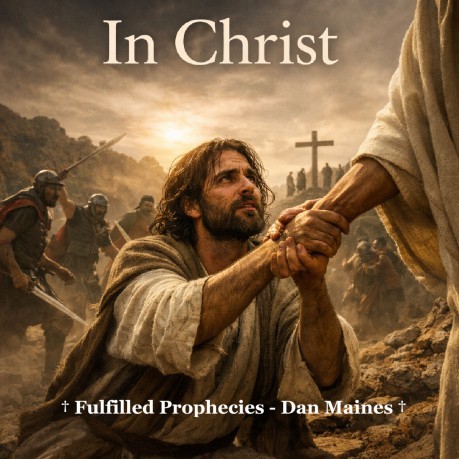
In Christ Introduction 2 Corinthians 5:17 Romans 8:38-39 John 10:28 Ephesians 1:13 1 John 5:11-13 1 Peter 1:3-5 Hebrews 6:4-6 1 Corinthians 3:13-15 Historical References How It Applies To Us Today Q & A Appendix Q Does eternal life mean it cannot be lost? Q What does it mean to be in Christ? Q Does Hebrews 6:4-6 teach that a saved person
can lose salvation? Q What determines whether someone is truly in
Christ? Q Can anything in creation separate a believer
from God's love? Q How do believers know they possess eternal
life? Q If a believer loses rewards, are they still
saved? Q What protects believers in their salvation? Q What is the difference between experiencing the
gospel and actually being in Christ? † This is the fulfilled perspective we proclaim at
Fulfilled Prophecies † Source Index
By Dan Maines
† The
central truth of the gospel is not religious performance, church
attendance, or moral improvement. The central truth is being IN
Christ. Scripture repeatedly teaches that salvation is located in a
person, not in a system.
† The New Testament
doesn't describe salvation as something fragile that believers
constantly lose and regain. Instead, it describes a permanent union
with Christ. If someone is truly IN Christ, they are a new creation
and nothing can separate them from Him.
† At
the same time, the Bible clearly distinguishes between salvation,
judgment, and rewards. These are not the same things. Many passages
about judgment deal with accountability and reward, not with the loss
of salvation.
† Understanding the difference
between being IN Christ and merely experiencing the blessings around
Christ is critical to understanding passages that are often
misunderstood.
Therefore, if anyone is
in Christ, he is a new creation; old things have passed away; behold,
all things have become new.
† Paul describes
a completed reality. The person who is in Christ is already a new
creation.
† The phrase old things have passed
away shows the complete change that happens when someone is united
with Christ. Their former standing under sin and condemnation is
gone.
† This verse explains identity, not
effort. Salvation is not about trying to become new, it is about
being made new through Christ.
For I am sure that neither
death nor life, nor angels nor rulers, nor things present nor things
to come, nor powers, nor height nor depth, nor anything else in all
creation, will be able to separate us from the love of God in Christ
Jesus our Lord.
† Paul lists every possible
category of power and authority. His point is simple, nothing in
creation has the power to break the believer's union with Christ.
†
The phrase things present nor things to come removes fear about the
future. Nothing that will ever happen can separate believers from the
love of God.
† The security of the believer
rests in God's love in Christ Jesus our Lord.
I give them eternal life, and
they will never perish, and no one will snatch them out of my hand.
†
Jesus defines the life He gives as eternal life. Eternal means
without end, not temporary life that can later disappear.
†
Christ also says they will never perish. This is a direct promise
from the Lord Himself about the security of those who belong to
Him.
† The believer's security rests in
Christ's authority and power. If no one can snatch them from His
hand, salvation is protected by the Son of God.
In him you also, when you
heard the word of truth, the gospel of your salvation, and believed
in him, were sealed with the promised Holy Spirit.
†
Paul explains that those who believe the gospel are sealed with the
Holy Spirit. A seal represents ownership, authority, and
protection.
† In the ancient world a seal
marked something as belonging to its owner. God places His seal on
those who are in Christ.
† This shows
salvation is secured by God's Spirit, not by human effort.
And this is the testimony,
that God gave us eternal life, and this life is in his Son.
Whoever
has the Son has life; whoever does not have the Son of God does not
have life.
I write these things to you who believe in the name
of the Son of God that you may know that you have eternal life.
†
John explains that eternal life is located in the Son. Salvation is
not found in human effort but in being united with Christ.
†
The contrast is clear. Whoever has the Son has life. Whoever does not
have the Son does not have life. The issue is union with Christ.
†
John says believers can know that they have eternal life. The gospel
produces certainty because life is secured in the Son of God.
Blessed be the God and Father
of our Lord Jesus Christ! According to his great mercy, he has caused
us to be born again to a living hope through the resurrection of
Jesus Christ from the dead,
to an inheritance that is
imperishable, undefiled, and unfading, kept in heaven for you,
who
by God's power are being guarded through faith for a salvation ready
to be revealed in the last time.
† Peter
explains that believers have an inheritance that is imperishable,
undefiled, and unfading. This means salvation is not something that
decays or disappears.
† He also says
believers are being guarded by God's power. The security of salvation
rests on God's power, not human strength.
†
This confirms what the other passages teach. Those who are truly in
Christ are protected and preserved by God Himself.
For it is impossible, in the
case of those who have once been enlightened, who have tasted the
heavenly gift, and have shared in the Holy Spirit,
and have
tasted the goodness of the word of God and the powers of the age to
come,
and then have fallen away, to restore them again to
repentance, since they are crucifying once again the Son of God to
their own harm and holding him up to contempt.
†
This passage describes people who experienced the blessings
surrounding the gospel but never actually entered into Christ.
†
The text says they were enlightened and tasted the heavenly gift.
Tasting something is not the same as possessing it.
†
These individuals witnessed the power of the coming age and the work
of the Holy Spirit during the first century, yet they ultimately
rejected Christ.
† The warning shows the
seriousness of rejecting Christ after clearly seeing the truth about
Him.
each one's work will
become manifest, for the Day will disclose it, because it will be
revealed by fire, and the fire will test what sort of work each one
has done.
If the work that anyone has built on the foundation
survives, he will receive a reward.
If anyone's work is burned
up, he will suffer loss, though he himself will be saved, but only as
through fire.
† This passage clearly
distinguishes between salvation and rewards. A believer may lose
reward, yet he himself will be saved.
† Paul
shows that judgment for believers concerns the quality of their
works, not the security of their salvation.
†
This proves salvation, judgment, and rewards are not the same thing.
Salvation is secured in Christ, while rewards are based on works.
†
Justin Martyr explained that believers receive new life through
Christ and become new creations through Him, emphasizing the
permanence of the life given by Christ.
†
Irenaeus taught that life comes through union with the Son of God and
that those who receive Him receive life that cannot be taken away.
†
Clement of Alexandria wrote that salvation comes through
participation in Christ Himself and not merely through knowledge
about Him.
† Eusebius recorded that early
Christians believed eternal life was secured through the completed
work of Christ and the new life He gives to believers.
†
Being IN Christ means our identity is no longer defined by our past
sins or failures. In Christ we stand as new creations.
†
Our confidence doesn't come from our performance. It comes from the
finished work of Jesus Christ.
† Salvation,
judgment, and rewards are not the same. A believer may be evaluated
for works, yet his salvation remains secure in Christ.
†
The most important question for every person is whether they are
truly IN Christ.
A
Yes. John 10:28 says Jesus gives eternal life and they will never
perish, and no one will snatch them out of His hand.
A
2 Corinthians 5:17 teaches that anyone who is in Christ is a new
creation and the old things have passed away.
A No. Hebrews 6:4-6
describes people who experienced the blessings surrounding the gospel
but ultimately rejected Christ rather than truly belonging to Him.
A Scripture shows that those who
believe the gospel and are united with Christ become new creations. 2
Corinthians 5:17 teaches that if anyone is in Christ, he is a new
creation and the old things have passed away.
A No. Romans 8:38-39 says
neither death nor life, angels nor rulers, things present nor things
to come, nor anything else in all creation will be able to separate
us from the love of God in Christ Jesus our Lord.
A 1 John 5:11-13 explains that God has
given eternal life and this life is in His Son, and those who believe
in the name of the Son of God may know that they have eternal life.
A Yes. 1 Corinthians 3:13-15 teaches
that if someone's work is burned up he will suffer loss, yet he
himself will be saved.
A
1 Peter 1:3-5 explains that believers have an inheritance that is
imperishable and are guarded by God's power through faith.
A Hebrews
6:4-6 describes people who experienced the blessings around the
gospel and witnessed its power but ultimately rejected Christ rather
than truly belonging to Him.
© Fulfilled Prophecies - Dan
Maines.
† 2
Corinthians 5:17, Romans 8:38-39, John 10:28, Ephesians 1:13, 1 John
5:11-13, 1 Peter 1:3-5, Hebrews 6:4-6, 1 Corinthians 3:13-15
†
Justin Martyr, First Apology; Irenaeus, Against Heresies; Clement of
Alexandria, Stromata; Eusebius, Ecclesiastical History
Links