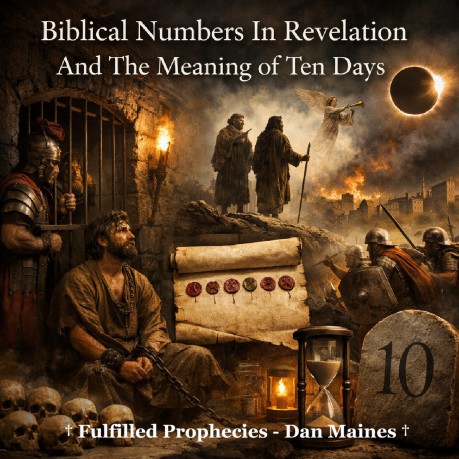
Biblical Numbers In
Revelation And The Meaning Of Ten Days Introduction † Revelation is structured around numbers that
communicate covenant meaning, not random statistics (Revelation 1:1). † If we mishandle the numbers, we distort the
message given to the first century churches (Revelation 1:3). † The fulfilled perspective keeps the numbers
inside the time boundaries Jesus Himself gave (Matthew 24:34). Revelation 2:10 Do not fear what you are about to suffer. Behold, the devil is
about to cast some of you into prison, so that you will be tested,
and you will have tribulation for ten days. Be faithful until death,
and I will give you the crown of life. † The Lord explicitly says you will have
tribulation for ten days, which describes a defined, measured period
of testing, not automatically a ten year formula (Daniel 1:12-15). † The number ten in Scripture regularly
signifies completeness within limits, such as the ten plagues that
completed judgment on Egypt (Exodus 12:29). † The language about imprisonment and testing
shows this was imminent first century persecution directed at a real
congregation (Revelation 1:9). Daniel 1:12-15 Please test your servants for ten days, and let us be given some
vegetables to eat and water to drink. Then let our appearance be
observed in your presence and the appearance of the youths who are
eating the king's choice food, and deal with your servants according
to what you see. So he listened to them in this matter and tested
them for ten days. At the end of ten days their appearance seemed
better and they were fatter than all the youths who had been eating
the king's choice food. † Daniel's ten days was a literal, defined
period of testing that had a clear beginning and end, showing that
ten days in Scripture can represent a measured probationary trial
(Daniel 1:12-15). † The testing language in Daniel mirrors the
testing language in Revelation, strengthening the connection between
the two passages (Revelation 2:10). † In both cases, the ten day period results in
vindication after faithful endurance, reinforcing covenant testing
rather than a coded decade timeline (James 1:12). Revelation 1:1 The Revelation of Jesus Christ, which God gave Him to show to His
bond servants, the things which must soon take place, and He sent and
communicated it by His angel to His bond servant John, † The phrase must soon take place governs every
number in the book and anchors them in the lifetime of the original
readers (Revelation 22:6). † If soon is stretched into thousands of years,
then the numerical timeframes lose their relevance to the audience
addressed (Revelation 1:3). † The seals, trumpets, and bowls unfold under
this declared nearness (Revelation 22:10). Revelation 11:2-3 Leave out the court which is outside the temple and do not measure
it, for it has been given to the nations, and they will tread under
foot the holy city for forty-two months. And I will grant authority
to my two witnesses, and they will prophesy for one thousand two
hundred and sixty days, clothed in sackcloth. † Forty-two months equals one thousand two
hundred and sixty days, showing deliberate equivalence rather than
separate chronological systems (Revelation 12:6). † These numbers echo time, times, and half a
time, which represents a broken seven, a limited period cut short
(Daniel 7:25). † Half of seven signifies incomplete and
temporary judgment, reinforcing that the suffering had a divinely
fixed boundary (Daniel 12:7). Revelation 13:5 There was given to him a mouth speaking arrogant words and
blasphemies, and authority to act for forty-two months was given to
him. † The repetition of forty-two months emphasizes
restriction, not endless dominion (Revelation 17:8). † Authority was given, meaning it was permitted
and limited by God's decree (John 19:11). † The measured duration shows covenant judgment
unfolding within the generational limit Jesus gave (Matthew 24:34). Revelation 5:1 I saw in the right hand of Him who sat on the throne a book
written inside and on the back, sealed up with seven seals. † Seven seals reflect covenant completeness,
showing a full and finished cycle of judgment being opened in stages
(Leviticus 26:18). † Revelation repeatedly uses seven churches,
seven seals, seven trumpets, and seven bowls to signal totality
rather than random counting (Revelation 1:4). † The number seven is rooted in creation
completeness, reinforcing divine fullness in judgment (Genesis
2:2-3). Daniel 9:24 Seventy weeks have been decreed for your people and your holy
city, to finish the transgression, to make an end of sin, to make
atonement for iniquity, to bring in everlasting righteousness, to
seal up vision and prophecy and to anoint the most holy place. † Seventy weeks function symbolically as a
structured covenant period leading to redemptive fulfillment (Daniel
9:24). † Prophetic numbers already operated
symbolically before Revelation, so we shouldn't suddenly demand
wooden literalism in apocalyptic language (Daniel 7:25). † The goal of the seventy weeks was to seal up
vision and prophecy, showing fulfillment language tied directly to
numeric prophecy (Daniel 9:24). Psalm 50:10 For every beast of the forest is Mine, The cattle on a thousand
hills. † One thousand in Scripture often represents
fullness or magnitude, not a literal numeric inventory (Deuteronomy
7:9). † Revelation's one thousand years fits within
this established biblical pattern of symbolic fullness (Revelation
20:2). † The numerical language of Revelation is
consistent with the broader biblical use of numbers as covenant
markers (Revelation 1:1). Matthew 24:34 Truly I say to you, this generation will not pass away until all
these things take place. † This generation establishes the outer
boundary for every numerical period in Revelation (Luke 21:32). † The tribulation language in Revelation
mirrors the tribulation Jesus limited to His contemporaries (Matthew
24:21). † No number in Revelation can honestly be
stretched beyond the generation Christ identified (Matthew 16:28). Historical References † Tacitus records Nero's persecution of
Christians, confirming first century tribulation within a defined
historical window. † Eusebius documents Nero's violent oppression,
aligning with the limited timeframes described in Revelation. † Josephus details the progressive judgments
culminating in Jerusalem's fall, reflecting Revelation's structured
numerical cycles. † Irenaeus acknowledges first century
persecution under Nero, reinforcing that the suffering addressed was
historical, not futuristic. † Clement of Rome wrote of suffering and
persecution in his own generation, confirming that tribulation was
already unfolding in the first century church. How It Applies To Us Today † Understanding biblical numbers protects us
from speculative systems that stretch time statements beyond their
meaning. † Christ controlled the duration and intensity
of tribulation, and He fulfilled what He declared. † When numbers are misunderstood, fear based
systems are built, but when numbers are understood covenantally,
fulfillment becomes visible and confidence replaces speculation. † When we respect the numerical structure, we
see order, limitation, and fulfillment instead of delay. Q & A Appendix Q: Does ten days mean ten literal years? A: Scripture shows ten functioning as a complete
but limited measure, such as in Daniel's ten day test and the ten
plagues, so there's no textual demand to convert it into ten calendar
years (Daniel 1:12-15; Exodus 12:29). Q: Are forty-two months and one thousand two
hundred and sixty days literal modern math? A: Their equivalence and connection to Daniel's
time, times, and half a time show symbolic covenant measurement of a
limited period (Daniel 7:25; Revelation 12:6). Q: What about the one thousand years? A: Scripture uses one thousand to express
fullness and magnitude, and Revelation's thousand year language
follows that established biblical pattern (Psalm 50:10; Revelation
20:2). Q: If ten days is symbolic, how do we know any
number is literal? A: Context determines meaning. Historical
narrative uses numbers plainly, but apocalyptic prophecy uses
symbolic structure, imagery, and repeated numeric patterns to
communicate covenant realities (Revelation 1:1; Daniel 7:25). Q: Why didn't John just say it was symbolic? A: Apocalyptic literature communicates through
signs and symbols by design, and Revelation openly states it was
signified, meaning communicated in symbolic form (Revelation 1:1). Q: Doesn't symbolic mean it's not real? A: No. Symbolic describes how something is
communicated, not whether it happened. The destruction of Jerusalem
was literal history, but it was described in symbolic prophetic
language (Matthew 24:29-34; Josephus, Wars of the Jews 6.4-5). Q: Could ten days still refer to a specific short
Roman persecution? A: Yes, it refers to a defined period of
persecution in their lifetime, but the number communicates measured
completeness, not a hidden decade code (Revelation 2:10; Tacitus,
Annals 15.44). Q: Why must the numbers stay within the first
century? A: Because Jesus said all these things would
occur before that generation passed, and that boundary governs the
entire prophetic framework (Luke 21:32). † This is the fulfilled perspective we proclaim at
Fulfilled Prophecies † © Fulfilled Prophecies - Dan Maines. Source Index † Revelation 2:10; 1:1, 3; 5:1; 11:2-3; 13:5;
20:2; 22:6, 10; Matthew 24:21, 34; 16:28; Luke 21:32; Daniel 1:12-15;
7:25; 9:24; 12:7; Psalm 50:10; Exodus 12:29; Genesis 2:2-3; Leviticus
26:18; Deuteronomy 7:9; John 19:11 † Tacitus, Annals 15.44; Eusebius,
Ecclesiastical History 2.25; Josephus, Wars of the Jews 6.4-5;
Irenaeus, Against Heresies 5.30.3; Clement of Rome, First Epistle to
the Corinthians
By Dan Maines
Links