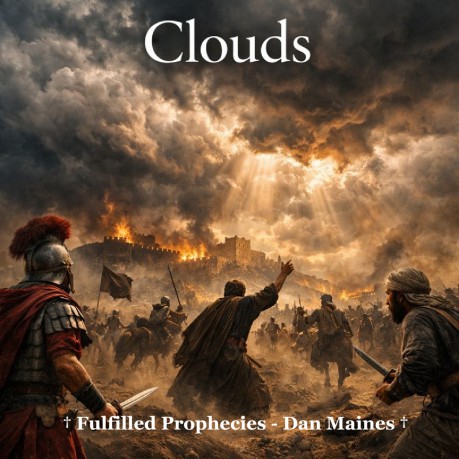
Clouds Introduction † The Bible uses clouds consistently as
covenantal and judgment imagery, not as a literal description of God
physically riding atmospheric clouds. Psalm 104:3 † Clouds are established early as poetic
imagery for divine action, not literal transportation (Psalm
104:3). Isaiah 19:1 † This is judgment language, not a literal
visible appearance of God in the sky (Isaiah 19:1). Jeremiah 4:13-14 † The one going up like clouds refers to the
invading force God used as His instrument (Jeremiah 4:13). Ezekiel 30:3 † The day of the Lord is a historical judgment
event (Ezekiel 30:3). Isaiah 13:9-13 † Cosmic collapse language describes national
judgment, not literal astronomy (Isaiah 13:10). Daniel 7:13-14 † The Son of Man comes with clouds toward
heaven, not down to earth (Daniel 7:13). Ezekiel 30:18-19 † Darkness and clouds describe national
humiliation and loss of power (Ezekiel 30:18). Nahum 1:2-6 † Clouds as the dust beneath His feet emphasize
authority (Nahum 1:3). Zephaniah 1:14-17 † Clouds accompany warfare and covenant
collapse (Zephaniah 1:15). Joel 2:1-11 † God comes in judgment through an army (Joel
2:11). † Revelation 1:7 borrows Old Testament cloud
judgment language, it doesn't introduce a new kind of coming. Historical References † Josephus describes Jerusalem's destruction
using cosmic and divine judgment language (Josephus, Wars of the
Jews, Book 6, Chapters 4-5). How It Applies To Us Today † God is known by what He does, not by
spectacle. Q & A Appendex Q What do clouds represent in Scripture? Q Did Jesus come in judgment in AD 70? Q Why is this misunderstood? Q What does it mean that clouds are the dust of
His feet? Q If clouds are symbolic, why does Jesus use the
same language in Matthew 24? Q Does "coming on the clouds" ever mean
a literal descent in the Bible? Q How can every eye see Him if the coming is
spiritual? Q Why do people expect a physical return if
Scripture doesn't teach one? Q Does believing in spiritual comings deny God's
involvement today? † This is the fulfilled perspective we proclaim at
Fulfilled Prophecies † Source Index † Psalm 104:3; Isaiah 19:1; Jeremiah 4:13-14;
Ezekiel 30:3, 18-19; Isaiah 13:9-13; Daniel 7:13-14; Nahum 1:2-6;
Zephaniah 1:14-17; Joel 2:1-11
By Dan Maines
† From
Genesis through Revelation, clouds signify God's presence, authority,
and intervention from heaven into earthly affairs.
†
When Scripture says God comes with clouds, it's describing divine
action in judgment, usually carried out through historical events and
nations.
He lays the beams of His upper
chambers in the waters; He makes the clouds His chariot; He walks
upon the wings of the wind.
† This imagery sets the interpretive
foundation used by later prophets (Psalm 104:3).
†
Israel already understood clouds as symbolic language long before
apocalyptic prophecy developed.
The oracle concerning Egypt.
Behold, the Lord is riding on a swift cloud and is about to come to
Egypt; The idols of Egypt will tremble at His presence, And the heart
of the Egyptians will melt within them.
†
Egypt's idols trembling shows authority being stripped away, not God
becoming physically visible (Isaiah 19:1).
†
The coming was made known by what happened in Egypt, God acted
through historical judgment (Isaiah 19:1).
Behold, he goes up like
clouds, And his chariots like the whirlwind; His horses are swifter
than eagles. Woe to us, for we are ruined!
Wash your heart from
evil, O Jerusalem, That you may be saved. How long will your wicked
thoughts Lodge within you?
†
Clouds describe speed, inevitability, and divine authorization of
judgment (Jeremiah 4:13).
† The warning to
Jerusalem shows covenant judgment unfolding in history, not the end
of the planet (Jeremiah 4:14).
For the day is near, Even the
day of the Lord is near; It will be a day of clouds, A time of doom
for the nations.
† A day of clouds means
God intervenes without bodily appearance (Ezekiel 30:3).
†
Doom for the nations confirms covenantal judgment language (Ezekiel
30:3).
Behold, the day of the Lord
is coming, Cruel, with fury and burning anger, To make the land a
desolation; And He will exterminate its sinners from it.
For the
stars of heaven and their constellations Will not flash forth their
light; The sun will be dark when it rises And the moon will not shed
its light.
Thus I will punish the world for its evil And the
wicked for their iniquity; I will also put an end to the arrogance of
the proud And abase the haughtiness of the ruthless.
I will make
mortal man scarcer than pure gold And mankind than the gold of
Ophir.
Therefore I will make the heavens tremble, And the earth
will be shaken from its place At the fury of the Lord of hosts In the
day of His burning anger.
†
Heavens and earth shaking refers to covenantal order being dismantled
(Isaiah 13:13).
† Babylon's historical fall
proves this language is symbolic and fulfilled.
I kept looking in the night
visions, And behold, with the clouds of heaven One like a Son of Man
was coming, And He came up to the Ancient of Days And was presented
before Him.
And to Him was given dominion, Glory and a kingdom,
That all the peoples, nations, and men of every language Might serve
Him. His dominion is an everlasting dominion Which will not pass
away; And His kingdom is one Which will not be destroyed.
†
Cloud coming here is about receiving authority and dominion (Daniel
7:14).
† Jesus applies this passage to
Himself, defining His coming as judicial and covenantal.
In Tehaphnehes the day will
be dark When I break there the yoke bars of Egypt. Then the pride of
her power will cease in her; A cloud will cover her, And her
daughters will go into captivity.
Thus I will execute judgments
on Egypt, And they will know that I am the Lord.
†
Captivity reveals the reality of God's coming (Ezekiel 30:18).
†
They know the Lord through judgment, not physical sight (Ezekiel
30:19).
A jealous and avenging God is
the Lord; The Lord is avenging and wrathful.
The Lord takes
vengeance on His adversaries, And He reserves wrath for His
enemies.
The Lord is slow to anger and great in power, And the
Lord will by no means leave the guilty unpunished.
In whirlwind
and storm is His way, And clouds are the dust beneath His feet.
He
rebukes the sea and makes it dry; He dries up all the rivers. Bashan
and Carmel wither; The blossoms of Lebanon wither.
Mountains
quake because of Him And the hills dissolve; Indeed the earth is
upheaved by His presence, The world and all the inhabitants in
it.
Who can stand before His indignation? Who can endure the
burning of His anger? His wrath is poured out like fire And the rocks
are broken up by Him.
† Nineveh's fall
confirms fulfillment in history (Nahum 1).
†
God's presence is known by outcome, not visibility.
Near is the great day of
the Lord, Near and coming very quickly; Listen, the day of the
Lord!
In it the warrior cries out bitterly.
A day of wrath
is that day, A day of trouble and distress, A day of destruction and
desolation, A day of darkness and gloom, A day of clouds and thick
darkness,
A day of trumpet and battle cry Against the fortified
cities And the high corner towers.
I will bring distress on men
So that they will walk like the blind, Because they have sinned
against the Lord; And their blood will be poured out like dust And
their flesh like dung.
† Trumpets and
battle confirm historical judgment (Zephaniah 1:16).
†
Near language demands first century fulfillment patterns.
Blow a trumpet in Zion, And
sound an alarm on My holy mountain! Let all the inhabitants of the
land tremble, For the day of the Lord is coming; Surely it is near,
A
day of darkness and gloom, A day of clouds and thick darkness.
As
the dawn is spread over the mountains, So there is a great and mighty
people; There has never been anything like it, Nor will there be
again after it To the years of many generations.
A fire consumes
before them And behind them a flame burns.
The land is like the
garden of Eden before them But a desolate wilderness behind them, And
nothing at all escapes them.
Their appearance is like the
appearance of horses; And like war horses, so they run.
With a
noise as of chariots They leap on the tops of the mountains, Like the
crackling of a flame of fire consuming the stubble, Like a mighty
people arranged for battle.
Before them the people are in
anguish; All faces turn pale.
They run like mighty men, They
climb the wall like soldiers; They each march in line, Nor do they
deviate from their paths.
They do not crowd each other, They
march everyone in his path; When they burst through the defenses,
They do not break ranks.
They rush on the city, They run on the
wall; They climb into the houses, They enter through the windows like
a thief.
Before them the earth quakes, The heavens tremble, The
sun and the moon grow dark And the stars lose their brightness.
The
Lord utters His voice before His army; Surely His camp is very great,
For strong is he who carries out His word.
The day of the Lord
is indeed great and very awesome, And who can endure it?
† Cloud language frames covenant
judgment (Joel 2:2).
† This imagery directly
parallels Revelation.
†
Every eye seeing Him refers to universal covenant impact through
historical events.
† Judgment is visible by
effect, not by bodily appearance.
† Eusebius
identifies Jesus' warnings as fulfilled in the fall of Jerusalem
(Eusebius, Ecclesiastical History, Book 3, Chapter 5).
†
Lactantius taught that God's judgments are recognized by historical
outcome, not physical sight (Lactantius, Divine Institutes, Book 7,
Chapter 16).
† Clement of Alexandria
emphasized spiritual discernment over physical vision (Clement of
Alexandria, Stromata, Book 6, Chapter 15).
† Cloud language teaches us how to
read Scripture faithfully.
† God's
sovereignty over history hasn't changed.
A
God's presence and covenant judgment, not physical visibility, Isaiah
19:1; Nahum 1:3; Ezekiel 30:3.
A
Yes, following the same prophetic pattern used throughout Scripture,
Isaiah 13:9-13; Joel 2:1-11.
A
Because prophetic imagery is read literally instead of covenantally,
Zephaniah 1:14-17.
A It means clouds symbolize God's
authority and movement in judgment, not physical visibility.
Scripture uses this imagery to show dominion and power expressed
through events, Nahum 1:3; Psalm 104:3.
A Because Jesus is
speaking as a covenant prophet, using the same judgment language God
used against Egypt, Babylon, and Nineveh. Matthew 24 follows the
established Old Testament pattern, Isaiah 13:9-13; Joel 2:1-11;
Matthew 24:29-34.
A No. Every
occurrence of cloud coming language refers to divine action in
judgment or authority, never a bodily descent visible to human eyes,
Isaiah 19:1; Daniel 7:13-14; Nahum 1:3.
A Every eye sees Him in the sense
that everyone experiences the results of His judgment. Scripture
consistently defines sight by perception of outcome, not optical
vision, Ezekiel 30:19; Revelation 1:7.
A Because
prophetic imagery is read literally instead of covenantally, just as
many in the first century expected a physical kingdom and missed its
spiritual fulfillment, Matthew 16:27-28; John 6:15.
A No. It affirms that God is
actively ruling history now, just as He always has, intervening
through nations, events, and judgment without needing to appear
bodily, Joel 2:11; Psalm 103:19.
© Fulfilled Prophecies - Dan
Maines.
† Josephus,
Wars of the Jews, Book 6, Chapters 4-5; Eusebius, Ecclesiastical
History, Book 3, Chapter 5; Lactantius, Divine Institutes, Book 7,
Chapter 16; Clement of Alexandria, Stromata, Book 6, Chapter 15
Links