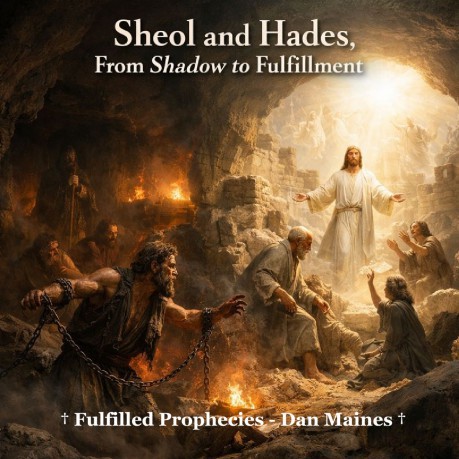
Sheol and Hades, From Shadow
to Fulfillment Introduction † Sheol and Hades are often misunderstood
because later traditions read ideas back into the text that weren't
there in the first century. (Job 7:9; Isaiah 38:18) Ecclesiastes 9:10 Whatever your hand finds to do, do it with all your might, for
there is no activity or planning or knowledge or wisdom in Sheol
where you are going. † Solomon describes Sheol as the realm of the
dead, marked by the absence of earthly activity, not a place of
conscious torment. (Psalm 6:5) Psalm 16:10 For You will not abandon my soul to Sheol, nor will You allow Your
Holy One to undergo decay. † David speaks prophetically of deliverance
from Sheol, pointing beyond himself to the Messiah. (Acts 13:35-37) Acts 2:27 Because You will not abandon my soul to Hades, nor allow Your Holy
One to undergo decay. † Peter directly applies David's words to
Jesus, equating Sheol with Hades in Greek language. (Acts 2:31) Luke 16:23 In Hades he lifted up his eyes, being in torment, and saw Abraham
far away and Lazarus in his bosom. † Jesus uses a parabolic account familiar to
His Jewish audience to expose covenant reversal, not to map the
afterlife. (Luke 15:1-2) Matthew 27:52-53 And the tombs were opened, and many bodies of the saints who had
fallen asleep were raised, and coming out of the tombs after His
resurrection they entered the holy city and appeared to many. † This is the first explicit statement of
resurrection breaking the power of death following Christ's
resurrection. (1 Corinthians 15:20) Ephesians 4:8-10 Therefore it says, When He ascended on high, He led captive a host
of captives, and He gave gifts to men. † Paul describes a release of captives, which
only makes sense if people were held prior to Christ's victory.
(Isaiah 61:1) John 5:25-29 Truly, truly, I say to you, an hour is coming and now is, when the
dead will hear the voice of the Son of God, and those who hear will
live. † Jesus places resurrection within an
approaching hour that had already begun. (Matthew 4:17) Daniel 12:1-2 Now at that time Michael, the great prince who stands guard over
the sons of your people, will arise. And there will be a time of
distress such as never occurred since there was a nation until that
time, and at that time your people, everyone who is found written in
the book, will be rescued. † Resurrection is directly tied to Jerusalem's
time of distress, not the end of the physical world. (Matthew
24:21) Hebrews 12:22-24 But you have come to Mount Zion and to the city of the living God,
the heavenly Jerusalem, and to myriads of angels, † The righteous aren't said to be waiting,
they're described as already made perfect. (Hebrews 10:14) Revelation 20:13-14 And the sea gave up the dead which were in it, and death and Hades
gave up the dead which were in them, and they were judged, every one
of them according to their deeds. † John presents Hades as a temporary holding
state that would itself be abolished. (1 Corinthians 15:26) Acts 24:15 having a hope in God, which these men cherish themselves, that
there shall certainly be a resurrection of both the righteous and the
wicked. † Paul affirms resurrection applies to all, not
only believers. (John 5:28) Matthew 25:31-46 But when the Son of Man comes in His glory, and all the angels
with Him, then He will sit on His glorious throne. † This judgment scene fulfills covenant
separation, not a distant end of time event. (Matthew 24:30) Ezekiel 37:12-14 Therefore prophesy and say to them, Thus says the Lord GOD,
Behold, I will open your graves and cause you to come up out of your
graves, My people, and I will bring you into the land of Israel. † Resurrection language here is covenant
restoration, not physical bodies leaving dirt. (Hosea 6:1-2) Romans 6:3-7 Or do you not know that all of us who have been baptized into
Christ Jesus have been baptized into His death. † Paul defines resurrection as freedom from the
old master, not physical reanimation. (Romans 8:2) Isaiah 26:13-19 O LORD our God, other masters besides You have ruled us, † Isaiah uses resurrection language to describe
covenant restoration and deliverance, not biological resurrection.
(Isaiah 52:1-2) 2 Timothy 1:10 but now has been revealed by the appearing of our Savior Christ
Jesus, who abolished death and brought life and immortality to light
through the gospel, † Paul declares death abolished, not postponed.
(1 Corinthians 15:26) Historical References † Josephus describes Sheol and Hades as part of
first century Jewish understanding of the realm of the dead.
(Antiquities of the Jews 18.1.3) How It Applies To Us Today † We don't live under fear of Sheol or Hades
because Christ holds the keys of death and Hades. (Revelation 1:18) Q & A Appendix Q Was resurrection only for the righteous Q Why were the wicked raised Q What is the so called general resurrection Q Did resurrection mean everyone received eternal
life Q Is resurrection still happening today Q Where did the righteous go after resurrection † This is the fulfilled perspective we proclaim at
Fulfilled Prophecies † Source Index † Ecclesiastes 9:10; Psalm 16:10; Matthew
27:52-53; Acts 2:27; Luke 16:23; John 5:25-29; Daniel 12:1-2; Ezekiel
37:12-14; Isaiah 26:13-19; Romans 6:3-7; Acts 24:15; Matthew
25:31-46; Ephesians 4:8-10; Hebrews 12:22-24; 2 Timothy 1:10; 1
Corinthians 15:22-26; Revelation 20:13-14
By Dan Maines
†
Scripture presents Sheol in the Old Testament and Hades in the New
Testament as related terms, not competing doctrines. (Psalm 49:14;
Revelation 1:18)
† When we read them through
the fulfilled perspective, we see a consistent story that reaches its
resolution in Christ and the events of that generation. (Luke 21:22)
† This verse
reflects the common Hebrew understanding that Sheol was the grave or
state of death shared by all. (Job 14:10-12)
†
There's no hint here of reward or punishment, only the silence and
finality associated with death under the Old Covenant. (Psalm 115:17)
†
Sheol is shown as a condition that could be entered but wasn't meant
to hold God's faithful one permanently. (Hosea 13:14)
†
This sets the expectation that Sheol's power would be broken in God's
redemptive plan. (1 Corinthians 15:54-55)
†
Hades here isn't a fiery hell but the realm of the dead from which
Christ was raised. (Revelation 1:18)
† This
shows continuity between Old Testament Sheol and New Testament Hades.
(Psalm 49:15)
† The imagery draws
from Pharisaic thought to condemn their greed and self righteousness.
(Luke 18:9-14)
† The focus is on warning
Israel of impending judgment, not defining the eternal state of the
dead. (Luke 21:20-22)
† These
saints didn't remain in Hades, they were raised, showing Hades had
begun to release its captives. (Ephesians 4:8)
†
This event stands as a visible sign that resurrection wasn't merely
promised, it had already begun within that generation. (Matthew
16:27-28)
Now this expression, He
ascended, what does it mean except that He also had descended into
the lower parts of the earth.
He who descended is Himself also
He who ascended far above all the heavens, so that He might fill all
things.
† The lower parts of the earth
aligns with Jewish understanding of Sheol or Hades, not modern hell
imagery. (Psalm 63:9)
† Leading captivity
captive shows relocation from death's domain into Christ's completed
kingdom order. (Colossians 2:15)
For just as the Father has life in Himself, even so He
gave to the Son also to have life in Himself,
and He gave Him
authority to execute judgment, because He is the Son of Man.
Do
not marvel at this, for an hour is coming, in which all who are in
the tombs will hear His voice,
and will come forth, those who
did the good deeds to a resurrection of life, those who committed the
evil deeds to a resurrection of judgment.
†
Life and judgment are tied to His authority, not a distant future
age. (Daniel 7:13-14)
† This confirms
resurrection out of death was imminent for His generation. (John
11:25-26)
Many of those who sleep in the dust
of the ground will awake, these to everlasting life, but the others
to disgrace and everlasting contempt.
† This places resurrection within
Israel's covenant crisis, fulfilled in the first century. (Luke
21:23)
† Daniel distinguishes two outcomes,
life for the righteous and disgrace for the wicked. (Acts 24:15)
to the general
assembly and church of the firstborn who are enrolled in heaven, and
to God, the Judge of all, and to the spirits of the righteous made
perfect,
and to Jesus, the mediator of a new covenant, and to
the sprinkled blood, which speaks better than the blood of Abel.
†
This confirms a completed transition from death into the heavenly
covenant reality. (Ephesians 2:6)
† The
destination after release from Hades wasn't delay, it was
fulfillment. (Revelation 21:2)
Then death and Hades were
thrown into the lake of fire. This is the second death, the lake of
fire.
†
The dead are raised out of Hades for judgment, showing resurrection
included the wicked. (Acts 17:31)
† The
second death is the final removal of covenant death, not eternal
conscious torment. (Hebrews 8:13)
† Resurrection
for the wicked wasn't restoration but accountability. (Romans 2:5)
†
This aligns with judgment language throughout Scripture.
(Ecclesiastes 12:14)
All the
nations will be gathered before Him, and He will separate them from
one another, as the shepherd separates the sheep from the
goats.
These will go away into eternal punishment, but the
righteous into eternal life.
†
Eternal punishment refers to irreversible judgment, not endless
torment. (Jude 7)
† The righteous and wicked
outcomes mirror Daniel 12. (Daniel 12:2)
Then
you will know that I am the LORD, when I have opened your graves and
caused you to come up out of your graves, My people.
I will put
My Spirit within you and you will come to life, and I will place you
on your own land.
†
This establishes how Scripture consistently uses resurrection
imagery. (Isaiah 26:19)
† The same pattern
applies to the New Testament fulfillment. (Romans 11:15)
Therefore we
have been buried with Him through baptism into death, so that as
Christ was raised from the dead through the glory of the Father, so
we too might walk in newness of life.
For if we have become
united with Him in the likeness of His death, certainly we shall also
be in the likeness of His resurrection,
knowing this, that our
old self was crucified with Him, in order that our body of sin might
be done away with, so that we would no longer be slaves to sin,
for
he who has died is freed from sin.
†
Resurrection here is participation in Christ's victory over death and
sin. (Colossians 2:12)
† This confirms
resurrection language is covenantal and transformative. (2
Corinthians 5:17)
But
through You alone we confess Your name.
The dead will not live,
the departed spirits will not rise,
Therefore You have punished
and destroyed them,
And You have wiped out all remembrance of
them.
You have increased the nation, O LORD,
You have
increased the nation, You are glorified,
You have extended all
the borders of the land.
O LORD, they sought You in
distress,
They could only whisper a prayer,
Your chastening
was upon them.
As the pregnant woman approaches the time to give
birth,
She writhes and cries out in her labor pains,
Thus
were we before You, O LORD.
We were pregnant, we writhed in
labor,
We gave birth, as it seems, only to wind.
We could
not accomplish deliverance for the earth,
Nor were inhabitants
of the world born.
Your dead will live,
Their corpses will
rise.
You who lie in the dust, awake and shout for joy,
For
your dew is as the dew of the dawn,
And the earth will give
birth to the departed spirits.
† The contrast between those
who rise and those who do not shows judgment and renewal within
history. (Isaiah 24:21-22)
† This prophetic
pattern explains how resurrection language functions throughout
Scripture. (Ezekiel 37:1-14)
† Immortality is
revealed through the gospel, not delayed to a future age. (John
11:26)
† This confirms resurrection reached
its completion in Christ's redemptive work. (Hebrews 2:14-15)
† Josephus
records Pharisaic expectations of resurrection and judgment,
explaining the background of Jesus' warnings. (The Jewish War
2.8.14)
† Irenaeus taught that Hades was
temporary and that Christ's victory secured deliverance from it.
(Against Heresies 5.31)
† Tertullian
described Hades as a holding place prior to judgment, not the final
state. (On the Soul)
† Clement of Alexandria
taught that Christ proclaimed victory to those in Hades as part of
redemption. (Stromata Book 6)
† Hippolytus
connected resurrection and judgment with the covenant crisis
surrounding Jerusalem. (On Christ and Antichrist)
†
Eusebius linked divine judgment and vindication to the fall of
Jerusalem in the first century. (Ecclesiastical History Book 3)
†
Athanasius emphasized that Christ destroyed death's dominion rather
than postponing it. (On the Incarnation)
†
Epiphanius preserved early Christian debates on resurrection, showing
these doctrines were defined early. (Panarion)
†
We live in the reality of a finished covenant transition, not an
unfinished hope. (Hebrews 8:13)
† We walk in
newness of life now, not waiting for resurrection later. (Romans
6:4)
† We live under Christ's reign where
death has lost its authority. (1 Corinthians 15:26)
†
We proclaim life and freedom from sin, not fear driven religion.
(Romans 8:2)
† We've been brought into the
heavenly Jerusalem reality now. (Hebrews 12:22-24)
A
No. Scripture teaches a resurrection of both righteous and wicked.
(Acts 24:15)
A
They were raised for judgment and exposure, not restoration. (John
5:29)
A
Scripture describes a single resurrection event tied to judgment, not
a future series of resurrections. (Daniel 12:2)
A No. Some were raised to life and others
to disgrace and contempt. (Daniel 12:2)
A
No. Resurrection culminated when death was abolished. (1 Corinthians
15:26)
A
They are identified with the heavenly Jerusalem and the spirits of
the righteous made perfect. (Hebrews 12:22-23)
© Fulfilled Prophecies - Dan
Maines.
†
Josephus, Antiquities of the Jews; The Jewish War; Irenaeus, Against
Heresies; Tertullian, On the Soul; Clement of Alexandria, Stromata;
Hippolytus, On Christ and Antichrist; Eusebius, Ecclesiastical
History; Athanasius, On the Incarnation; Epiphanius, Panarion
Links