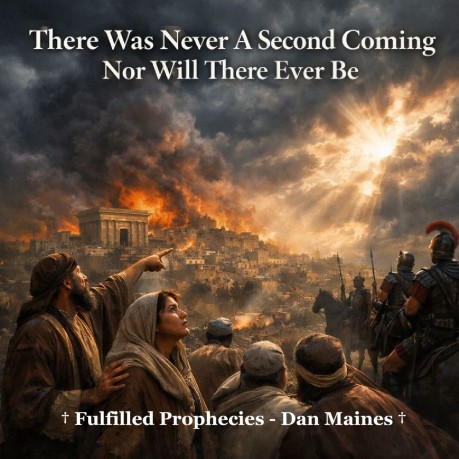
There
Was Never A Second Coming Nor Will There Ever Be Introduction † The phrase
Second Coming is deeply rooted in church tradition, yet it does not
appear anywhere in Scripture, not once, not in any book of the Bible
(Matthew 15:9; Colossians 2:8). Christ Promised Presence,
Not Absence John 14:16-18 I will ask the Father, and He will give
you another Helper, so that He may be with you forever, † Christ
promised continued presence forever, not absence followed by a later
rescue (Matthew 28:20; Hebrews 13:5). The Father's House Is
Covenant Dwelling John 14:1-3 Do not let your heart be troubled,
believe in God, believe also in Me. † Father's
house language refers to God's covenant household, not a future
location in the sky (Ephesians 2:19-22; 1 Timothy 3:15). † Coming again
is fulfilled through resurrection presence and Spirit indwelling
(John 14:23; Galatians 2:20). Christ In You Ends
Absence Theology Colossians 1:27 to whom God wanted to make known what
the wealth of the glory of this mystery among the Gentiles is,
namely, Christ in you, the hope of glory. † Christ in
you is present reality, not symbolic placeholder language (Romans
8:9-11; John 14:23). Hebrews 9 Never Teaches A
Second Coming Hebrews 9:26-28 Otherwise, He would have needed to
suffer often since the foundation of the world, but now once at the
consummation of the ages He has been revealed to put away sin by the
sacrifice of Himself. † The contrast
is between sin offering and appearing apart from sin, not incarnation
cycles (Hebrews 10:10-14; Romans 6:10). Resurrection Ends Any
Return To Mortality Romans 6:9 knowing that Christ, having been raised
from the dead, is never to die again, death no longer is master over
Him. † Scripture
explicitly forbids a return to mortal existence (Revelation 1:18;
Hebrews 7:25). Acts 1 Does Not Teach A
Future Physical Return Acts 1:9-11 And after He had said these things, He
was lifted up while they were watching, and a cloud took Him up, out
of their sight. † The angels
rebuke sky watching, not encourage it (Luke 17:20-21; John 18:36). Daniel 7 Defines Cloud
Coming Daniel 7:13-14 I kept looking in the night
visions, † The Son of
Man comes toward God, not toward earth (Psalm 110:1; Acts 2:33-36). Revelation Locks Timing
As Imminent Revelation 1:1-3 The Revelation of Jesus Christ, which
God gave Him to show His servants the things that must soon take
place, and He sent and communicated it by His angel to His servant
John, † Soon and
near are time words, not symbolic delays (Romans 13:11-12; James
5:9). Revelation 1:7
Behold, He
is coming with the clouds, and every eye will see Him, even
those who pierced Him; and all the tribes of the earth will mourn
over Him. So it is to be. Amen.
† They that
pierced him identifies the covenant generation involved in the
crucifixion and its judgment fallout (Acts 2:36; Zechariah 12:10). Revelation 22 Closes The
Door On Delay Revelation 22:6-7 And he said to me, These words are
faithful and true, and the Lord, the God of the spirits of the
prophets, sent His angel to show His servants the things that must
soon take place. † Revelation
ends exactly how it begins, with imminence (Revelation 1:1-3). Revelation 22:10 And he said to me, "Do not seal up
the words of the prophecy of this book, for the time is near.
† Not sealing
means near fulfillment, because sealing is what is done when
fulfillment is distant (Daniel 12:4; Daniel 12:9). The Day Of The Lord Was
Judgment, Not Rescue Matthew 24:29-34 But immediately after the tribulation
of those days the sun shall be darkened, and the moon shall not give
her light, and the stars shall fall from heaven, and the powers of
the heavens shall be shaken, † This
generation is the boundary, Christ tied fulfillment to their lifetime
(Matthew 16:27-28; Mark 13:30). Luke 21 Identifies The
Coming As Jerusalem's Judgment Luke 21:20-22
"But when you see Jerusalem surrounded by armies, then recognize
that her desolation is near. Then those who are in Judea must flee to
the mountains, and those who are inside the city must leave, and
those who are in the country must not enter the city; because these
are days of punishment, so that all things which have been written
will be fulfilled. † Jesus gives
a visible, local sign tied to Jerusalem, not a global end of the
world (Luke 19:41-44; Matthew 23:37-38). † Fleeing only
makes sense in a localized historical event, not a cosmic catastrophe
(Matthew 24:16-18; Mark 13:14). Matthew 23 Establishes
Covenant Guilt And Timing Matthew 23:35-36 that upon you may come all the
righteous blood shed on the earth, from the blood of Abel the
righteous unto the blood of Zachariah son of Barachiah, whom ye slew
between the sanctuary and the altar. † Jesus places
accumulated covenant guilt on that generation, not on a future one
(Genesis 4:10; Hebrews 11:4). † This
generation cannot be stretched without rewriting Jesus' words
(Matthew 11:16; Matthew 12:41-42). Acts 2 Shows Christ
Already Enthroned And Reigning Acts 2:33-36
Therefore, since He has been exalted at the right hand of God, and
has received the promise of the Holy Spirit from the Father, He has
poured out this which you both see and hear. For it was not David who
ascended into heaven, but he himself says: 'The
Lord said to my Lord, Therefore
let all the house of Israel know for certain that God has made Him
both Lord and Christ—this Jesus whom you crucified." † Christ is
already exalted and reigning, not waiting to reign later (Psalm
110:1; Ephesians 1:20-22). † Peter
declares Christ is Lord and Christ now, not after a second coming
(Romans 1:4; Colossians 2:10). Hebrews 12 Explains What
Was Shaken Hebrews 12:26-28
And His voice shook the earth then, but now He has promised, saying,
"Yet once more I will
shake not only the earth, but
also the heaven." This expression, "Yet once more,"
denotes the removing of those things which can be shaken, as of
created things, so that those things which cannot be shaken may
remain. Therefore, since we receive a kingdom which cannot be shaken,
let's show gratitude, by which we may offer to God an acceptable
service with reverence and awe; † Yet once
more means a final covenant transition, not repeated future shakings
(Hebrews 8:13; Hebrews 9:10). † This shaking
matches the end of the age language Jesus used, covenant collapse and
kingdom permanence (Matthew 24:3; Matthew 24:34). Covenant Death Defined By
Paul 1 Corinthians 15:26, 56 The last enemy that will be abolished
is death. † Paul defines
death as covenant death, not biology (Romans 7:9-11; Ephesians
2:1). The Covenant Body In 2
Corinthians 5 2 Corinthians 5:1-4
For we know that if our earthly tent which is our house is torn down,
we have a building from God, a house not made by hands, eternal in
the heavens. For indeed, in this tent we groan, longing to be
clothed with our dwelling from heaven, since in fact after putting it
on, we will not be found naked. For indeed, we who are in this tent
groan, being burdened, because we do not want to be unclothed but to
be clothed, so that what is mortal will be swallowed up by life. † Earthly
house language matches covenant dwelling language, tabernacle
language, not a modern biology debate (Hebrews 9:1; Hebrews 9:11). † Paul does
not desire disembodiment, he desires being clothed upon, covenant
covering and life (Philippians 3:9; Romans 8:10-11). Historical References † Josephus
recorded the siege, famine, fire, and the destruction of Jerusalem,
and his record matches the judgment framework Jesus foretold (Matthew
24:2; Luke 21:20-22). How It Applies To Us
Today † We don't
live as people waiting for Christ to arrive, we live as people in
whom Christ already dwells (Colossians 1:27; John 14:23). † We don't
interpret hardship as proof that prophecy failed, because the kingdom
was never promised as an escape from trouble (John 16:33; Acts
14:22).
By Dan Maines
†
The New Testament consistently speaks of Christ's coming, appearing,
presence, and judgment, all anchored to clear time statements given
to the original audience (Matthew 16:27-28; Revelation 1:1-3).
†
When tradition replaces the plain language of Scripture, fulfillment
is turned into endless delay (Mark 7:7-8; 2 Timothy 4:3-4).
that is
the Spirit of truth, whom the world cannot receive, because it does
not see Him or know Him, but you know Him because He remains with you
and will be in you.
I will not leave you as orphans, I am coming
to you.
†
The coming in view is realized through indwelling, not through
another incarnation (Colossians 1:27; Romans 8:10).
†
If He comes to them and remains in them, the idea of Him leaving and
returning collapses (John 17:21-23; 2 Corinthians 13:5).
In My Father's house are
many dwelling places, if it were not so, I would have told you,
because I am going there to prepare a place for you.
If I go and
prepare a place for you, I am coming again and will take you to
Myself, so that where I am, there you also may be.
†
Many dwelling places describes inclusion within one household, Jew
and Gentile together, not geography (Ephesians 3:6; Romans
15:9-12).
†
Preparing a place refers to priestly access accomplished through
Christ's work, not construction (Hebrews 9:11-12; Hebrews 10:19-22).
†
Where I am speaks of covenant position and shared life, not physical
location (Colossians 3:1-3; Romans 6:4-5).
†
John 14 teaches fulfillment, not postponement (2 Corinthians 1:20;
Hebrews 10:14).
†
Hope is anchored in completed work, not future arrival (Hebrews
10:12-14; Titus 2:11-13).
†
An indwelling Christ does not need to return (Matthew 28:20; Hebrews
13:5).
And just as it is destined for people to
die once, and after this comes judgment,
so Christ also, having
been offered once to bear the sins of many, will appear a second time
for salvation without reference to sin, to those who eagerly await
Him.
†
Consummation of the ages is covenant timing language, not end of the
physical universe (1 Corinthians 10:11; Hebrews 8:13).
†
Those awaiting Him were first century believers expecting covenant
completion (Hebrews 10:25; James 5:8-9).
†
Resurrection is final, not reversible (John 11:25-26; Hebrews
10:12).
†
The gospel moves forward, not backward (John 19:30; Hebrews 10:14).
And as they were gazing intently into the sky
while He was going, behold, two men in white clothing stood beside
them.
They also said, Men of Galilee, why do you stand looking
into the sky? This Jesus, who has been taken up from you into heaven,
will come in the same way as you have watched Him go into heaven.
†
In the same way refers to prophetic manner, cloud authority, not
physical mechanics (Isaiah 19:1; Psalm 104:3).
†
Acts 1 must harmonize with Jesus' own time statements (Matthew
16:27-28; Matthew 24:34).
†
If Acts 1 is forced into a far future physical descent, it collides
with Revelation's shortly, at hand, quickly language (Revelation
1:1-3; Revelation 22:6-7).
†
If it is forced into a global spectacle, it collides with Daniel 7
where the Son of man comes toward the Ancient of days to receive
dominion (Daniel 7:13-14; Acts 2:33-36).
†
Scripture interprets Scripture, not tradition interpreting one verse
in isolation (2 Peter 1:20-21; Acts 17:11).
And behold, with the clouds of heaven
One like a
Son of Man was coming,
And He came up to the Ancient of Days
And
was presented before Him.
And to Him was given dominion, honor,
and a kingdom,
So that all the peoples, nations, and populations
of all languages
Might serve Him.
His dominion is an
everlasting dominion
Which will not pass away,
And His
kingdom is one
Which will not be destroyed.
†
Cloud coming results in authority, not relocation (Ephesians 1:20-22;
Hebrews 1:3).
†
Acts 1 aligns with enthronement, not postponement (Luke 22:69;
Matthew 26:64).
who testified to the word of God and the testimony of
Jesus Christ, to all that he saw.
Blessed is the one who reads
and those who hear the words of the prophecy and keep the things that
are written in it, for the time is near.
†
Revelation defines its own timeframe (Revelation 22:6-7; Revelation
22:10).
†
Delaying this empties language of meaning (Numbers 23:19; Titus 1:2).
†
All the tribes connects to Israel tribal mourning, the same covenant
mourning Jesus described (Matthew 24:30; Matthew 23:35-36).
†
Cloud coming again matches prophetic judgment language, not a globe
wide travel event (Isaiah 19:1; Psalm 104:3).
And behold, I am coming quickly. Blessed is the
one who keeps the words of the prophecy of this book.
†
Quickly does not mean thousands of years (Habakkuk 2:3; Romans
13:11).
†
The blessing only makes sense if fulfillment was near to the audience
(Revelation 1:3; James 5:8).
†
Futurism reverses John's instruction by sealing it again with delay
(Revelation 22:10; Revelation 1:3).
†
The text will not allow a far future reading without contradiction
(Revelation 1:1-3; Revelation 22:6-7).
and then shall appear the sign of
the Son of man in heaven, and then shall all the tribes of the earth
mourn, and they shall see the Son of man coming on the clouds of
heaven with power and great glory.
And he shall send forth his
angels with a great sound of a trumpet, and they shall gather
together his elect from the four winds, from one end of heaven to the
other.
Now from the fig tree learn her parable, when her branch
is now become tender, and putteth forth its leaves, ye know that the
summer is nigh,
even so ye also, when ye see all these things,
know ye that he is nigh, even at the doors.
Verily I say unto
you, This generation shall not pass away, till all these things be
accomplished.
†
Tribes mourn, that is covenant judgment, not a worldwide worship
event (Matthew 23:35-36; Revelation 1:7).
†
Immediately after the tribulation of those days prevents a two
thousand year gap (Matthew 24:29; Luke 21:20-22).
†
The coming judgment is identified as days of vengeance, not days of
rescue (Deuteronomy 32:35; Isaiah 61:2).
†
All things which are written must be fulfilled refers to covenant
judgment prophecy, not future speculation (Daniel 9:26-27; Matthew
5:17-18).
†
Luke defines the tribulation in geographical terms, proving this is
not a worldwide future event (Luke 21:23; Luke 21:24).
†
Luke's account interprets Matthew 24 by grounding it in first century
Jerusalem history (Luke 21:20; Matthew 24:15).
Verily I say unto you, All
these things shall come upon this generation.
†
This establishes the timing for judgment language used in Matthew 24
(Matthew 24:34; Mark 13:30).
†
Covenant judgment always falls on those accountable under the
covenant (Amos 3:1-2; Romans 2:12).
†
The destruction of Jerusalem answers this charge historically and
judicially (Luke 13:34-35; Luke 21:6).
†
Matthew 23 and Matthew 24 form one continuous judgment discourse
(Matthew 23:38; Matthew 24:1-2).
"Sit
at My right hand,
Until
I make Your enemies a footstool for Your feet."'
†
The pouring out of the Spirit is proof of enthronement, not a
placeholder event (Joel 2:28-32; Hebrews 1:3).
†
Enemies being made a footstool is a process during His reign, not
after a future return (1 Corinthians 15:25; Hebrews 10:12-13).
†
The audience is the house of Israel, tying judgment and reign to
covenant accountability (Acts 2:36; Matthew 21:43).
†
Acts 2 leaves no room for a delayed kingdom or postponed authority
(Daniel 7:14; Luke 17:20-21).
†
Removing what is shaken is removal of the made system, the old
covenant world, not destruction of the physical cosmos (Hebrews 9:1;
Hebrews 9:9-10).
†
Receiving a kingdom is present tense reality for them, not postponed
hope (Colossians 1:13; Hebrews 12:28).
†
The unshakable kingdom is what remains, not an empty waiting room for
a future return (Daniel 7:14; Luke 17:20-21).
†
The text says the kingdom is received, not that it is delayed
(Hebrews 12:28; Ephesians 1:22-23).
The sting of death is sin, and the power of sin is the
Law.
†
The Law empowered that death (Colossians 2:14; Hebrews 8:13).
†
When the Law passed, covenant death passed (Romans 8:1; Hebrews
10:18).
†
Not made with hands is temple contrast language, old system versus
new covenant reality (Acts 7:48-49; Hebrews 9:24).
†
Nakedness is law exposure and shame, clothed is righteousness and
acceptance in Christ (Romans 3:19-24; Isaiah 61:10).
†
Mortal swallowed up of life matches the same victory language from 1
Corinthians 15 (1 Corinthians 15:54; John 5:24).
†
This is covenant transition, old giving way to new, not waiting for a
future physical return (Hebrews 8:13; Hebrews 10:19-22).
†
Eusebius recorded that believers fled Jerusalem before its fall,
consistent with Christ's warning to escape when armies surrounded the
city (Luke 21:20-21; Matthew 24:15-16).
†
These writers do not replace Scripture, but they confirm the
historical reality of the fulfillment context (Acts 26:26; Luke
1:1-4).
†
Faith is not built on delay, it is built on fulfilled promise and
present union (2 Corinthians 1:20; Galatians 2:20).
†
This removes fear driven theology and replaces it with assurance
(Romans 8:1; Hebrews 10:22).
†
The unshakable kingdom gives stability in shaking times, it does not
promise
Links