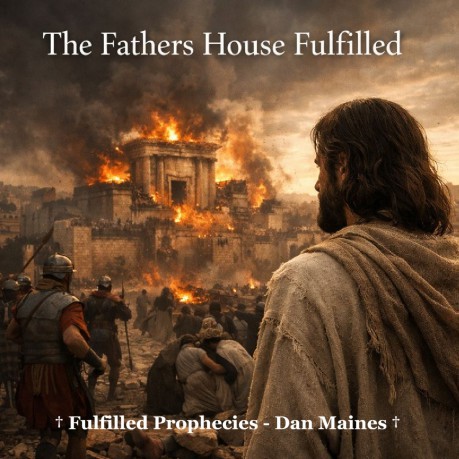
The Fathers House Fulfilled Introduction † Jesus was not comforting His disciples with
the promise of real estate in the sky, He was unveiling the
fulfillment of covenant access. (Hebrews 9:11-12) † Jesus spoke these words before the cross,
before the resurrection, and before the old covenant system was
removed, which governs how His promise must be understood. (John
13:1; Hebrews 9:9) John 14:1-3 † The Fathers house is not a location in the
sky, it's Gods covenant household. (Ephesians 2:19) Psalm 23:6 † David didn't expect to live inside a stone
building forever, he spoke of covenant dwelling and fellowship.
(Psalm 27:4) John 2:19-21 † Jesus identified Himself as the true temple,
the true dwelling place of God. (Colossians 2:9) Ephesians 2:19-22 † Paul explicitly defines the household of God
as a people, not a place. (Romans 8:15) † Jesus wasn't promising relocation, He was
promising access. (Hebrews 10:19) Galatians 3:28 † The many homes are not separate physical
dwellings scattered through heaven. (Romans 12:5) Ephesians 3:6 † Inclusion is the heart of this promise.
(Genesis 12:3) John 17:21-23 † This has nothing to do with omnipresence. (1
Kings 8:27) † Being where Christ is means sharing His
relationship with the Father, not occupying His divine nature.
(Romans 8:17) Hebrews 9:8 † As long as the old covenant system stood,
access remained limited. (Galatians 4:1-3) Hebrews 10:19-22 † When Jesus said He was going to prepare a
place, He spoke of His death, resurrection, and ascension. (Luke
9:31) † The letter to the Hebrews was written during
the final years of the temple system, addressing an imminent
transition that history confirms ended in AD 70. (Hebrews 8:13) † So the Fathers house is fulfilled.
(Revelation 21:3) Historical References † Josephus records the destruction of the
temple as the definitive end of the old covenant system. (Antiquities
of the Jews, Book 20) How It Applies To Us Today † We don't wait for access, we've been given
access. (Ephesians 3:12) † Every question about John 14 must be answered
from fulfillment, not postponement, because Jesus spoke truthfully
and history confirms its completion. (Matthew 24:34) Q & A Appendix Q Does this deny heaven? Q Does this mean believers become God? Q Was this promise fulfilled in the first
century? Q Did Jesus promise individual homes for
believers in heaven? Q Does being where Christ is mean believers share
His divine nature? Q Was the coming again of Christ a physical
return to establish access? Q Why was the destruction of the temple necessary
for this promise to be fulfilled? † This is the fulfilled perspective we proclaim at
Fulfilled Prophecies † Source Index † John 14:1-3; Psalm 23:6; John 2:19-21;
Ephesians 2:19-22; Galatians 3:28; Ephesians 3:6; John 17:21-23;
Hebrews 9:8; Hebrews 10:19-22
By Dan Maines
†
John 14 is spoken on the eve of the cross, in the shadow of the
temple, using language every first century Jew would immediately
recognize as covenantal and priestly. (Matthew 26:61)
†
This teaching only makes sense when read through Scripture itself and
through the completed work of Christ. (Luke 24:44)
Do not let your heart be
troubled, believe in God, believe also in Me. In My Fathers house are
many dwelling places, if it were not so, I would have told you,
because I go to prepare a place for you. And if I go and prepare a
place for you, I am coming again and will take you to Myself, so that
where I am, there you may be also.
†
Jesus is using temple language, not travel language, speaking to men
who lived and worshiped under a system defined by access and
restriction. (Hebrews 9:6-7)
† In Scripture,
the house of God is where God dwells with His people, not a
destination reached by death or flight. (Leviticus 26:11-12)
Certainly goodness and
faithfulness will follow me all the days of my life, And my dwelling
will be in the house of the Lord forever.
† Dwelling in the house of the
Lord meant living under His care, rule, and presence. (Psalm 91:1)
†
This establishes the biblical meaning of Gods house long before John
14. (Exodus 25:8)
Jesus answered them, Destroy
this temple, and in three days I will raise it up. Then the Jews
said, It took forty-six years to build this temple, and yet You will
raise it up in three days? But He was speaking about the temple of
His body.
†
This makes it impossible to read John 14 as a promise of buildings in
heaven. (Acts 17:24)
† The house of God is
now centered in Christ Himself. (1 Timothy 3:15)
So then you are no longer
strangers and foreigners, but you are fellow citizens with the
saints, and are of Gods household, having been built on the
foundation of the apostles and prophets, Christ Jesus Himself being
the cornerstone, in whom the whole building, being fitted together,
is growing into a holy temple in the Lord, in whom you also are being
built together into a dwelling of God in the Spirit.
† The
dwelling is corporate, covenantal, and present. (1 Corinthians
3:16)
† This is the fulfillment of what Jesus
promised in John 14. (Hebrews 12:22-23)
There is neither Jew nor
Greek, there is neither slave nor free, there is no male and female,
for you are all one in Christ Jesus.
†
The word means abiding places, dwelling places, room within the
household. (John 15:4)
† Under the old
covenant, access was restricted, under the new covenant, there is
room for many. (Isaiah 56:7)
The Gentiles are fellow heirs
and fellow members of the body, and fellow partakers of the promise
in Christ Jesus through the gospel.
† Jews and Gentiles together
now share equal standing before the Father. (Romans 10:12)
†
This is the many dwelling places Jesus spoke of. (Hebrews 2:11)
That they may all be one, just
as You, Father, are in Me and I in You, that they also may be in Us,
so that the world may believe that You sent Me. The glory which You
have given Me I also have given to them, so that they may be one,
just as We are one, I in them and You in Me, that they may be
perfected in unity, so that the world may know that You sent Me, and
that You loved them just as You loved Me.
† Believers aren't omnipresent
like God. (Psalm 139:7-10)
† Unity here is
covenantal unity, shared life, shared standing, shared access, not
shared deity. (1 Corinthians 1:30)
The Holy Spirit is signifying
this, that the way into the holy places has not yet been disclosed
while the first tabernacle is still standing.
†
This directly explains why a place still needed to be prepared.
(Hebrews 8:13)
† Preparation required the
removal of the old system. (Colossians 2:14)
Therefore, brothers and
sisters, since we have confidence to enter the holy place by the
blood of Jesus, by a new and living way which He inaugurated for us
through the veil, that is, His flesh, and since we have a great
priest over the house of God, let us approach with a sincere heart in
full assurance of faith, having our hearts sprinkled clean from an
evil conscience and our bodies washed with pure water.
† When He said He would come again and
receive them to Himself, that promise was fulfilled when the barrier
was removed. (Matthew 16:27-28)
† The
destruction of the temple confirmed the end of that system and the
fullness of access. (Luke 21:6)
† The place was prepared.
(John 19:30)
† The dwelling is corporate, not
geographic. (1 Peter 2:5)
† Believers don't
become God, they become members of Gods household, exactly what Jesus
promised. (Romans 8:16-17)
† Irenaeus spoke of the
church as the dwelling place of God through Christ. (Against
Heresies, Book 3)
† Eusebius identified the
fall of Jerusalem as the confirmation of Christ's fulfilled promises.
(Ecclesiastical History, Book 3)
† We don't look for
a future dwelling, we're already part of Gods household. (Hebrews
3:6)
† Our identity is covenantal, not
geographic. (Philippians 3:20)
† Faith rests
in what Christ finished, not in what people still expect. (Hebrews
4:3)
† This teaching gives assurance, not
uncertainty, because access to the Father is grounded in what Christ
finished, not in the moment of our death. (John 5:24)
A
No, it explains access to God through Christ, Hebrews 10:19-22.
A
No, believers become members of Gods household, Ephesians 2:19.
A Yes, the removal of the old covenant
system confirmed it, Hebrews 9:8.
A No, Jesus promised
access within the Fathers household, fulfilled through His work, not
separate physical dwellings, Ephesians 2:19-22; Hebrews 10:19-22.
A No, believers share
covenant relationship and inheritance, not deity, Romans 8:17; John
17:22-23.
A No, access was
established through His completed work and confirmed with the removal
of the old covenant system, Hebrews 9:8; Matthew 24:34.
A Because the
standing temple represented restricted access, which had to be
removed for full covenant access to be realized, Hebrews 8:13; Luke
21:6.
© Fulfilled Prophecies - Dan
Maines.
† Josephus,
Antiquities of the Jews; Irenaeus, Against Heresies; Eusebius,
Ecclesiastical History
Links