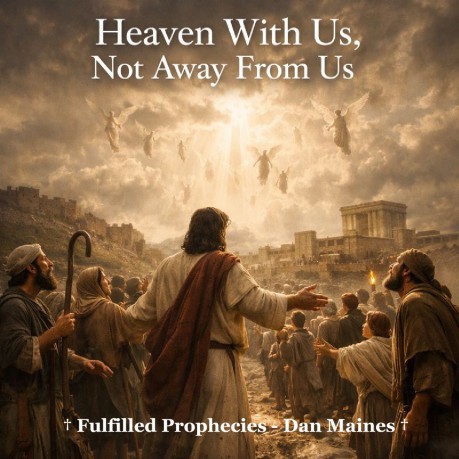
Heaven With Us, Not Away From
Us Introduction † I believe heaven isn't missing from us at
all, it's just not a future destination we're waiting to reach (John
17:3). Revelation 21:3 † This passage shows God coming to dwell with
men, not men going to dwell with God elsewhere (Ezekiel 37:27). Ephesians 2:22 † Paul teaches that believers are presently
God's dwelling place, not future occupants of a distant realm (1
Corinthians 3:16). John 1:14 † The incarnation reveals heaven entering earth
through Christ, not believers escaping creation (Matthew 1:23). Hebrews 12:22 † The writer uses present tense, showing this
reality had already been reached by believers (Ephesians 1:3). Colossians 1:13 † This is past tense language, showing the
transfer already occurred, not something awaited (Ephesians 2:6). 1 Peter 2:5 † Believers are described as God's present
dwelling, continuing the temple theme (1 Corinthians 6:19). Exodus 25:8 † God's stated purpose was dwelling among His
people on earth, not removing them from it (Exodus 29:45). Ezekiel 43:7 † God's throne language connects heaven with
rule, not distance (Psalm 103:19). Historical References † Irenaeus taught that God's redemptive goal
was His dwelling with redeemed humanity on earth (Against Heresies
5.36). How It Applies To Us Today † We don't live waiting to escape the earth, we
live knowing God dwells with us now (Matthew 28:20). Q & A Appendix Q If heaven is present now, where is it? Q Does this mean eternal life is future only? Q Did heaven replace the earth? Q What about being with the Lord when we die? Q If heaven is here now, why does Scripture speak
of it as above? Q Did believers before Christ have the same
access to heaven we do now? Q Why do many Christians still believe heaven is
only a future destination? † This is the fulfilled perspective we proclaim at
Fulfilled Prophecies † Source Index † Revelation 21:3; Ephesians 2:22; John 1:14;
Hebrews 12:22; Colossians 1:13; 1 Peter 2:5; Exodus 25:8; Ezekiel
43:7
By Dan Maines
† In Scripture, heaven is God's
dwelling and authority, not a place that replaces the earth (Psalm
115:16).
† Under the old covenant, heaven and
earth functioned together as a covenant system, now fulfilled in
Christ (Colossians 1:19-20).
† This view
doesn't deny heaven, it restores heaven to its biblical role as God's
present rule and dwelling among His people (Isaiah 66:1).
And I heard a loud voice
from the throne, saying, Behold, the tabernacle of God is among
people, and He will dwell among them, and they shall be His people,
and God Himself will be among them.
†
The emphasis is on presence, heaven is identified by God's dwelling,
not geography (John 14:23).
† This fulfills
the covenant promise of God dwelling among His people without
separation (Leviticus 26:11-12).
† The
language echoes earlier covenant promises where God's dwelling
defined blessing and life, not physical relocation (Psalm 132:13-14).
in whom you also are being
built together into a dwelling of God in the Spirit.
† Heaven is defined as
God's habitation, and that habitation is among His people now (2
Corinthians 6:16).
† This confirms that
heaven and earth were reconciled through Christ, not kept apart
(Isaiah 57:15).
† The dwelling language shows
covenant fulfillment, not delay, the goal has already been reached
(Isaiah 65:17-18).
And the Word became flesh, and
dwelt among us, and we saw His glory, glory as of the only Son from
the Father, full of grace and truth.
†
God's purpose has always been to dwell with humanity, not abandon the
earth (Exodus 29:45).
† The word dwelt
carries tabernacle meaning, pointing to covenant fulfillment in
Christ (Hebrews 8:2).
† First century Jews
understood God's dwelling as covenant presence, making this language
immediately recognizable to the original audience (Zechariah 2:10).
But you have come to Mount
Zion and to the city of the living God, the heavenly Jerusalem, and
to myriads of angels,
†
This passage speaks of access, not anticipation, heaven is entered
through Christ now (Luke 17:21).
† Heaven is
described as covenantal reality, not postponed inheritance (Romans
8:10).
† This aligns with first century
expectation that the kingdom would be established within that
generation (Daniel 9:26-27).
For He rescued us from the
domain of darkness, and transferred us to the kingdom of His beloved
Son,
†
The kingdom is entered now, reinforcing heaven as present authority
rather than future relocation (Revelation 1:6).
†
Deliverance is described as movement in covenant status, not physical
departure (Hebrews 13:14).
you also, as living stones, are
being built up as a spiritual house for a holy priesthood, to offer
spiritual sacrifices acceptable to God through Jesus Christ.
†
A spiritual house confirms heaven is where God dwells, not where we
travel (Psalm 127:1).
† This fulfills the
prophetic promise of God dwelling among His people without a physical
temple (Ezekiel 43:7).
Have them construct a sanctuary
for Me, so that I may dwell among them.
†
This covenant pattern sets the trajectory fulfilled in Christ (John
2:19-21).
† Heaven and earth function
together through covenant dwelling, not separation (Isaiah 8:18).
And He said to me, Son of man,
this is the place of My throne and the place of the soles of My feet,
where I will dwell among the sons of Israel forever.
† Forever
language points to covenant fulfillment, not endless delay (Hebrews
9:10).
† This promise reaches fulfillment
through Christ's completed work (John 19:30).
† Augustine described the City of God
as God's reign among His people rather than a distant location (City
of God, Book 20).
† Eusebius recorded that
the kingdom was inaugurated through Christ's reign and the church's
establishment (Ecclesiastical History 3.24).
†
Josephus recorded the destruction of the temple, marking the end of
the old covenant system that separated heaven and earth (Wars of the
Jews 6.4).
†
Our faith rests in presence, not postponement, because Christ has
brought heaven near (James 4:8).
† We walk in
confidence and obedience because God's authority and dwelling are
accessible today (Hebrews 4:16).
† This
understanding frees believers from fear based religion and grounds us
in faithful living now (Romans 8:1).
A
Heaven is God's dwelling and authority made present among His people
through Christ (John 14:23).
A
No, eternal life is knowing God now through Christ (1 John 5:11-12).
A
No, heaven and earth were reconciled in Christ, not replaced
(Colossians 1:20).
A
Scripture teaches continued fellowship with Christ, not a delay of
relationship, because life in Him is already established (2
Corinthians 5:8).
A Scripture uses above language
to describe authority and rule, not distance, showing God's throne
and sovereignty rather than a physical location (Isaiah 66:1).
A No, access was
restricted under the old covenant, but through Christ the separation
has been removed (Hebrews 10:19-20).
A That belief comes
from reading Scripture through later tradition instead of audience
relevance and covenant fulfillment (Matthew 23:36).
© Fulfilled Prophecies - Dan
Maines.
† Irenaeus, Against Heresies; Augustine,
City of God; Eusebius, Ecclesiastical History; Josephus, Wars of the
Jews
Links