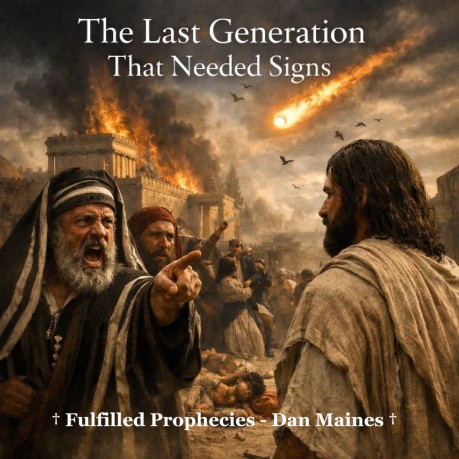
The
Last Generation That Needed Signs Introduction † Signs in
Scripture were never random displays of power meant to entertain or
convince believers. Matthew 12:38-42 Matthew 12:38 † The request
for a sign came from covenant leaders who already rejected Jesus. Matthew
12:39 † Jesus
identified the sign seekers as an adulterous generation, prophetic
covenant language. Matthew
12:40 † The sign
given was redemptive, not ongoing miraculous displays. Matthew
12:41 † Gentiles
repented without signs, Israel demanded signs and still refused. Matthew
12:42 † Wisdom was
sufficient for the Queen of Sheba. 1
Corinthians 1:22 † Paul
described an active covenant distinction, not a timeless rule. Hebrews 2:3-4 Hebrews
2:3 † The warning
was directed to a living covenant generation. Hebrews
2:4 † Signs bore
witness, they weren't the message. Deuteronomy
28:46 † Signs in the
Law were covenant curses. Deuteronomy
4:34 † Signs were
tied to covenant formation, not ongoing religious experience. Isaiah 28:16-21 Isaiah
28:16 "Behold, I am laying a stone in
Zion, a tested stone, † Christ is
presented as the true foundation, not signs. Isaiah
28:17 † Judgment
language dominates the context of signs. Isaiah 28:18 † Covenant
language is explicit, not generic. Isaiah
28:19 † The message
brings terror, not reassurance. Isaiah
28:20 † False
security is exposed. Isaiah
28:21 † Judgment is
called God's strange work, yet necessary. Isaiah
8:18 † Signs are
explicitly tied to Israel, not the nations. 1 Corinthians 14:21-22 1
Corinthians 14:21 † Paul quotes
covenant judgment language from Isaiah. 1
Corinthians 14:22 † Scripture
explicitly states signs aren't for believers. Historical References † Josephus
recorded signs in Jerusalem before its destruction, confirming
covenant judgment. How It Applies To Us
Today † We don't
need signs because the covenant transition is complete. Q & A Appendix Q
Why did signs stop after the first century? Q
Were signs meant to build faith in believers? Q
Does the absence of signs mean God is inactive today? Q
Should Christians expect signs today like in Acts? † This is the fulfilled
perspective we proclaim at Fulfilled Prophecies † Source Index † Matthew
12:38-42; 1 Corinthians 1:22; Hebrews 2:3-4; Deuteronomy 28:46;
Deuteronomy 4:34; Isaiah 28:16-21; Isaiah 8:18; 1 Corinthians
14:21-22
By Dan Maines
†
They were covenantal warnings aimed at a specific people living under
a specific covenant.
†
Once that covenant reached its appointed end, the need for signs
ended with it.
Then
some of the scribes and Pharisees said to Him, "Teacher, we want
to see a sign from You."
†
This wasn't honest doubt, it was covenant rebellion.
†
Signs were demanded by those accountable to the Law, not by
believers.
But He
answered and said to them, "An evil and adulterous generation
craves a sign; and so no sign will be given to it except the sign of
Jonah the prophet;
†
Adultery here refers to covenant unfaithfulness, not merely moral
failure.
†
Signs were limited to that generation, proving they weren't
perpetual.
for just
as Jonah
was in the stomach of the sea monster for three days and three
nights, so will the
Son of Man be in the heart of the earth for three days and three
nights.
†
Christ's death and resurrection marked the covenant transition
point.
†
After this sign, judgment on that covenant generation was certain.
The men
of Nineveh will stand up with this generation at the judgment, and
will condemn it because they repented at the preaching of Jonah; and
behold, something greater than Jonah is here.
†
Signs didn't produce faith, they exposed rebellion.
†
Accountability increased with greater revelation.
The Queen
of the South will rise up with this generation at the judgment and
will condemn it, because she came from the ends of the earth to hear
the wisdom of Solomon; and behold, something greater than Solomon is
here.
†
Israel rejected greater light while demanding proof.
†
Signs functioned as judicial testimony, not evangelistic tools.
For
indeed Jews ask for signs and Greeks search for wisdom;
†
Sign seeking identified Old Covenant Israel.
†
When the covenant ended, that identifying marker ended with it.
how will we
escape if we neglect so great a salvation? After it was at first
spoken through the Lord, it was confirmed to us by those who heard,
†
Confirmation was temporary and foundational.
†
Judgment language shows urgency tied to covenant transition.
God also
testifying with them, both by signs and wonders, and by various
miracles and by gifts of the Holy Spirit according to His own will.
†
Bearing witness indicates a completed function.
†
Once the covenant shift was complete, the witness was no longer
required.
And they
will become a sign and a wonder against you and your descendants
forever.
†
They functioned as warnings of judgment for disobedience.
†
Jesus and the apostles operated within this covenant framework.
Or has a
god ventured to go to take for himself a nation from within another
nation by trials, by signs and wonders, by war, by a mighty hand, by
an outstretched arm, and by great terrors, just as the Lord
your God did for you in Egypt before your eyes?
†
They marked Israel as a distinct covenant nation.
†
When that covenant ended, the signs tied to it ended as well.
Therefore
this is what the Lord God
says:
A precious cornerstone for the foundation,
firmly placed.
The one who believes in it will not be disturbed.
†
Faith rests on the cornerstone, not on visible wonders.
†
This directly opposes sign seeking as a basis for belief.
I will
make justice the measuring line
And righteousness the
level;
Then hail will sweep away the refuge of lies,
And
the waters will overflow the secret place.
†
Signs expose false refuge rather than produce saving faith.
†
Covenant breakers are being measured and removed.
†
This points to covenant annulment, not ongoing warning cycles.
†
Signs accompany covenant collapse, not covenant continuation.
As often
as it passes through, it will seize you;
For morning after
morning it will pass through, anytime during the day or night,
And
it will be sheer terror to understand what it means."
†
Signs function as judgment messengers.
†
Understanding comes through judgment, not spectacle.
The bed
is too short on which to stretch out,
And the blanket is too
small to wrap oneself in.
†
Signs reveal insufficiency of covenant refuge.
†
There's no rest for covenant breakers.
For the
Lord
will rise up as at Mount Perazim,
He will be stirred up as in
the Valley of Gibeon,
To do His task, His unusual task,
And
to work His work, His extraordinary work.
†
Signs accompany this strange work, not normal covenant life.
†
Once the work is finished, the signs cease.
Behold, I
and the children whom the Lord
has given me are for signs and wonders in Israel from the Lord
of armies, who dwells on Mount Zion.
†
They belong to a covenant people under judgment and warning.
†
This confines signs to a specific covenant context.
In
the Law it is written: "By
men of strange tongues and by the lips of strangers I will speak to
this people, and
even so they will not listen to Me,"
says the Lord.
†
Tongues are linked to warning a disobedient people.
†
Even signs don't guarantee repentance.
So
then, tongues are for a sign, not to those who believe but to
unbelievers; but prophecy is not for unbelievers, but for those who
believe.
†
This confirms the covenant breaker focus of signs.
†
Once the covenant ended, the sign function ended.
†
Eusebius stated apostolic signs confirmed the gospel's initial
spread.
†
Augustine taught miracles established the church, not sustained it.
†
Tacitus confirmed the devastation of Jerusalem from a Roman
historical perspective, supporting the finality of covenant judgment.
†
Faith rests on Christ's finished work, not warning signs.
†
Seeking signs today misunderstands their original covenant purpose.
A
Because their covenant purpose was fulfilled when the Old Covenant
ended, Matthew 12:39-40; Hebrews 2:3-4.
A
No, they were aimed at covenant breakers, 1 Corinthians 1:22;
Deuteronomy 28:46.
A
No, it means redemption is complete and final, Hebrews 1:1-2.
A
No. Acts records covenant transition, not a perpetual pattern,
Hebrews 2:3-4; 1 Corinthians 1:22.
©
Fulfilled Prophecies - Dan Maines.
†
1 Corinthians 13:8-10
†
Josephus, Wars of the Jews, Book 6
†
Eusebius, Ecclesiastical History, Book 3
†
Augustine, City of God, Book 22
†
Tacitus, Histories, Book 5
Links