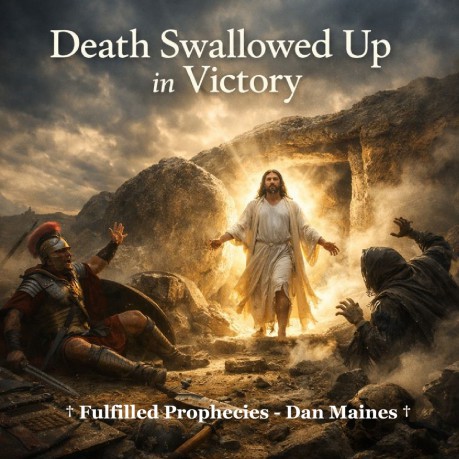
Death Swallowed Up in Victory Introduction † Paul's teaching on death in 1 Corinthians 15
is one of the most misunderstood passages in Scripture, not because
Paul was unclear, but because the kind of death he identified is
often assumed instead of defined (1 Corinthians 15:54-56). I believe the death Paul spoke of was not biological death, it was
covenant death, separation from God under sin and the Law. That death
entered through Adam, was empowered by the Law, and was swallowed up
when Christ fulfilled the Law and removed condemnation, bringing
covenant life and immortality to light in the gospel (1 Corinthians
15:54-56; Romans 5:12; Romans 7:9-10; 2 Corinthians 3:6-7; Colossians
2:14; 2 Timothy 1:10). Misidentifying that death as physical death is what causes so much
confusion in eschatology. 1 Corinthians 15:54-56 † Paul defines the death that is swallowed up
by identifying its sting and its power, not by appealing to biology
(1 Corinthians 15:56). 1 Corinthians 15:21-22 † Paul locates the entrance of death in Adam,
not in biology alone but in covenantal consequence (Romans 5:12). Romans 7:9-10 † Paul speaks of dying while physically alive,
proving this death was not biological (Romans 7:9). 2 Corinthians 3:6-7, 9 † Paul explicitly calls the Mosaic covenant the
ministry of death and condemnation (2 Corinthians 3:7, 9). Colossians 2:14 † Paul explains how death was abolished, by
removing the Law that empowered sin and condemnation. 2 Timothy 1:10 † The gospel abolished death, yet believers
continued to physically die after Christ's appearing, proving the
death abolished was not biological (Hebrews 9:27). Hebrews 2:14-15 † Covenant death produced fear and bondage
under condemnation, not fear of biology. 1 Corinthians 15:51-54 † The change described is corporate and
covenantal, not a biological transformation of individual bodies
(Ephesians 2:1-6). Historical References † Josephus described the destruction of
Jerusalem as the end of the Old Covenant world tied to the Law and
Temple, the very system Paul called the ministry of death (Josephus,
Wars of the Jews, Book 6). How It Applies To Us Today † Believers are not living under death,
condemnation, or separation from God, that death has already been
abolished (Romans 8:1). Q & A Appendix Q What death did Paul say was abolished? Q Why can't this be physical death? Q What was swallowed up in victory? Q When did this victory occur? † This is the fulfilled perspective we proclaim at
Fulfilled Prophecies † Source Index † 1 Corinthians 15:21-22, 51-56; Romans
5:12-18; Romans 7:9-11; 2 Corinthians 3:6-11; Colossians 2:14; 2
Timothy 1:10; Hebrews 2:14-15; Romans 8:1-10; John 5:24; John 11:26
By Dan Maines
†
When death is misidentified as biological death, the entire framework
of resurrection, fulfillment, and eschatology becomes distorted.
†
Paul does not leave the meaning of this death open to speculation, he
explains it directly and repeatedly throughout his letters.
But when this
corruptible shall have put on incorruption, and this mortal shall
have put on immortality, then shall come to pass the saying that is
written, Death is swallowed up in victory.
O death, where is thy
victory? O death, where is thy sting?
The sting of death is sin,
and the power of sin is the law.
† Death's sting is
sin, and sin's power is the Law, which places this death squarely
within a covenantal framework (Romans 7:9-11).
†
Physical death existed before the Law and continued after Christ,
therefore it cannot be the death empowered by the Law (Romans
5:13-14).
† The victory Paul describes is not
over dying bodies but over condemnation and separation caused by sin
under the Law (Romans 8:1-2).
For since by man came
death, by man came also the resurrection of the dead.
For as in
Adam all die, so also in Christ shall all be made alive.
†
The life brought by Christ answers the same kind of death that
entered through Adam (1 Corinthians 15:22).
†
This confirms that the resurrection Paul speaks of addresses covenant
death, not merely physical mortality.
And I was alive apart from the
law once: but when the commandment came, sin revived, and I died;
and
the commandment, which was unto life, this I found to be unto death.
†
This death occurred when the Law brought sin to life and produced
condemnation (Romans 7:10).
† This is the
same death described in 1 Corinthians 15, empowered by sin through
the Law (1 Corinthians 15:56).
Who also made us
sufficient as ministers of a new covenant; not of the letter, but of
the spirit: for the letter killeth, but the spirit giveth life.
But
if the ministration of death, written, and engraven on stones, came
with glory, so that the children of Israel could not look stedfastly
upon the face of Moses for the glory of his face; which glory was
passing away;
For if the ministration of condemnation hath
glory, much rather doth the ministration of righteousness exceed in
glory.
†
This ministry was passing away, not eternal, and was replaced by the
ministry of righteousness in Christ (2 Corinthians 3:11).
†
The death being abolished must therefore be covenantal death tied to
the Old Covenant system.
having blotted out the bond
written in ordinances that was against us, which was contrary to us:
and he hath taken it out of the way, nailing it to the cross;
†
The bond written in ordinances is the same Law identified as the
power of sin (1 Corinthians 15:56).
† With
the Law removed, covenant death could no longer exist.
but hath now been manifested
by the appearing of our Saviour Christ Jesus, who abolished death,
and brought life and immortality to light through the gospel,
†
What was abolished was separation and condemnation under sin and the
Law (Romans 8:2).
† Life and immortality were
revealed covenantally, not anatomically (John 5:24).
Since then the children are
sharers in flesh and blood, he also himself in like manner partook of
the same; that through death he might bring to nought him that had
the power of death, that is, the devil;
and might deliver all
them who through fear of death were all their lifetime subject to
bondage.
†
Christ's victory removed the power behind that death, not the
existence of physical dying.
† Deliverance is
covenantal freedom, not anatomical immortality.
Behold, I tell you a
mystery: We all shall not sleep, but we shall all be changed,
in
a moment, in the twinkling of an eye, at the last trumpet: for the
trumpet shall sound, and the dead shall be raised incorruptible, and
we shall be changed.
For this corruptible must put on
incorruption, and this mortal must put on immortality.
But when
this corruptible shall have put on incorruption, and this mortal
shall have put on immortality, then shall come to pass the saying
that is written, Death is swallowed up in victory.
† This moment marks the
transition from death in Adam and under the Law to life in Christ
(Romans 5:18).
† The victory over death is
the removal of condemnation and separation, not the elimination of
physical dying (Romans 8:10).
† Eusebius
identified the passing of the old order as the fulfillment of
apostolic expectation, not a postponed hope (Ecclesiastical History,
Book 3).
† Early Christian writers
consistently spoke of life in Christ as present possession, not
postponed biology (Ignatius, Letter to the Magnesians).
† Our confidence
rests in covenant life now, not fear of a future victory over biology
(John 11:26).
† Understanding the correct
death restores clarity to resurrection, fulfillment, and hope
(Colossians 2:12-14).
A
Covenant death, separation from God under sin and the Law (1
Corinthians 15:56; 2 Corinthians 3:7, 9; 2 Timothy 1:10).
A
Because physical death existed before the Law and continued after
Christ (Romans 5:13-14; Hebrews 9:27).
A
Condemnation and separation caused by sin through the Law (Romans
7:9-10; Romans 8:1-2; Colossians 2:14).
A
When Christ fulfilled the Law and established the New Covenant
(Matthew 5:17; Colossians 2:14; Hebrews 8:13).
© Fulfilled Prophecies - Dan
Maines.
†
Josephus, Wars of the Jews, Book 6
†
Eusebius, Ecclesiastical History, Book 3
†
Ignatius of Antioch, Letter to the Magnesians
Links