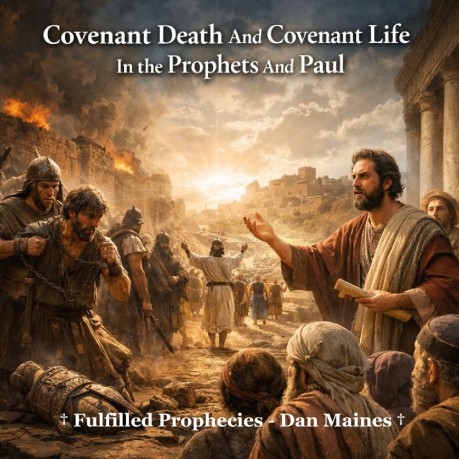
Covenant Death And Covenant
Life In The Prophets And Paul Introduction † Hosea, Ezekiel, and the other prophets
consistently use death and resurrection language to describe covenant
status, not biological events. Hosea 13:1 When Ephraim spoke, there was trembling. † Hosea says Ephraim died, yet no one dropped
dead physically at that moment. (Deuteronomy 30:15-18) † Covenant death in Hosea is tied directly to
guilt in Baal worship, not to the cessation of biological life.
(Jeremiah 2:11-13) † Hosea is not redefining death, he's using
established covenant language Israel already understood. (Deuteronomy
30:19-20) Hosea 6:1-2 "Come,
let's return to the Lord. † Hosea now moves from covenant death to
covenant restoration using resurrection language. (Isaiah 57:18-19) † Revive and raise us up describe national
restoration, not corpses coming out of graves. (Ezekiel 36:24-28) † The two days and third day language reflects
covenant timing and restoration patterns, not literal calendar
predictions. (Hosea 5:15; Isaiah 54:7-8) Ezekiel 37:11-14
Then He said to me, "Son of man, these bones are the entire
house of Israel; behold, they say, ‘Our bones are dried up and our
hope has perished. We are completely cut off.' Therefore prophesy and
say to them, ‘This is what the Lord God
says: "Behold, I am going to open your graves and cause you to
come up out of your graves, My people; and I will bring you into the
land of Israel. Then you will know that I am the Lord,
when I have opened your graves and caused you to come up out of your
graves, My people. And I will put My Spirit within you and you will
come to life, and I will place you on your own land. Then you will
know that I, the Lord,
have spoken and done it," declares the Lord.'"
† Ezekiel explicitly defines the bones as the
whole house of Israel, not dead individuals. (Ezekiel 36:22-24) † God interprets the vision Himself, leaving no
room for speculation. (Isaiah 46:9-10) † Hosea and Ezekiel are speaking the same
theological language. (Hosea 13:14; Deuteronomy 30:3-6) Paul And The Prophetic Framework † Paul didn't invent a new definition of death
and life, he stood firmly within the prophetic tradition. (Acts
26:22-23) † Life in Christ means restored covenant
standing, not simply animated bodies. (Colossians 2:13-14) † Assyrian exile was covenant death, return was
covenant life, and Paul applies this fulfilled reality to Christ.
(Isaiah 11:16; Colossians 1:13) Added Reinforcement Commentary † The prophets define death and life
covenantally, and Paul never departs from that definition. (Isaiah
55:3; Jeremiah 31:33) † This is why Paul can speak of believers as
having passed from death into life while still living physically.
(John 5:24; Colossians 3:1-3) Historical References † Josephus records Israel's exile and national
judgment history, Antiquities of the Jews, Book 9. How It Applies To Us Today † We don't read Paul as if he were detached
from the prophets, we read him through them. (Romans 15:4) † This understanding removes fear-based
theology and replaces it with assurance and confidence. (1 John
4:17-18) Q & A Appendix Q Was Hosea describing physical death when he
said Ephraim died? Q Does Hosea 6 teach bodies coming out of
graves? Q How does this affect how we read Paul? Q Does Paul ever connect death to something
broader than the Law? Q Why do many readers assume resurrection
language must be biological? Q If covenant death ended, why do Christians
still physically die? Q How does this understanding protect the gospel
from fear-based eschatology? † This is the fulfilled perspective we proclaim at
Fulfilled Prophecies † Source Index † Hosea 13:1; Hosea 6:1-2; Ezekiel 37:11-14 † Josephus, Antiquities of the Jews, Book 9;
Eusebius, Ecclesiastical History, Book 3; Clement of Alexandria,
Stromata, Book 4; Irenaeus, Against Heresies, Book 5
By Dan Maines
† This
prophetic pattern forms the backbone of how Paul speaks about death
through sin and life through Christ.
† If we
ignore this covenantal framework, we misunderstand both the prophets
and the apostles.
He exalted
himself in Israel,
But through Baal he incurred guilt and died.
†
The death described here is covenantal, Israel was cut off from
covenant standing because of idolatry. (Deuteronomy 29:24-28)
†
This death resulted in exile, separation from the land, the temple,
and the covenant blessings promised to them. (2 Kings 17:6-18)
† Exile functioned as
being cast out of the presence of God, which is why Scripture
describes it as death. (Hosea 9:3; Lamentations 2:1-9)
†
This aligns with Deuteronomy's covenant warnings, where obedience
meant life in the land and rebellion meant removal. (Deuteronomy
28:15-68)
† To be cut off from covenant
fellowship was to be dead as a nation before God. (Isaiah 59:1-2)
For
He has torn us, but He will heal us;
He has wounded us,
but He will bandage us.
He will revive us after two days;
He
will raise us up on the third day,
That we may live before Him.
†
The tearing and smiting refer to judgment and exile, not physical
violence against bodies. (Hosea 5:14-15)
†
Healing and binding up refer to restoration to covenant fellowship
and land. (Jeremiah 30:17; Hosea 14:4)
†
Living before Him means restored covenant presence, access, and
identity as God's people. (Psalm 80:3; Micah 7:18-19)
†
This passage is about Israel returning from exile, not an
end-of-the-world bodily resurrection. (Jeremiah 31:10-14)
†
Hosea is speaking corporately, Israel as a people, not individuals
awaiting biological resurrection. (Isaiah 49:8-13)
†
The graves represent exile among the nations, where Israel considered
itself cut off and hopeless. (Psalm 137:1-4)
†
Coming out of the graves is a return to the land, not a biological
resurrection. (Isaiah 11:11-12)
† The
life given is covenant life, restored identity, restored land,
restored relationship. (Ezekiel 36:25-28)
†
This confirms that resurrection language in the prophets is
covenantal by definition. (Isaiah 61:1-4)
†
Death equals exile and separation, life equals restoration and
covenant presence. (Deuteronomy 30:3-6)
† When Paul speaks of death through
sin and the Law, he's using the same covenant categories found in
Hosea and Ezekiel. (Romans 7:10-11; Jeremiah 31:31-34)
†
Law-bound Israel experienced covenant death, separation, and
condemnation. (2 Corinthians 3:7-9)
†
Paul's gospel announces the end of exile and the restoration promised
by the prophets. (Ephesians 2:12-19)
†
Without the prophetic framework, Paul's language becomes distorted
and misread. (Romans 9:25-26)
† This
continuity proves the unity of Scripture and the consistency of God's
redemptive plan. (Luke 24:44-47)
† Exile, condemnation,
and separation under the Law are consistently described as death,
while restoration, forgiveness, and access are described as life.
(Deuteronomy 30:6; Ezekiel 36:26)
† Paul's
gospel announces that the exile promised by the prophets has ended in
Christ, which means covenant death has been swallowed up by covenant
life. (2 Corinthians 5:17-19)
† The
categories never changed, only the covenant administration changed.
(Hebrews 8:6-13)
† Reading Paul outside the
prophetic framework creates contradictions the text itself never
creates. (Romans 3:21)
†
Eusebius records early Christian history surrounding Jerusalem and
the apostolic era, Ecclesiastical History, Book 3.
†
Clement of Alexandria discusses death and life language in relation
to sin, righteousness, and the soul, Stromata, Book 4.
†
Irenaeus strongly affirms the resurrection of the flesh, Against
Heresies, Book 5.
†
Covenant life in Christ means we're not separated, condemned, or
exiled from God. (Romans 8:1-2)
† We live in
restored fellowship, not waiting for covenant life to begin later.
(Hebrews 12:22-24)
† We don't define ourselves by death
language that no longer applies to those in Christ. (Romans 6:4)
†
We live as a restored people, walking in the reality the prophets
promised. (Ephesians 2:19-22)
A No. Hosea is using
covenant death language rooted in the Law and exile warnings, not
biological death. (Deuteronomy 30:15-18; 2 Kings 17:6-18)
A No. The prophets consistently use
resurrection language to describe national restoration from covenant
judgment. (Ezekiel 36:24-28; Jeremiah 31:10-14)
A
It anchors Paul firmly in the prophetic tradition, where death and
life describe covenant standing, not physical mortality. (Acts
26:22-23; Romans 7:10-11)
A Yes. Paul connects
death to sin, he also traces the reign of death back to Adam, and he
explains how the Law intensifies and exposes sin in Israel. (Romans
5:12-21; 7:9-13)
A Because
resurrection language is often read without first grounding it in the
prophets' exile and restoration framework. (Ezekiel 36:24-28;
37:11-14)
A Because covenant death
and biological death are not the same category. Covenant death refers
to separation from God, which no longer applies in Christ.
(Colossians 2:13-14; Romans 8:1-2)
A It places
salvation in a completed covenant restoration rather than a future
escape scenario. (Colossians 1:13; Hebrews 9:26)
© Fulfilled Prophecies - Dan
Maines.
Links