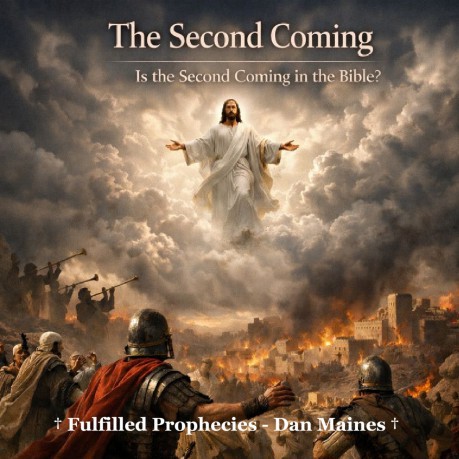
The Second Coming, Is the
Second Coming in the Bible Introduction † The phrase Second Coming is deeply embedded
in modern Christian language, yet the Bible never uses that exact
term. Matthew 24:30 And then the sign of the Son of Man will appear in the sky, and
then all the tribes of the earth will mourn, and they will see the
Son of Man coming on the clouds of the sky with power and great
glory. † Jesus uses Old Testament judgment language
drawn from Isaiah 19:1 and Daniel 7:13, where coming on the clouds
describes divine judgment, not a physical descent. Matthew 24:34 Truly I say to you, this generation will not pass away until all
these things take place. † Jesus places a strict time limitation on His
coming, defining it within that generation. Acts 1:11 and they said, "Men of Galilee, why do you stand looking into
the sky? This Jesus, who has been taken up from you into heaven, will
come in the same way as you have watched Him go into heaven." † Like manner refers to covenantal authority
and vindication, not physical direction or geography. Hebrews 9:26-28 Otherwise, He would have needed to suffer often since the
foundation of the world; but now once at the consummation of the ages
He has been revealed to put away sin by the sacrifice of Himself. And
just as it is destined for people to die once, and after this comes
judgment, so Christ also, having been offered once to bear the sins
of many, will appear a second time for salvation without reference to
sin, to those who eagerly await Him. † The end of the ages is presented as a present
reality for the original audience. Revelation 1:7 Behold, He is coming with the clouds, and every eye will see Him,
even those who pierced Him; and all the tribes of the earth will
mourn over Him. So it is to be. Amen. † They that pierced him can only refer to first
century Israel. 1 Peter 4:7 The end of all things is near; therefore, be of sound judgment and
sober spirit for the purpose of prayer. † The apostles consistently taught nearness,
not delay. 1 Corinthians 15:50-54 Now I say this, brothers and sisters, that flesh and blood cannot
inherit the kingdom of God; nor does the perishable inherit the
imperishable. Behold, I am telling you a mystery; we will not all
sleep, but we will all be changed, in a moment, in the twinkling of
an eye, at the last trumpet; for the trumpet will sound, and the dead
will be raised imperishable, and we will be changed. For this
perishable must put on the imperishable, and this mortal must put on
immortality. But when this perishable puts on the imperishable, and
this mortal puts on immortality, then will come about the saying that
is written: "Death has been swallowed up in victory. † Paul distinguishes resurrection change from
flesh and blood expectations. Isaiah 13:9-10 Behold, the day of the Lord is coming, † This prophecy describes the fall of Babylon,
not the end of the universe. Historical References † Josephus records Jerusalem's destruction in
AD 70 as divine judgment, fulfilling Jesus' warnings (Wars of the
Jews, Book 6). How It Applies To Us Today † We don't live waiting for Christ to arrive,
we live under His completed reign. Q & A Appendex Q: Is the phrase Second Coming found in the Bible? Q: Did Jesus promise His coming within the lifetime of His
audience? Q: Does Hebrews 9:28 teach a future return thousands of years
later? Q: Was the coming of Christ a physical descent to earth? Q: How should Acts 1:11 be understood? † This is the fulfilled perspective we proclaim at
Fulfilled Prophecies † Source Index † Matthew 24:30, 34; Acts 1:11; Hebrews
9:26-28; Revelation 1:7; 1 Peter 4:7; 1 Corinthians 15:50-54; Isaiah
13:9-10
By Dan Maines
† What Scripture does speak of is the
coming, the appearing, the revelation of Jesus Christ, all addressed
to first century believers living in a defined historical window.
†
This sermon examines whether the idea of a future Second Coming
exists in Scripture, or whether the biblical language points to a
fulfilled coming already accomplished within that generation.
†
The tribes of the earth refers to the tribes of the land of Israel,
consistent with Matthew's Jewish audience and covenant context.
†
This coming is tied to Jerusalem's judgment, not the end of the
physical world (Matthew 24:1-3).
†
Scripture doesn't allow this statement to be redefined without
violating plain language.
† Whatever the
coming is, it had to occur before that generation passed.
†
The angels redirect the disciples away from sky watching and back to
covenant mission.
† This aligns with Jesus
reigning from heaven while coming in judgment through historical
events (Acts 2:30-36).
† The
second appearance is connected to covenantal salvation, not a global
catastrophe.
† This appearance completes
redemption by closing the Old Covenant age (Hebrews 8:13).
† This language directly
echoes Matthew 24:30, confirming the same event.
†
Revelation anchors the coming in the near timeframe declared at the
opening of the book (Revelation 1:1, 3).
† If fulfillment were thousands of
years away, this language would be misleading.
†
The end in view is covenantal, not cosmic.
† This passage
addresses transformation of covenant life, not a physical descent of
Christ.
† Resurrection language is never
equated with cloud coming language in Scripture.
Cruel, with fury and
burning anger,
To make the land a desolation;
And He will
exterminate its sinners from it.
For the stars of heaven and
their constellations
Will not flash their light;
The sun
will be dark when it rises
And the moon will not shed its light.
† Cosmic
language is used symbolically for historical judgment.
†
Jesus and the apostles reuse this established prophetic language.
† Eusebius states that
Christ's predictions were fulfilled in the Roman siege of Jerusalem
(Ecclesiastical History 3.7).
† Lactantius
spoke of judgment falling upon Jerusalem as proof of Christ's
authority (Divine Institutes 4.21).
† Our
faith rests in what He has already accomplished, not in postponed
fulfillment.
† Freedom from end time fear
allows us to live boldly, faithfully, and confidently in the kingdom
now present.
A: No.
Scripture never uses the phrase Second Coming, instead it speaks of
the coming or appearing of Christ within a first century timeframe.
A: Yes. Jesus explicitly stated that all these things
would be fulfilled before that generation passed away (Matthew
24:34).
A: No. Hebrews places Christ's appearance at the end of
the ages, which the writer presents as present reality for his
audience (Hebrews 9:26; Hebrews 8:13).
A:
No. The coming language follows Old Testament judgment imagery
describing covenantal authority and vindication, not bodily
relocation.
A: Acts 1:11 affirms
Christ's authority from heaven, not a future sky descent, and
redirects believers away from sky watching and into covenant mission.
© Fulfilled Prophecies - Dan
Maines.
† Josephus, Wars of the Jews, Book 6;
Eusebius, Ecclesiastical History 3.7; Lactantius, Divine Institutes
4.21
Links