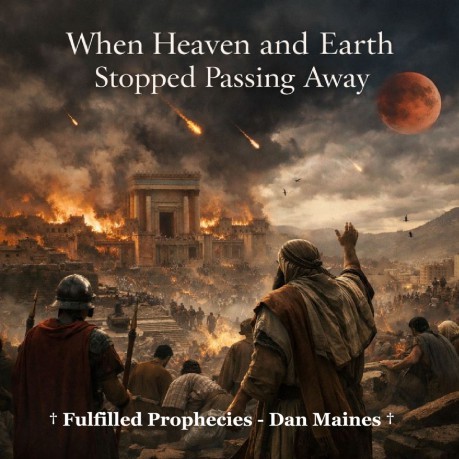
When Heaven and Earth Stopped
Passing Away Introduction † Jesus spoke words Israel already understood,
not mysterious phrases about the end of the planet, but covenant
language rooted in their Scriptures. (Isaiah 1:2; Deuteronomy 31:28;
Matthew 13:34-35) Matthew 24:35 † Jesus contrasts two things Israel already
knew how to distinguish, the old covenant order and the enduring
authority of His word. (Deuteronomy 18:18-19; Isaiah 40:8) Isaiah 51:6 † Isaiah uses heaven and earth language to
describe covenant instability, not the destruction of the universe.
(Isaiah 24:1-6; Isaiah 34:4) Isaiah 13:10 † This language was spoken against Babylon, not
the physical cosmos. (Isaiah 13:1; Isaiah 14:4) Jeremiah 31:35-36 † Jeremiah anchors covenant promises to the
reliability of creation to illustrate certainty, not to predict
cosmic collapse. (Jeremiah 33:20-21) Hebrews 8:13 † The writer of Hebrews defines passing away as
covenant obsolescence, not planetary decay. (Hebrews 7:18-19) Hebrews 12:26-28 † The shaking of heaven and earth refers to the
removal of the old covenant order. (Haggai 2:6-7; Hebrews 9:26) Historical References † Josephus records the destruction of the
temple and the end of the sacrificial system, confirming the covenant
world had collapsed in AD 70. (Matthew 24:1-2; Luke 21:6) How It Applies To Us Today † We aren't living in a world waiting to pass
away, we're living in the unshakable kingdom. (Hebrews 12:28) Q and A Appendix † Q. When Jesus said heaven and earth would
pass away, was He talking about the physical universe? (Matthew
24:34-35) † Q. If heaven and earth passed away, what are
we living in now? (Hebrews 12:26-28) † Q. Did Jesus place the passing away of heaven
and earth in the distant future? (Matthew 24:34) † Q. Does this teaching remove hope for
believers after death? (John 11:25-26) † Q. Why does understanding this matter today?
(Hebrews 12:28) † This is the fulfilled perspective we proclaim at
Fulfilled Prophecies † Source Index † Matthew 24:35; Isaiah 51:6; Isaiah 13:10;
Jeremiah 31:35-36; Hebrews 8:13; Hebrews 12:26-28
By Dan Maines
† Heaven and earth passing
away wasn't new language, it was familiar prophetic speech describing
covenant transition. (Isaiah 51:6; Jeremiah 4:23-26)
†
Matthew 24:35 stands as a declaration of covenant stability, not
cosmic annihilation. (Matthew 24:34-35; Hebrews 12:27-28)
Heaven and earth will pass
away, but My words will not pass away.
†
Heaven and earth here refer to the covenant world Israel lived under,
the system defined by temple, priesthood, sacrifices, and law.
(Exodus 24:9-11; Psalm 78:69; Isaiah 65:17)
†
The passing away Jesus speaks of is covenantal, not material, because
His words were already being fulfilled within that generation.
(Matthew 24:34; Luke 21:22)
Lift up your eyes to the
sky,
Then look to the earth beneath;
For the sky will
vanish like smoke,
And the earth will wear out like a
garment
And its inhabitants will die in like manner,
But My
salvation will be forever,
And My righteousness will not wane.
† Israel
understood this imagery as prophetic language for judgment and
transition. (Hosea 4:1-3; Joel 2:10)
†
Salvation remaining forever shows covenant continuity through change,
not physical extinction. (Isaiah 45:17; Isaiah 55:11)
For the stars of heaven and
their constellations
Will not flash forth their light;
The
sun will be dark when it rises
And the moon will not shed its
light.
†
Israel already knew that darkened heavens described national judgment
and covenant overthrow. (Ezekiel 32:7-8; Amos 8:9)
†
Jesus was speaking within a well established prophetic framework.
(Matthew 24:29; Luke 21:20-22)
Thus says the LORD,
Who
gives the sun for light by day
And the fixed order of the moon
and the stars for light by night,
Who stirs up the sea so that
its waves roar,
The LORD of hosts is His name:
If this
fixed order departs
From before Me, declares the LORD,
Then
the offspring of Israel also will cease
From being a nation
before Me forever.
† Heaven
and earth imagery is used to show covenant faithfulness, not physical
destruction. (Psalm 89:36-37)
† Israel
would've recognized this as covenant assurance language.
(Lamentations 3:31-33)
When He said, A new covenant,
He has made the first obsolete. But whatever is becoming obsolete and
growing old is ready to disappear.
†
Heaven and earth were in the process of vanishing because the old
covenant was still standing but was about to end. (Hebrews 9:8-10)
†
This aligns directly with Jesus' words in Matthew 24:35. (Matthew
24:2; Matthew 24:34)
And His voice shook the
earth then, but now He has promised, saying, Yet once more I will
shake not only the earth, but also the heaven.
This expression,
Yet once more, denotes the removing of those things which can be
shaken, as of created things, so that those things which cannot be
shaken may remain.
Therefore, since we receive a kingdom which
cannot be shaken, let us show gratitude, by which we may offer to God
an acceptable service with reverence and awe.
†
What remained was the unshakable kingdom, already received by
believers. (Luke 17:20-21; Colossians 1:13)
†
This marks the moment heaven and earth stopped passing away. (Hebrews
10:9; Revelation 21:1)
†
Eusebius writes of the complete judgment upon Jerusalem, marking the
end of the old order and the establishment of the church without the
temple. (Matthew 22:7)
† John Chrysostom
identified the fall of Jerusalem as the final sign that the old
covenant had ended and Christ's kingdom stood alone. (Hebrews 12:28)
†
Our faith rests on fulfilled promises, not future instability. (2
Corinthians 1:20)
† We live at rest, not
vigilance, because the shaking is finished and Christ's word stands
complete. (Matthew 11:28; John 19:30)
† A. No. In Scripture, heaven and
earth often describe a covenant world. Isaiah, Jeremiah, and Hebrews
all use this language for covenant judgment and transition, not the
destruction of creation itself. (Isaiah 51:6; Jeremiah 4:23; Hebrews
12:27)
† A.
Hebrews says we've received a kingdom which can't be shaken. What
passed away was the old covenant order, what remains is the
unshakable kingdom established in Christ. (Colossians 1:13; Luke
17:21)
†
A. No. Jesus tied it to His generation. Hebrews confirms it was
already happening in the first century as the old covenant was
becoming obsolete and ready to disappear. (Hebrews 8:13)
† A.
No. It strengthens hope. The passing away of the old covenant removed
separation, not life. Believers live in uninterrupted fellowship with
Christ. (2 Corinthians 5:6-8)
† A. Because it removes fear
and uncertainty. We aren't waiting for collapse or loss. We're living
in what remains, the completed and stable kingdom of God. (Romans
8:38-39)
© Fulfilled Prophecies - Dan
Maines.
†
Josephus, The Jewish War
† Eusebius,
Ecclesiastical History
† John Chrysostom,
Homilies on Matthew
Links