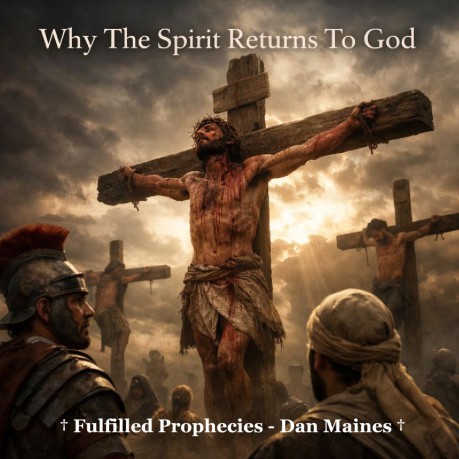
Why The Spirit Returns To God Introduction † This message addresses a common question
that's often framed the wrong way, as if Scripture gives us two
competing options about what happens to the spirit at death. (Job
34:14-15) Ecclesiastes 12:7 the dust will return to the earth as it was, and the spirit will
return to God who gave it. † This statement is universal and
unconditional, it applies to every human being because it's rooted in
creation, not covenant standing. (Genesis 2:7; Job 33:4) Genesis 2:7 Then the Lord God formed man of dust from the ground, and breathed
into his nostrils the breath of life, and man became a living being. † Life begins with God's breath, not man's
decision or obedience, which means the spirit has always belonged to
God from the beginning. (Job 27:3; Isaiah 42:5) Hebrews 9:27 And inasmuch as it is appointed for men to die once and after this
comes judgment. † Death is an appointment, not a spiritual
transportation system, it marks the separation of body and spirit.
(James 2:26; Ecclesiastes 3:19-21) Ecclesiastes 3:21 Who knows that the breath of man ascends upward and the breath of
the beast descends downward to the earth? † This verse is often misunderstood because
Ecclesiastes is speaking from the perspective of life under the sun,
human observation apart from revealed conclusion. (Ecclesiastes
1:2-3) John 5:24 Truly, truly, I say to you, he who hears My word, and believes Him
who sent Me, has eternal life, and does not come into judgment, but
has passed out of death into life. † Faith in Christ determines covenant standing,
reconciliation, and life while living, not whether the spirit returns
to God at death. (Romans 5:1-2; Ephesians 2:12-16) Luke 23:46 And Jesus, crying out with a loud voice, said, Father, into Your
hands I commit My spirit. Having said this, He breathed His last. † Jesus doesn't introduce a new doctrine here,
He demonstrates the creation truth that the spirit belongs to God.
(Psalm 31:5) 2 Corinthians 5:8 we are of good courage, I say, and prefer rather to be absent from
the body and to be at home with the Lord. † Paul doesn't describe death as creating
access to God, he describes it as revealing what's already true for
those reconciled in Christ. (2 Corinthians 5:18-20; Romans 8:1) Historical References † Second Temple Jewish thought understood the
breath of life as returning to God at death, rooted in Genesis and
Ecclesiastes. (Genesis 2:7; Ecclesiastes 12:7) How It Applies To Us Today † This truth removes fear-based theology that
treats death as a reward system instead of a created reality. (Romans
8:15; Hebrews 2:14-15) Anticipated Objections † Objection: Ecclesiastes 12:7 can't mean
everyone because Scripture elsewhere speaks of judgment and
separation. † Objection: If everyone's spirit returns to
God, then belief in Christ doesn't matter. † Objection: Ecclesiastes is wisdom literature
and shouldn't be used doctrinally. † Objection: The wicked can't be said to return
to God. Clarifying Judgment Language vs Fellowship Language † Scripture uses judgment language to describe
accountability before God, not ownership of the spirit, which is
already established by creation. (Ecclesiastes 12:7; Romans
14:10-12) Q and A Appendix † Q: Does the spirit return to God because a
person believes in Jesus Christ? † Q: Does death itself send the spirit to
God? † Q: What does faith in Christ actually
determine then? † Q: Was there separation before Christ? † Q: Is eternal life something we wait for
after death? † This is the fulfilled perspective we proclaim at
Fulfilled Prophecies † Source Index † Ecclesiastes 12:7; Ecclesiastes 3:21; Genesis
2:7; Hebrews 9:27; John 5:24; Luke 23:46; 2 Corinthians 5:8
By Dan Maines
† From the fulfilled, biblical
perspective, it's not either option the way they're usually framed,
and Scripture itself settles the issue clearly and consistently.
(Isaiah 55:8-9)
† The Bible never teaches
that the spirit returns to God because of belief, nor does it teach
that death itself sends the spirit anywhere. It teaches something
deeper and more foundational. (Ecclesiastes 12:7)
†
The verse doesn't say the spirit returns to God because of faith,
righteousness, or unbelief, it says the spirit returns to God because
He gave it. (Numbers 16:22; Zechariah 12:1)
†
God is the giver and owner of life, and what He gives remains
accountable to Him regardless of belief. (Psalm 24:1; Acts 17:24-28)
†
The breath of life doesn't become human property, it remains God's
gift entrusted to the body for a time. (Job 34:14-15; Psalm
104:29-30)
† Death doesn't change ownership,
it simply ends the bodily stewardship of what God gave. (James 2:26;
Luke 12:20)
† Judgment
follows death because the spirit returns to God's authority, not
because death sends it somewhere new. (Romans 14:10-12; Ecclesiastes
12:14)
† Death is the occasion, not the
cause, it reveals where the spirit has always belonged. (Job 12:10;
Psalm 146:4)
† Hebrews 9:27 doesn't teach a
future trial to decide outcomes, it states order, death, then
judgment. For the one IN Christ, judgment has already occurred, there
is now no condemnation at all. (Romans 8:1; John 5:24) For the
wicked, judgment has also already occurred, the wages of sin is
death. (Romans 6:23) Death itself is the punishment, not a doorway
into another conscious state. Scripture never defines death as
continued life somewhere else. If a person is dead, they are not
alive anywhere. This is why Scripture consistently speaks of the
wicked as perishing, being destroyed, burned up, consumed, and
brought to an end forever. (Obadiah 16; Malachi 4:1-3; Matthew 3:12;
2 Thessalonians 2:8)
† The question form doesn't deny
truth, it exposes human limitation when God hasn't yet stated the
final answer. (Ecclesiastes 8:17)
†
Ecclesiastes 12:7 resolves what Ecclesiastes 3:21 questions, showing
progression within the same book, not contradiction. (Ecclesiastes
12:7)
†
Eternal life is presented as a present reality, not something that
begins only after physical death. (John 17:3; 1 John 5:11-13)
†
Under the Old Covenant, separation existed because of sin, but that
separation was fully dealt with in Christ and brought to completion
in that generation. (Matthew 27:51; Hebrews 9:26)
† His death confirms
Ecclesiastes 12:7 at the cross, the spirit returns to the One who
gave it. (Ecclesiastes 12:7)
† Christ's
reconciliation work addresses covenant access, not spirit origin or
destination. (2 Corinthians 5:18-19)
†
Being at home with the Lord speaks to covenant relationship, not
basic spirit origin or ownership. (Ephesians 2:19; Hebrews
12:22-24)
† The contrast here isn't belief
versus unbelief, it's reconciliation versus alienation. (Colossians
1:21-22)
† Yes, you heard that right,
alienation. It's either Romans 8:1, therefore there is now no
condemnation at all for those who are IN Christ Jesus, or Obadiah 16,
where the end of the wicked is to become as though they had not been.
Scripture doesn't present a third category. Life is in Christ,
outside of Christ there is death, not relocation, not continued
conscious existence. This is why Scripture consistently describes the
wicked as coming to an end, being burned up, consumed, destroyed, and
reduced to nothing. (see also Isaiah 1:28; Isaiah 66:24; Malachi
4:1-3; Matthew 3:12; 2 Thessalonians 2:8)
†
Philo of Alexandria wrote that life originates from God's breath and
returns to Him by divine order, not moral achievement. (Acts 17:28
reflects this worldview)
† Early Christian
writers consistently taught that Christ restored fellowship with God,
not ownership of the soul, which was never lost. (Hebrews 10:19-22)
† It keeps faith
grounded in life and reconciliation now, not reduced to a mechanism
for postmortem outcomes. (John 10:10; 2 Corinthians 6:2)
†
It reminds us that belief in Christ transforms how we live before
God, not whether we belong to Him at death. (Galatians 2:20;
Colossians 2:12-13)
† Response: Judgment addresses
covenant standing and accountability, not spirit ownership, which
Ecclesiastes grounds in creation, not belief. (Ecclesiastes 12:7;
Romans 14:10-12)
†
Response: Belief determines reconciliation, life, and access to God,
not the basic fact that the spirit belongs to Him. (John 5:24; Romans
5:1-2)
†
Response: Jesus and the apostles repeatedly used wisdom literature to
establish foundational truth, and Ecclesiastes itself resolves its
own questions. (Matthew 7:24-27; Ecclesiastes 12:7)
† Response: Returning to God doesn't
imply fellowship, it affirms accountability to the One who gave life.
(Job 12:10; Ecclesiastes 12:14)
† Fellowship language describes
relational access, peace, and reconciliation with God, which was
broken under the Old Covenant and restored in Christ. (Isaiah 59:2;
Ephesians 2:13-16)
† Confusing judgment with
fellowship leads to false conclusions about where the spirit belongs,
Scripture keeps these categories distinct. (Ecclesiastes 12:14; 2
Corinthians 5:18-19)
† Judgment answers to
responsibility, fellowship answers to relationship, and Christ's work
addressed relationship, not God's original ownership of life. (Acts
17:24-28; Hebrews 10:19-22)
† A: No,
Scripture says the spirit returns to God because He gave it, belief
determines reconciliation and life, not spirit ownership.
(Ecclesiastes 12:7; Romans 5:10)
† A: No, death is the separation of body
and spirit, it's the occasion, not the cause. (James 2:26; Job 12:10)
† A: Faith determines
covenant standing, peace with God, and participation in eternal life
while living. (John 5:24; Romans 5:1)
†
A: Yes, under the Old Covenant sin brought exile and separation,
which Christ fully removed in that generation. (Isaiah 59:2; Matthew
27:51)
† A: No, eternal life is a
present possession for those in Christ. (John 17:3; 1 John 5:11-13)
© Fulfilled Prophecies - Dan
Maines.
†
Philo of Alexandria; Augustine, Confessions; Athanasius, On the
Incarnation
Links