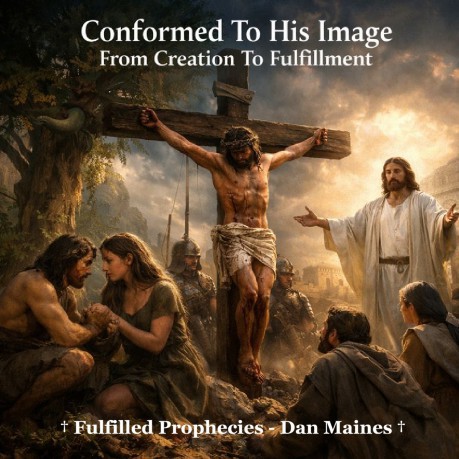
Conformed To His Image From
Creation To Fulfillment Introduction † From the very beginning, God defined humanity
by image, function, and purpose, not by biology alone. (Genesis
1:26-28) Romans 8:29 For those whom He foreknew, He also predestined to become
conformed to the image of His Son, so that He would be the firstborn
among many brothers and sisters; † Paul is not redefining image, he's showing
where it was always headed. (Romans 5:14-19) Genesis 1:27 So God created man in His own image, in the image of God He
created him, male and female He created them. † The image of God is given before sin enters
the narrative, showing it's foundational to human purpose. (Genesis
1:26-28) † Adam was created in God's image but Christ is
the image of God revealed in fullness. (Colossians 1:15; 2
Corinthians 4:4) Historical References † Irenaeus taught that Adam was created
immature and that Christ completed humanity through obedience, not
postponement. (Irenaeus, Against Heresies 4.38) How It Applies To Us Today † We're not striving to become God's image,
we're living from it. (Colossians 3:10) † This is the fulfilled perspective we proclaim at
Fulfilled Prophecies † Source Index † Genesis 1:27; Romans 8:29; 1 Corinthians
15:45-49; Hebrews 2:6-9
By Dan Maines
† Scripture never treats the image
of God as a vague concept, it treats it as a covenant reality that
develops through redemptive history. (Psalm 8:4-6; Hebrews 2:6-8)
†
Romans 8:29 does not introduce a new idea, it brings Genesis 1:27 to
its intended fulfillment in Christ. (Romans 8:29; Colossians 1:15)
†
The Bible consistently presents image as something moving toward
completion, not something frozen at creation. (Ephesians 4:22-24;
Colossians 3:9-10)
†
The image in Genesis was never static, it was a trajectory pointing
forward to Christ. (1 Corinthians 15:45-49)
†
Foreknowledge here is covenantal recognition, not foreseen behavior,
God knew a people beforehand because He purposed them beforehand.
(Romans 11:2; Amos 3:2)
† Predestination is
not about individual fate detached from history, it's about God
determining the outcome of His covenant plan in Christ. (Ephesians
1:4-11)
† Conformity to the image of His Son
is the restored and perfected image of God that Adam never completed.
(Colossians 1:15; Hebrews 1:3)
† Christ is
called firstborn because He stands as the representative head of a
new humanity, not because others are biologically reborn into Him.
(Colossians 1:18; Romans 8:29)
† The phrase
many brothers and sisters shows corporate fulfillment, a shared
identity formed in Christ, not isolated spiritual upgrades. (Hebrews
2:10-12; Romans 12:5)
† This conformity is
not postponed to the end of time, Paul presents it as the realized
goal of redemption already underway. (2 Corinthians 3:18; Colossians
3:10)
† Paul's Adam to Christ contrast is
made explicit elsewhere, showing image moving from natural to
spiritual fulfillment. (1 Corinthians 15:45-49)
†
Hebrews directly connects Genesis image language to Christ's
fulfilled dominion, confirming Paul's framework. (Hebrews 2:6-9)
† Image here is functional and
relational, representing God in the world, not possessing divine
attributes. (Genesis 1:28; Psalm 8:5-6)
†
Male and female together express the fullness of that image, showing
corporate identity from the start. (Genesis 1:27; Genesis 2:18-24)
†
Adam bore the image but failed to mature into it, sin fractured
access, not intention. (Genesis 3:22-24; Romans 5:12)
†
The image was never lost ontologically, it was lost in vocation,
authority, and covenant standing. (Genesis 3:17-19; Hosea 6:7)
†
Image precedes covenant law, temple, and Israel, proving it was never
limited to one nation. (Genesis 1:27; Acts 17:26-28)
†
Genesis establishes the pattern, Romans explains the fulfillment.
(Genesis 1:27; Romans 8:29)
† Adam was a living soul,
Christ became a life giving Spirit, completing what Adam began. (1
Corinthians 15:45)
† Where Adam failed under
probation, Christ succeeded under obedience. (Romans 5:18-19)
†
Romans 8:29 is the answer to Genesis 1:27, not a contradiction of it.
(Romans 8:29; Genesis 1:27)
† The image moves
from creation to conformity, from potential to realization, from
shadow to substance. (Hebrews 10:1; Colossians 2:17)
†
Athanasius wrote that the image corrupted in Adam was restored and
perfected in Christ, not replaced or delayed. (Athanasius, On the
Incarnation 13)
† Augustine affirmed that the
image of God reaches its true expression in conformity to Christ, not
mere physical existence. (Augustine, City of God 22.30)
†
Clement of Alexandria described salvation as restoration to the true
image through knowledge of Christ. (Clement of Alexandria, Stromata
2.22)
† These writers did not teach a
postponed fulfillment but a realized restoration through Christ.
(Hebrews 1:1-3)
† Our
identity isn't rooted in Adamic failure but in Christ's completed
work. (Romans 5:19; 2 Corinthians 5:17)
† We
don't wait for conformity after death, we walk in restored purpose
now. (Ephesians 2:6; 2 Corinthians 3:18)
†
The image of God defines how we live, love, and represent Him in the
world. (Matthew 5:14-16; Philippians 2:15)
†
Identity in Christ precedes behavior, obedience flows from
conformity, not toward it. (Colossians 3:1-4)
†
Fulfillment theology removes delay theology and anchors our identity
in what Christ has already accomplished. (Hebrews 9:26; John 19:30)
†
This truth grounds assurance, calling, and unity among believers as
one family in Christ. (Romans 8:16-17; Ephesians 4:4-6)
© Fulfilled Prophecies - Dan
Maines.
† Irenaeus, Against
Heresies
† Athanasius, On the Incarnation
†
Augustine, City of God
† Clement of
Alexandria, Stromata
Links