Preterism
over Futurism Preterism takes Jesus' words at face value, especially time
statements like "this generation will not pass away"
(Matt. 24:34) and "the time is near" (Rev. 1:3).
Futurists often reinterpret these statements to mean thousands of
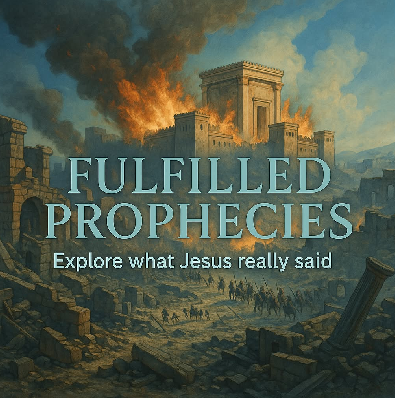
years later, creating inconsistency in how Scripture is understood. Preterism aligns with real historical events, particularly the
destruction of Jerusalem in AD 70. Jesus and the apostles frequently
warned of an impending judgment, which was fulfilled within the
first century. This makes prophecy verifiable rather than
speculative. Futurist interpretations have repeatedly predicted the end of the
world or Christ's return, leading to disappointment and skepticism.
Preterism avoids this issue by showing that prophecy was fulfilled
as promised in the first century. Rather than expecting Christ to establish His reign in the
future, Preterism emphasizes that He is already reigning (1 Cor.
15:25). This encourages Christians to actively live out the Gospel
now rather than waiting for an earthly kingdom to come. Futurism often fosters a pessimistic view of the world, expecting
things to get worse before Jesus returns. Preterism, on the other
hand, teaches that Christ's kingdom is growing and advancing, giving
believers hope and motivation to be involved in transforming society
for the better. Futurism is often tied to conspiracy theories, date-setting, and
endless speculation about the Antichrist, the Mark of the Beast, and
a one-world government. Preterism stays rooted in the historical and
theological context of Scripture, avoiding these distractions. Futurism often looks for a rebuilt temple, renewed sacrifices,
and a return to Old Testament systems. Preterism, however,
recognizes that these things were fulfilled and abolished in Christ,
emphasizing the superiority of the New Covenant (Hebrews 8:13). Since Christ's kingdom is already established, believers are
encouraged to engage in spreading the Gospel and building up God's
kingdom now, rather than waiting for an apocalyptic event to fix
everything. Preterism provides a consistent,
historically grounded, and hopeful interpretation of prophecy. It
keeps Jesus' words intact, prevents failed predictions, and inspires
believers to actively live out their faith in the present rather
than anxiously waiting for the future.
By Dan Maines
Preterism offers
several advantages over Futurism when interpreting biblical
prophecy. Here are some key benefits:1.
Biblical Consistency
2.
Historical Fulfillment
3.
No Failed Expectations
4.
Christ's Kingdom is a Present Reality
5.
Encourages a Hopeful Worldview
6.
Avoids Speculation and Sensationalism
7.
Emphasizes the New Covenant Over the Old
8.
Strengthens Christian Mission
Conclusion:
Links