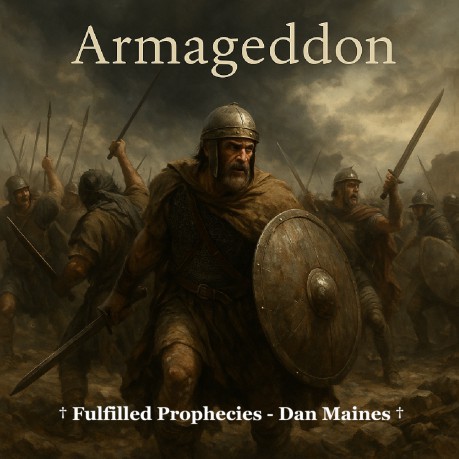
Armageddon Introduction Revelation 1:1 Revelation 1:3 † These opening statements place the entire
book, including Armageddon, inside their lifetime. Soon and near
can't be stretched for 2000 years. † Armageddon in Revelation 16:16 isn't about
the modern idea of a global military showdown. It isn't about Russia,
China, Europe, or the United States. From the fulfilled perspective,
Armageddon is a covenantal gathering of first century enemies against
Jerusalem, the city under judgment from God for rejecting His Son.
The Book of Revelation is a prophecy about events that were near, not
far away, and Armageddon is part of that immediate judgment that fell
on the generation Jesus addressed. † Armageddon is rooted in the time statements
of Jesus and Revelation. It's not a modern prediction but the
fulfillment of covenant judgment on Old Covenant Israel. † Revelation 16 shows the bowls of God's wrath
poured out on the land, and the sixth bowl focuses on the drying up
of the Euphrates to prepare the way for the kings from the east. That
imagery isn't about literal rivers drying up, it's about removing
obstacles so the nations could converge on the covenant people.
Scripture interprets scripture, and Revelation consistently points
the reader back to the war of AD 66 to 70, the war that ended the Old
Covenant world. † The bowls aren't ecological disasters for our
future. They are symbolic images of judgment leading up to the
destruction of Jerusalem. Armageddon Is About Jerusalem's Judgment Revelation 16:16 Revelation 16:14 Matthew 23:36 Matthew 24:34 Zechariah 14:1-2 Luke 21:20 Additional Fulfilled Scripture Connection Revelation 19:2 Revelation 6:16-17 Armageddon Isn't Global Destruction † Revelation never describes the destruction of
planet earth. Instead, it describes the removal of the Old Covenant
world. Armageddon is the symbolic battlefield for the final clash
between the rebellious covenant people and the God they rejected.
It's the covenant lawsuit reaching its climax. Revelation 11:8 Revelation 18:20 Historical References Josephus, Wars of the Jews 5 to 6 Josephus, Wars 3.2.4 Tacitus, Histories 5.13 Eusebius, Ecclesiastical History Book 3 Clement of Alexandria How It Applies to Us Today † Armageddon teaches that God keeps His word.
He said judgment would fall in their generation, and it did. The
destruction of Jerusalem wasn't a failure of prophecy, it was the
proof of it. It also shows that the kingdom isn't waiting to come. It
arrived. Jesus is reigning now. The old world ended, the new covenant
world began, and believers live in the fullness of that kingdom
today. † Believers don't have to fear a future
Armageddon, a global conflict, or a world ending war. The judgment
has already happened, and what remains is the ongoing reign of
Christ, the peace of the kingdom, and the assurance that prophecy
didn't fail. † Believers live in the kingdom that came
through judgment, not a kingdom that's waiting to arrive. Armageddon
wasn't the end of hope, it was the beginning of the new covenant
world where Christ reigns without rival. † Armageddon isn't a threat to our future. It's
a completed event that confirms the faithfulness of God and the
finished work of Christ. We're not waiting for another war to
validate Jesus' word. The judgment has already happened, and the
kingdom has already come. † This is the fulfilled perspective we proclaim at
Fulfilled Prophecies † Source Index
By Dan Maines
The revelation of Jesus
Christ, which God gave Him to show to His bond servants, the things
which must soon take place.
Blessed is he who reads and
those who hear the words of the prophecy, and heed the things which
are written in it, for the time is near.
And they gathered them
together to the place which in Hebrew is called Har Magedon.
†
The word Armageddon means mountain of Megiddo. Megiddo was never a
literal mountain, it was a battlefield symbol in Israel's history.
Every Israelite knew Megiddo as a place where God defeated His
enemies or judged His own people. Revelation uses that symbol to
point to the final covenant war of their age. Armageddon is symbolic
language for the gathering of nations in the first century to destroy
Jerusalem, fulfilling everything Jesus said in Matthew 23 and 24.
For they are spirits of
demons, performing signs, which go out to the kings of the whole
world, to gather them together for the war of the great day of God,
the Almighty.
† This gathering isn't world
geography, it's covenant geography. The whole world means the Roman
world, the same world Luke 2:1 speaks of when Caesar took a census of
the whole world. These kings are stirred up to fulfill God's purpose
in judging Jerusalem, just like God used pagan nations throughout the
Old Testament to bring judgment on Israel when they broke the
covenant.
Truly I say to you, all these
things will come upon this generation.
†
Armageddon belongs inside this time statement. Jesus didn't speak of
a distant future generation. He said their generation. Revelation is
the written expansion of what Jesus prophesied in Matthew 23 and 24.
Truly I say to you, this
generation will not pass away until all these things take place.
†
Armageddon is included in the all. It isn't outside the time limit
Jesus gave. Armageddon was part of the covenantal war that ended in
AD 70.
Behold, a day is coming for
the Lord when the spoil taken from you will be divided among you. For
I will gather all the nations against Jerusalem to battle, and the
city will be captured, the houses plundered, the women ravished, and
half of the city exiled, but the rest of the people will not be cut
off from the city.
† Zechariah isn't talking
about our future. He's describing the same gathering mentioned in
Revelation 16. God says He gathers the nations. Revelation says
they're gathered. The fulfillment is the Roman siege, the war of AD
70.
But when you see Jerusalem
surrounded by armies, then recognize that her desolation is near.
†
Jesus didn't tell them to look for signs thousands of years away. He
told His disciples what they would see. The armies surrounding
Jerusalem were Rome's forces under Cestus, Vespasian, and finally
Titus. Those armies were the nations gathered for God's covenantal
day of the Lord.
Because His judgments are
true and righteous, for He has judged the great harlot who was
corrupting the earth with her immorality, and He has avenged the
blood of His bond servants on her.
† This
confirms the object of God's wrath was the same covenant city guilty
of shedding prophetic blood, which places Armageddon directly in the
first century judgment on Jerusalem.
And they said to the
mountains and to the rocks, Fall on us and hide us from the presence
of Him who sits on the throne, and from the wrath of the Lamb, for
the great day of their wrath has come, and who is able to stand.
†
This is covenantal judgment language, not global destruction. The
great day of His wrath is the same day of the Lord fulfilled in the
fall of Jerusalem.
And their dead bodies will
lie in the street of the great city which mystically is called Sodom
and Egypt, where also their Lord was crucified.
†
Armageddon's location is defined by scripture. The war targets the
same city where their Lord was crucified. That's Jerusalem, not the
nations of the twenty first century.
Rejoice over her, O heaven,
and you saints and apostles and prophets, because God has pronounced
judgment for you against her.
† Armageddon is
the finale of God's judgment against the city responsible for killing
the prophets. The apostles and prophets rejoiced because the blood of
the martyrs was vindicated.
†
Josephus records the siege of Jerusalem in detail. He describes the
nations gathered under Roman authority, the city's internal collapse,
the starvation, the infighting, the burning of the temple, and the
total destruction. Revelation's imagery matches these historical
events with precision.
† Josephus says the
Romans came with auxiliaries from all the nations around, fulfilling
the imagery of the nations gathered.
† Tacitus writes
of the nations gathered under Rome's banner, fulfilling the prophetic
expectation of a multi national army surrounding Jerusalem.
†
Eusebius affirms the early Christian understanding that Jesus'
prophecies were fulfilled in the destruction of Jerusalem.
† Clement of
Alexandria affirms that the predictions of Jesus and the apostles
concerning the destruction of Jerusalem were fulfilled, showing early
Christian agreement with the first century application of these
prophecies.
© Fulfilled Prophecies - Dan
Maines.
† Revelation
16:14-16, Matthew 23:36, Matthew 24:34, Luke 21:20, Zechariah 14:1-2,
Revelation 11:8, Revelation 18:20, Revelation 19:2, Revelation
6:16-17, Revelation 1:1, Revelation 1:3
†
Josephus, Wars 5-6, Josephus Wars 3.2.4
†
Tacitus, Histories 5.13
† Eusebius,
Ecclesiastical History Book 3
† Clement of
Alexandria
Links