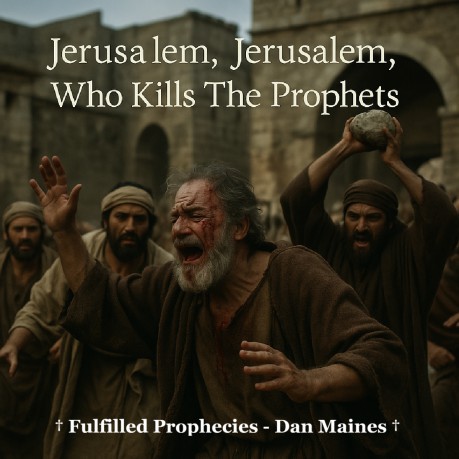
Jerusalem, Jerusalem, who
kills the prophets Matthew 23:35 so that upon you will fall the
guilt of all the righteous blood shed on earth, from the blood of
righteous Abel to the blood of Zechariah, the son of Berechiah, whom
you murdered between the temple and the altar. Matthew 23:36 Truly I say to you, all these
things will come upon this generation. † Jesus was saying that the generation He was
in would take the fall for killing the prophets. What generation?
Answer this first century generation, not that 21st century
generation. Matthew 23:37 Jerusalem, Jerusalem, who kills the
prophets and stones those who have been sent to her! How often I
wanted to gather your children together, the way a hen gathers her
chicks under her wings, and you were unwilling. † Jesus identifies Jerusalem as Babylon and
guilty of all the blood of prophets, and of saints, and of all that
were slain upon the earth. You can't have all the righteous bloodshed
in two separate entities. Babylon is Old Covenant Jerusalem. This
will not happen in the 21st century. Luke 11:49-51 Therefore also the wisdom of God
said, I will send to them prophets and apostles, and some of them
they will kill and some of them they will persecute, so that the
blood of all the prophets, shed since the foundation of the world,
may be charged against this generation, from the blood of Abel to the
blood of Zechariah, who was killed between the altar and the house of
God, yes, I tell you, it shall be charged against this generation. Revelation 17:6 And I saw the woman drunk with
the blood of the saints, and with the blood of the witnesses of
Jesus. When I saw her, I wondered greatly. Revelation 18:24 And in her was found the blood
of prophets and of saints and of all who have been slain on the
earth. Revelation 17:6 was referenced above. Revelation 11:8 and their dead bodies will lie in
the street of the great city, which mystically is called Sodom and
Egypt, where also their Lord was crucified. Revelation 18:20-24 Genesis 4 2 Chronicles 24:20-22 Fulfilled commentary † Jesus places the entire weight of prophetic
bloodshed on one location and one generation. Beginning with Abel in
Genesis and ending with Zechariah, Jesus shows the unified testimony
of covenant rebellion. Jerusalem stood as the city that rejected,
persecuted, and murdered God's messengers. The guilt was cumulative
and now reached its climax in His generation. † The use of the word "this" is
direct, immediate, and unbreakable. Jesus wasn't pointing to a
distant people thousands of years later. He was speaking face to face
with the leadership of Jerusalem. The entire context of Matthew 23
demands a first century fulfillment, the very audience Jesus
confronts in the Temple. † Revelation confirms the same identity. The
great city that kills the prophets is called Babylon. Revelation 11:8
says it's the city where the Lord was crucified, removing all doubt.
There's only one city in all of scripture that kills the prophets and
crucifies Christ. Old Covenant Jerusalem is Babylon, the harlot, the
persecutor of the saints. † When Jesus says all these things will come
upon this generation, He anchors the timing of the judgment. It's not
symbolic, it's not stretched out for millennia, and it's not waiting
for a modern nation in the 21st century. The guilt was theirs, the
judgment was theirs, and the fulfillment was theirs. Historical references † Justin Martyr wrote about the Jews killing
the prophets and rejecting the Messiah, confirming Jesus' accusation
in Matthew 23. He said Jerusalem was judged for shedding righteous
blood. † Irenaeus described the Jews as the
persecutors of the prophets and identified their rejection of Christ
as the climax of their rebellion, matching Jesus' condemnation on
that generation. † Eusebius recorded in detail the long history
of Jerusalem killing the prophets, rejecting God's messengers, and
finally crucifying the Lord, then connected the destruction of
Jerusalem with Matthew 23 and 24. † Tertullian repeatedly charged Jerusalem with
the blood of the prophets, showing that early Christians universally
understood Jesus' words to apply to first century Israel, not a
future nation. † Clement of Alexandria taught that Israel
constantly rejected those sent to her and that the judgment Jesus
spoke of was fulfilled in the downfall of Jerusalem. † Barnabas explained that the Jews persecuted
all the prophets and killed the Lord, bringing the judgment that
Jesus warned would fall on this generation. † Lactantius wrote that Israel was guilty of
shedding righteous blood from Abel forward, echoing Jesus' statement
that all such guilt would culminate in the generation that rejected
Christ. † Josephus, Wars of the Jews, gives the
historical eyewitness account of the same generation Jesus condemned,
showing their violence, corruption, prophetic rejection, and final
destruction exactly as Jesus foretold. How it applies to us today † We're not waiting for another Babylon to
rise. We're living in the fulfilled kingdom Jesus established after
the fall of the Old Covenant world. The crisis that Jesus pronounced
on Jerusalem is past. The guilt He placed on that generation isn't
transferred to ours. † The New Jerusalem is our present reality.
We're not under the covenant of death and condemnation. We're living
in the age where God dwells with His people without separation. † This is the fulfilled perspective we proclaim at
Fulfilled Prophecies † Source index † Matthew 23:35-37, Luke 11:49-51, Revelation
17:6, Revelation 18:24, Revelation 11:8, Revelation 18:20-24, Genesis
4, 2 Chronicles 24:20-22
By Dan Maines
†
Jesus declares that Jerusalem carries the guilt for the entire
history of prophetic bloodshed. Abel was the first righteous man
murdered, and Zechariah was among the last in the Old Testament
record. Jesus gathers all covenant blood into one indictment aimed at
first century Jerusalem.
†
Jesus gives the timing. Not a future age, not a future nation, but
the very generation He was speaking to. This ties the judgment
directly to the fall of Jerusalem in AD 70.
†
Jesus laments Jerusalem's long pattern of rejecting God's messengers.
This confirms the continuity of guilt stretching from the earliest
prophets to Jesus Himself.
†
Luke gives the parallel statement confirming the same audience, the
same guilt, and the same first century fulfillment. Abel to Zechariah
brackets the entire prophetic history. Jesus assigns all of it to His
generation.
†
The harlot city is identified by her crimes. She is drunk with the
blood of prophets and saints, the same guilt Jesus laid on Jerusalem.
No other city in scripture matches this identity.
† This verse seals it. The same
promise Jesus made in Matthew 23 is repeated: all prophetic blood is
found in one city. Revelation doesn't divide prophetic guilt between
two entities. It confirms Jesus' declaration.
†
This reinforces that Revelation's Babylon is the same Jerusalem Jesus
condemned.
†
Revelation identifies the city without ambiguity: the place where the
Lord was crucified. That is Jerusalem. The symbolic names underline
its covenant corruption.
†
Heaven and the apostles are told to rejoice over the downfall of the
persecuting city because she was guilty of the blood of the prophets
and the saints. This corresponds perfectly with Jesus' statements.
† Abel's blood
cries from the ground, marking the first righteous martyr. Jesus
intentionally starts the prophetic bloodline here.
†
Zechariah is murdered in the temple court, marking the last martyr in
the Hebrew canon. Jesus intentionally ends the prophetic bloodline
here.
© Fulfilled Prophecies - Dan
Maines.
† Josephus Wars 5-6
Links