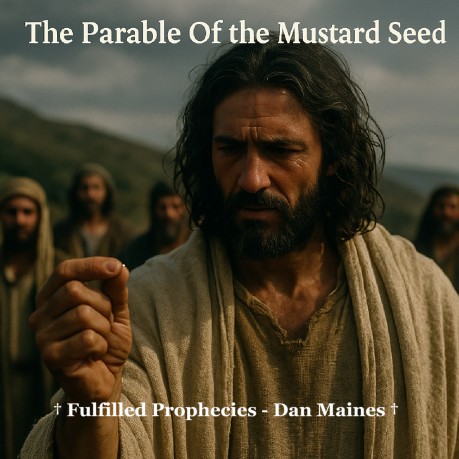
The Parable Of The Mustard
Seed Introduction This post brings clarity, comfort, and confidence in the fulfilled
truth of God's word by showing how Jesus used the smallest of seeds
to describe the unstoppable growth of His kingdom in the first
century. The Parable of the Mustard Seed wasn't about a future global
takeover, it was about the explosive growth of the New Covenant
community during the end of the Old Covenant age. Jesus spoke
directly to them in their final generation, and this parable
perfectly matches the fulfilled reality we're living in right now. Matthew 13:31-32 The Mustard Seed In Their Generation † Jesus said the kingdom would start small,
almost invisible, just like a mustard seed (Matthew 13:31). How The Parable Was Fulfilled † The seed was planted in the ministry of
Christ (Matthew 4:17). The Body Of Christ, The Kingdom, And The New Jerusalem Are
One Reality † You can't separate the body of Christ from
the Kingdom or the New Jerusalem. If you're in Christ, you're in His
Kingdom. If you're in His Kingdom, you're in the New Jerusalem
(Colossians 1:18, Ephesians 2:19-22). The Old Covenant Tree And The New Covenant Tree † The Old Covenant nation was pictured as a
tree that would be cut down because of unfaithfulness (Isaiah
6:13). Why Jesus Used Nature Parables † Jesus used things like seeds, trees, soil,
and harvests because creation reflects covenant truth (Matthew
13:10-11). Audience Relevance And Their Generation † Jesus told His disciples that the parables
were for them, not for some future generation thousands of years
later (Matthew 13:11). Tree Imagery And Kingdom Symbolism In Scripture † In scripture, trees always represent kingdoms
or covenant peoples (Daniel 4:10-12). The Gospel Reaching The Whole World Before AD 70 † Paul said their faith was spoken of
throughout the whole world (Romans 1:8). The Kingdom Already Present Before AD 70 † Jesus said the kingdom had already come upon
them (Matthew 12:28). Historical References † Josephus, Wars of the Jews, documents the
collapse of the Old Covenant world and the turmoil through which the
early church kept growing. How It Applies To Us Today † We're living in the full grown tree of God's
kingdom (Colossians 1:13). Because the mustard seed has already become the tree, we stand in
a fully established New Covenant world where God dwells with His
people, righteousness is ours, access to the Father is open, and the
nations rest in the branches of Christ's kingdom. Our job isn't to wait for the kingdom to arrive, it's to walk in
the life, peace, and victory that Jesus already provided through His
finished work. † This is the fulfilled perspective we proclaim at
Fulfilled Prophecies † Source Index
By Dan Maines
He presented another
parable to them, saying, The kingdom of heaven is like a mustard
seed, which a man took and sowed in his field, and this is smaller
than all other seeds, but when it is full grown, it is larger than
the garden plants and becomes a tree, so that THE BIRDS OF THE AIR
come and NEST IN ITS BRANCHES.
†
He said it would grow into something large enough for the birds to
nest in its branches, meaning the nations would rest in what God was
building (Matthew 13:32, Ezekiel 17:23).
†
Jesus wasn't telling them the kingdom would start thousands of years
later, He was telling them what was happening right in their lifetime
(Matthew 13:17).
† The growth happened
through their persecution, their preaching, and the outpouring of the
Spirit as the gospel spread rapidly before AD 70 (Acts 2:41, Acts
6:7, Colossians 1:6).
† The Old Covenant was
collapsing and the New Covenant was rising, fulfilling exactly what
Jesus said would happen (Hebrews 8:13).
† It sprouted at
Pentecost when three thousand believed in one day (Acts 2:41).
†
It spread through Judea, Samaria, and the nations exactly like Jesus
said it would (Acts 1:8).
† It reached full
maturity when the Old Covenant system was removed in AD 70 (Matthew
24:34, Hebrews 12:27).
† That's the mustard
seed becoming a tree (Matthew 13:32).
†
That's the kingdom taking its place (Luke 21:31).
†
That's the fulfillment Jesus spoke of (Matthew 5:17).
†
Colossians 1:13 says they'd already been transferred into the Kingdom
(Colossians 1:13).
† Revelation 21:2 shows
the New Jerusalem as the bride, and Ephesians 5:23 tells us the bride
is the church (Revelation 21:2, Ephesians 5:23).
†
Hebrews 12:22-23 says they'd already come to Mount Zion, the heavenly
Jerusalem, the church of the firstborn (Hebrews 12:22-23).
†
One body, one bride, one Kingdom, one New Jerusalem (Ephesians
4:4-5).
† The New Covenant people are the
branch of My planting, the true tree God intended (Isaiah 60:21).
†
Daniel 2:35 shows the stone becoming a great mountain, the same
picture of kingdom growth Jesus gave (Daniel 2:35).
† Luke 17:20-21 shows the kingdom
didn't come with visible signs, which matches the mustard seed
perfectly. Quiet growth, real growth, covenant growth (Luke
17:20-21).
† These parables revealed the
kingdom's unstoppable growth right in their generation (Matthew
13:16-17).
† He said their eyes
and ears were blessed because they were seeing the fulfillment the
prophets longed for (Matthew 13:16-17).
†
This nails down that the mustard seed parable belongs to the first
century covenant transition.
†
Ezekiel shows nations resting in branches as a picture of covenant
inclusion (Ezekiel 17:22-24).
† Jesus was
using the exact symbolic language the prophets used, and they
understood it instantly.
† He
said the gospel had gone out to all the earth (Romans 10:18).
†
He said it was bearing fruit in all the world (Colossians 1:6).
†
He said it had been proclaimed to every creature under heaven
(Colossians 1:23).
† That proves the mustard
seed reached full maturity before AD 70, just like Jesus said it
would.
† He said the kingdom
was in their midst (Luke 17:21).
† The
mustard seed was already growing long before AD 70, and it reached
its fullness when the Old Covenant world ended.
† Tacitus, Annals
and Histories, records how Christianity kept spreading even under
pressure.
† Eusebius, Ecclesiastical History,
describes how rapidly the church expanded before and after
Jerusalem's fall.
† We're not
waiting for the kingdom to arrive, we're already living inside it
(Luke 17:21).
† We're not waiting for the
mustard seed to grow, it already has (Matthew 13:32).
†
We're not looking for signs that the kingdom is near, because Jesus
already brought it in their generation (Matthew 24:34).
© Fulfilled Prophecies - Dan
Maines.
† Matthew
13:31-32, Daniel 4:10-12, Ezekiel 17:22-24, Colossians 1:13, Hebrews
12:22-23, Revelation 21:2, Isaiah 60:21, Daniel 2:35, Luke 17:20-21,
Matthew 13:10-17, Matthew 12:28, Romans 1:8, Romans 10:18, Colossians
1:6, Colossians 1:23
† Josephus, Wars of the
Jews
† Tacitus, Annals and Histories
†
Eusebius, Ecclesiastical History
Links