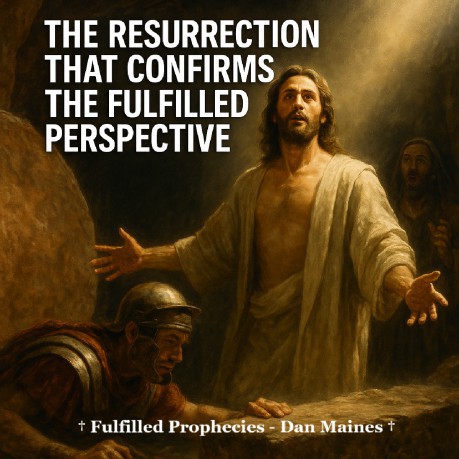
The Resurrection That
Confirms the Fulfilled Perspective Introduction The Nature of Christ's Resurrection † After His resurrection, Christ's body
demonstrated the nature of the new creation. He could appear in
locked rooms, vanish, and ascend into heaven, yet still be seen and
touched. This proves that His glorified body was both real and
spiritual. He wasn't a ghost, but neither was He bound by physical
limitations. This is the very kind of transformation Paul described
for those in Christ, from mortality to immortality, from corruption
to incorruption. † The claim that a "spiritual body"
must mean "non-body" is false. Paul's entire contrast is
between natural (Greek: psychikos) and spiritual (Greek:
pneumatikos), between mortal, corruptible flesh and the new,
incorruptible, immortal life. A "spiritual body" is still a
body, but it's animated by the Spirit instead of blood. Paul said
plainly, Flesh and blood cannot inherit the kingdom of God (1
Corinthians 15:50). Therefore, Christ's glorified body was no longer
flesh and blood, yet it was real and tangible. Our Resurrection Like His † When Paul spoke of our vile body being
changed (Philippians 3:21), he referred to the collective body of
believers, not to individual fleshly bodies. The "body"
that was to be changed was the body of death (Romans 7:24) and the
body of sin (Romans 6:6), the covenant body of Adam. It was being
transformed into the body of Christ, the spiritual house of the
redeemed (Ephesians 2:21-22). This wasn't a promise of a future
biological transformation but of a covenantal transition fulfilled in
Christ's kingdom. † The resurrection Paul taught was covenantal
in scope but spiritual in reality. It was the transformation of the
people of God from the Old Covenant of death to the New Covenant of
life. The focus wasn't on individual fleshly bodies, but on the
entire covenant body of believers being made alive in Christ. This is
why Paul said, We shall not all sleep, but we shall all be changed (1
Corinthians 15:51). The Fulfilled Resurrection of the Saints † Paul declared that resurrection was already
in progress in his time: Awake, sleeper, and arise from the dead, and
Christ will shine on you (Ephesians 5:14). He also warned of those
who said the resurrection was already past (2 Timothy 2:18), meaning
they were denying the timing and nature of the ongoing transformation
that was taking place as the old covenant body was being replaced by
the new. The resurrection wasn't about graves, but about passing from
death to life through Christ (John 5:24-29). Refuting the Futurist Argument † The early church never preached the
resurrection of corpses. They preached the resurrection of the dead
in Adam through the life of Christ. The empty tomb testified that
death was conquered, not that corpses would one day rise from graves.
Jesus' empty tomb proved His victory over death, not the future decay
of flesh being reversed. † The fulfilled perspective fully upholds the
gospel. Christ rose, conquering death, and became the firstfruits of
those who were asleep (1 Corinthians 15:20). Those in Him shared in
that victory when the Old Covenant system, the administration of
death, was destroyed in AD 70. This completed the redemption of the
saints and opened full access to eternal life. Historical References How it applies to us today † Because the resurrection has been fulfilled,
we now live as the resurrected people of God. Eternal life isn't a
future hope, it's our present reality in Christ. We've passed from
death to life, and our citizenship is in heaven, where we live and
reign with Him spiritually. This is the victory that was completed
when death, the last enemy, was destroyed in AD 70 (1 Corinthians
15:26). Why Futurists Do Not Understand This † Their confusion comes from viewing Scripture
through the lens of the natural man instead of the spiritual. Paul
said, The natural man does not accept the things of the Spirit of
God, for they are foolishness to him, and he cannot understand them
(1 Corinthians 2:14). In the same way, futurists cannot discern that
the resurrection was the passing from death in Adam to life in
Christ, not the restoration of physical bodies to mortal life. † They expect a physical resurrection because
they've never understood the death that Christ came to destroy. It
wasn't biological death that entered through Adam, but spiritual
death, separation from God. When Adam sinned, he didn't drop dead
physically; he died spiritually. Christ came to restore what was
lost, reconciling mankind to God, not to reverse physical death but
to remove the spiritual separation caused by sin. † Futurists also fail to recognize that Jesus
identified resurrection with belief, not with biology. He said, He
who believes in Me will live even if he dies, and everyone who lives
and believes in Me will never die (John 11:25-26). This promise isn't
about escaping the grave, it's about never being separated from God
again. The fulfilled perspective sees this as the true resurrection,
the life of Christ given to all who believe. † Because futurists interpret Scripture
materially, they miss the spiritual fulfillment of God's redemptive
plan. They continue waiting for what has already been accomplished,
not realizing that in Christ, the resurrection has already been made
complete. The gospel isn't about escaping physical death; it's about
life and immortality brought to light through Christ's finished work
(2 Timothy 1:10). † This misunderstanding keeps them in constant
expectation instead of resting in fulfillment. They continue to look
forward to what Christ has already finished, missing the peace, joy,
and spiritual life that come from knowing the resurrection is
complete and the kingdom is fully established. † This is the fulfilled perspective we proclaim at
Fulfilled Prophecies † Source Index
By Dan Maines
The accusation that Full
Preterism denies the bodily resurrection of Christ or destroys the
gospel is built upon a false understanding of both Scripture and the
nature of resurrection itself. The resurrection of Jesus Christ was
indeed bodily, but it wasn't the same kind of corruptible flesh that
dies. The Scriptures declare that He became a life-giving Spirit (1
Corinthians 15:45), and the saints were promised a share in that same
resurrection life, not a return to mortal, corruptible flesh. The
fulfilled perspective doesn't deny Christ's bodily resurrection, it
explains it correctly in light of what Paul and the apostles actually
taught.
†
When Jesus rose from the dead, His body was transformed. It was no
longer subject to death or corruption. He appeared and vanished (Luke
24:31), entered closed rooms (John 20:19), and ascended into heaven
(Acts 1:9). These aren't characteristics of a natural fleshly body,
but of a glorified, spiritual one. Paul describes this very
transformation: It is sown a natural body, it is raised a spiritual
body (1 Corinthians 15:44). The fulfilled perspective holds firmly
that Christ rose bodily, but that His body was changed, glorified,
and made spiritual.
†
Paul didn't teach that our resurrection would be a return to physical
existence, but a transformation into the same kind of glorified life
Christ entered. He said, As we have borne the image of the earthy, we
will also bear the image of the heavenly (1 Corinthians 15:49). The
earthy image was Adam's, mortal flesh. The heavenly image is
Christ's, spiritual, immortal life.
†
The resurrection Paul and Daniel spoke of wasn't about graves opening
in AD 70, but about the covenantal change from death in Adam to life
in Christ. Daniel 12:2 spoke of many awakening, some to everlasting
life and others to shame. This awakening corresponded to the judgment
of that generation (Matthew 24:34), when the righteous were gathered
into the kingdom and the wicked were cast out (Matthew 13:40-43).
†
The argument that "if our resurrection isn't bodily, then
Christ's wasn't bodily" confuses physicality with glory.
Christ's resurrection was bodily, but not of flesh and blood. Ours is
like His, a transformation, not a reanimation. To say otherwise is to
deny what Paul said: It is sown a natural body, it is raised a
spiritual body (1 Corinthians 15:44).
†
Josephus, Wars of the Jews 6.5 - records the signs of resurrection
and divine judgment before Jerusalem's fall.
†
Eusebius, Ecclesiastical History 3.7 - speaks of the saints being
taken up from Jerusalem's destruction, linking it with divine
deliverance.
† Clement of Rome, 1 Clement
24-26 - describes resurrection in terms of transformation and
renewal, not reanimation of flesh.
The resurrection
fulfilled in Christ and completed in AD 70 guarantees that death no
longer separates believers from God. The kingdom is open, the old
world of sin and separation is gone, and we live in the presence of
Christ now. Our hope isn't for future fleshly restoration, but for
eternal spiritual life already secured through the finished work of
Jesus Christ.
†
Futurists misunderstand the resurrection because they interpret
spiritual realities through the eyes of physical expectation. They
see words like "body," "death," and
"resurrection," and immediately assume these must refer to
biological terms instead of covenantal transformation. They read
Paul's teaching as though he promised the reanimation of corpses
rather than the renewal of God's covenant people.
© Fulfilled Prophecies - Dan
Maines.
† 1
Corinthians 15:44-51; Philippians 3:21; Romans 6:6; Romans 7:24;
Ephesians 2:21-22; Daniel 12:2; Matthew 13:40-43; John 5:24-29;
Ephesians 5:14; 2 Timothy 2:18; 1 Corinthians 15:26; 1 Corinthians
2:14; John 11:25-26; 2 Timothy 1:10.
†
Josephus, Wars of the Jews 6.5.
† Eusebius,
Ecclesiastical History 3.7.
† Clement of
Rome, 1 Clement 24-26.
Links