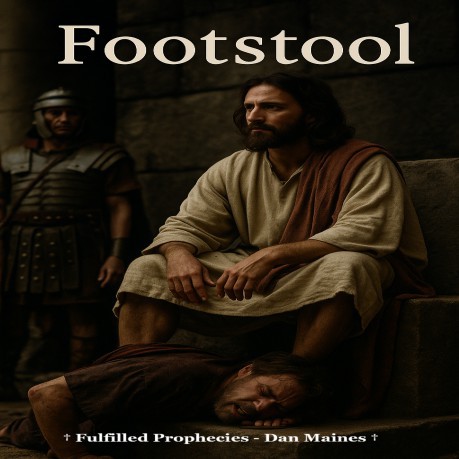
Footstool Psalm 110:1 1 Corinthians 15:25 † The process of making His enemies His
footstool began at the ascension of Christ (Acts 2:34-36; Hebrews
1:3; Hebrews 8:1), as Peter quotes Psalm 110:1 to show its
fulfillment, not as a future event waiting for a second coming. † Paul again quotes Psalm 110:1 to speak of
this ongoing abolishing of all enemies until it's accomplished (1
Corinthians 15:25). The last enemy to be abolished is death (1
Corinthians 15:26). † The New Testament reveals that Christ's rule
and the defeat of His enemies began after His resurrection, when He
ascended and sat down at the right hand of the Father (Acts 2:36;
Ephesians 1:20-22). Daniel 7:13-14 † This confirms that the giving of dominion
happened when Christ came to the Ancient of Days, not from Him,
showing that His reign began at His ascension (Daniel 7:14; Matthew
28:18). This reign continues until all enemies are defeated, at which
time Christ presents the finished kingdom to His Father (1
Corinthians 15:24). Jesus doesn't give up His authority or abdicate
His throne, as many have believed (Luke 1:33; Isaiah 9:7). Psalm 132:7 Isaiah 66:1 † David prophesied that the Messiah would sit
at God's right hand and that His enemies would become His footstool
(Psalm 110:1-7; Acts 2:34-36; Hebrews 10:12-13). This prophecy points
to the exalted position of Jesus as King and High Priest, seated in
authority (Zechariah 6:13). † Futurists struggle with the idea of Christ
ruling now because they expect to see an earthly throne. Yet
Scripture teaches that Jesus already reigns (Colossians 1:13;
Revelation 1:5-6). Matthew 28:18 Psalm 2:8-9 † Christ's authority wasn't postponed. He rules
both heaven and earth now, fulfilling the promises given in Psalms 2
and 110. His kingdom has come, His enemies are being subdued, and His
reign is everlasting (1 Peter 3:22; Revelation 17:14; Philippians
2:9-11). John 18:36 † Jesus' words show why He told the people to
render unto Caesar what's Caesar's (Matthew 22:21). His kingdom was
never intended to be an earthly rule over national Israel (Luke
17:20-21). The kingdom of heaven is spiritual, not physical (Romans
14:17). † When Stephen looked up, he saw Jesus standing
at the right hand of God (Acts 7:56). Heaven is His throne and the
earth His footstool (Acts 7:48-49; Isaiah 66:1). This confirms that
the Messiah's throne is in heaven. The Messianic kingdom rules the
earth from the heavenly realm (Ephesians 1:20-22). † Peter affirms in Acts 2:22-36 that Jesus
reigns now at the right hand of God. Hebrews 8:1 and Revelation 3:21
further testify that the throne of Christ is in heaven, where He
rules over His kingdom. That's why Jesus called it the Kingdom of
Heaven (Matthew 13:41-43). † The greatest misunderstanding among modern
believers is the expectation of a return of Christ to establish a
physical kingdom. That hope belongs to a system that denies what
Christ's already accomplished (Hebrews 9:26-28). † The truth is that Christ fulfilled all
promises. He defeated His enemies, sat upon His throne, and
established His everlasting dominion (Daniel 7:14; Luke 1:33). The
hope of believers should rest on what He's already done, not on what
people think He must still do (John 19:30). † Evil still exists because the heart of man
must be renewed by truth (Mark 7:21-23; James 1:14-15). The devil
doesn't make us sin, for each person chooses light or darkness (John
3:19-21). Redemption is found only in the transformation of the
heart, not in waiting for the destruction of the world (Romans 12:2). † The idea that God will destroy the planet is
man's invention. His judgment in Scripture wasn't about annihilating
creation but about ending the Old Covenant order and establishing the
New (Hebrews 8:13; 2 Peter 3:7,13; Isaiah 65:17). † Psalm 110 remains one of the most powerful
testimonies of fulfilled prophecy. The Lord said to my Lord, sit at
My right hand until I make Your enemies a footstool for Your feet.
Jesus sits now at the right hand of the Father. That means He reigns
right now (Ephesians 1:20-22). What the Footstool Means Hebrews 1:3-4 Historical References How it applies to us today † This is the fulfilled perspective we proclaim at
Fulfilled Prophecies † Source Index Proof and Verification Notes
By Dan Maines
The Father Gives Dominion to the
King.
The Lord says to my Lord: Sit at My right hand Until I
make Your enemies a footstool for Your feet.
For He must reign until
He has put all His enemies under His feet.
I kept looking in the night
visions, And behold, with the clouds of heaven One like a Son of Man
was coming, And He came up to the Ancient of Days And was presented
before Him. And to Him was given dominion, Glory and a kingdom, That
all the peoples, nations, and men of every language Might serve Him.
His dominion is an everlasting dominion Which will not pass away; And
His kingdom is one Which will not be destroyed.
Let us go into His dwelling
place; Let us worship at His footstool.
This is what the Lord says:
Heaven is My throne and the earth is the footstool for My feet. Where
then is a house you could build for Me? And where is a place that I
may rest?
And Jesus came up and spoke to
them, saying, All authority has been given to Me in heaven and on
earth.
Ask of Me, and I will surely
give the nations as Your inheritance, And the very ends of the earth
as Your possession.
You shall break them with a rod of iron, You
shall shatter them like earthenware.
Jesus answered, My kingdom is not
of this world. If My kingdom were of this world, My servants would be
fighting so that I would not be handed over to the Jews; but as it
is, My kingdom is not of this realm.
†
In ancient kingdoms, a footstool symbolized total conquest and
submission. When a king placed his feet on the neck or footstool of
his enemies, it declared that their power was broken and their
dominion ended. This imagery appears throughout Scripture (Joshua
10:24; Psalm 8:6; Hebrews 10:13) to show complete victory. For
Christ, His enemies becoming His footstool means that every power,
authority, and rebellion against Him is subdued under His reign (1
Corinthians 15:25-27; Colossians 2:15). The Father placed all things
under His feet, showing that His rule is absolute and eternal
(Ephesians 1:22; Philippians 2:10-11). The footstool isn't a symbol
of waiting but of reigning.
When He had made purification
of sins, He sat down at the right hand of the Majesty on high, having
become as much better than the angels, as He has inherited a more
excellent name than they.
†
Justin Martyr, Dialogue with Trypho, speaks of Christ reigning from
heaven after His ascension.
† Eusebius,
Ecclesiastical History, records the early church's understanding that
Christ's kingdom began at His resurrection and exaltation.
†
Tertullian, Against Marcion, affirms that the Messiah's rule is
spiritual and heavenly, not earthly.
†
Clement of Rome, 1 Clement 36, wrote of Christ's exaltation and rule
from heaven, saying He is "the scepter of the majesty of God"
through whom "all things were made subject."
†
We live under the reign of Christ, not waiting for it. His enemies
are defeated, and His kingdom is everlasting. Our hope rests not in a
future physical return but in the present reality of His fulfilled
promises (Luke 17:20-21; Revelation 11:15). This truth gives peace
and purpose, showing that redemption and judgment have already come,
and the kingdom will never end (Daniel 7:14; Isaiah 9:7).
†
Because His reign is complete, we walk in His victory. The enemies He
defeated, sin, death, and the Old Covenant system, can never rise
again (Romans 6:9; Hebrews 9:26).
© Fulfilled Prophecies - Dan
Maines.
† Psalm
110:1; 1 Corinthians 15:25-27; Acts 2:34-36; Daniel 7:13-14; Psalm
132:7; Isaiah 66:1; Matthew 28:18; Psalm 2:8-9; John 18:36; Matthew
22:21; Acts 7:48-56; Hebrews 1:3-4; Hebrews 8:1; Revelation 3:21;
Luke 1:33; Isaiah 9:7; Zechariah 6:13; Colossians 1:13; Revelation
1:5-6; Philippians 2:9-11; Luke 17:20-21; Romans 14:17; Mark 7:21-23;
James 1:14-15; Hebrews 8:13; Isaiah 65:17; Ephesians 1:20-22; Joshua
10:24; Psalm 8:6; Hebrews 10:13; Colossians 2:15; Philippians
2:10-11; Revelation 11:15; Romans 6:9; Hebrews 9:26
†
Christ's reign began at the ascension, fulfilling Psalm 110:1 (Acts
2:34-36; Hebrews 1:3; Hebrews 8:1; Daniel 7:13-14).
†
He reigns until all enemies are under His feet, and death is the last
enemy (1 Corinthians 15:25-27).
† Footstool
imagery means total conquest and submission (Joshua 10:24; Psalm 8:6;
Hebrews 10:12-13).
† His authority is
universal now, not postponed (Matthew 28:18; Acts 2:36; Psalm
2:8-9).
† His throne and kingdom are
heavenly, yet ruling the earth (John 18:36; Acts 7:48-49; Revelation
3:21; Hebrews 8:1).
† Render to Caesar aligns
with a non-earthly, non-national rule (Matthew 22:21; John 18:36;
Matthew 28:18).
† Delivering the kingdom to
the Father is presentation, not abdication (1 Corinthians 15:24;
Daniel 7:14; Luke 1:33; Isaiah 9:7).
† The
New Covenant replaced the Old, not the creation itself (Hebrews 8:13;
Hebrews 9:26; Isaiah 66:1; Psalm 132:7; Isaiah 45:18; Ecclesiastes
1:4).
† Moral evil persists because of the
human heart, not irresistible demonic coercion (Mark 7:21-23; James
1:14-15).
† "Kingdom of heaven"
language is consistent with a heavenly throne ruling earth (Matthew
4:17; Matthew 13).
† Stephen's vision fits
the present reign (Acts 7:56).
† Early
Christian witnesses align with heavenly reign (Justin Martyr,
Dialogue with Trypho; Eusebius, Ecclesiastical History; Tertullian,
Against Marcion; Clement of Rome, 1 Clement 36).
Links