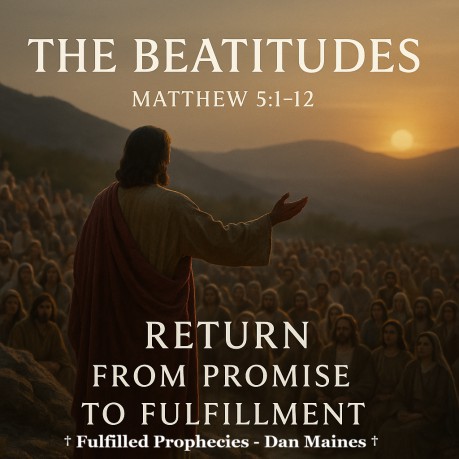
The Beatitudes † The Beatitudes aren't simply moral virtues or
steps toward happiness. They're covenantal declarations spoken by
Jesus, revealing the spiritual nature of those who would inherit the
Kingdom. Each blessing described the character of the faithful who
would receive the promises of the New Covenant when the Old Covenant
world ended. Those who were poor in spirit, meek, merciful, pure in
heart, and peacemakers were the true Israel of God, both Jew and
Gentile, who would enter the Kingdom when it came in fullness at the
end of the age in AD 70. The Beatitudes outlined the spiritual
transformation of the New Covenant community and the reward that
awaited them when the old system passed away. Matthew 5:1-12 Blessed are the poor in spirit, for theirs is the kingdom of
heaven. † These words weren't meant for a far-off age
but were spoken to those living at the close of the Old Covenant
world, showing who would truly inherit the promises of God. † The Beatitudes describe the spiritual
character of those who would enter the Kingdom. Jesus was teaching
His disciples what life in the Kingdom would look like under the New
Covenant. These blessings weren't promises of worldly gain, but of
covenantal transformation. † The poor in spirit recognized their spiritual
need. Israel's pride had to be broken before the kingdom could be
received (Isaiah 66:2). The humble received the kingdom that the
proud rulers rejected (Matthew 21:43). † Those who mourned were those lamenting
Israel's fallen condition and longing for redemption. In AD 70, the
system that caused the mourning was destroyed, and the comfort of the
New Jerusalem was revealed (Revelation 21:4). † The gentle, or meek, were those who submitted
to God's will. The promise to inherit the earth finds its fulfillment
in the New Covenant world, where Christ reigns over all nations
(Psalm 37:11, Matthew 28:18). † Those who hungered and thirsted for
righteousness weren't longing for law-based justification, but for
God's righteousness through faith. This was fulfilled in Christ
(Romans 3:21-22). † The merciful reflected the heart of God, who
desired mercy rather than sacrifice (Hosea 6:6). Mercy triumphed over
judgment in the New Covenant (James 2:13). † The pure in heart weren't those ceremonially
clean, but those inwardly cleansed. They'd see God because access
into His presence was granted through Christ (Hebrews 10:19-22). † The peacemakers were the ministers of
reconciliation, proclaiming peace between God and man through the
finished work of Christ (2 Corinthians 5:18-20). † The persecuted were those who suffered for
righteousness' sake. Their vindication came when the persecutors,
chiefly unbelieving Israel, were judged in that generation (Matthew
23:34-36). † When Jesus said, Rejoice and be glad, He
pointed to the eternal reality of the Kingdom. Their reward wasn't in
some future age, but in the heavenly realm now opened to believers
(Hebrews 12:22-24). Historical References † Josephus records that those who sought peace
and righteousness in Judea were often slain by zealots during the
war, yet their faith was vindicated when judgment fell upon their
persecutors (Josephus, Wars 4.3.8). How it applies to us today † The Beatitudes remind us that the Kingdom
isn't about outward appearance or religious show, but about the
inward transformation of the heart. † This is the fulfilled perspective we proclaim at
Fulfilled Prophecies † Source Index
By Dan Maines
Blessed are those who mourn, for they shall be
comforted.
Blessed are the gentle, for they shall inherit the
earth.
Blessed are those who hunger and thirst for
righteousness, for they shall be satisfied.
Blessed are the
merciful, for they shall receive mercy.
Blessed are the pure in
heart, for they shall see God.
Blessed are the peacemakers, for
they shall be called sons of God.
Blessed are those who have
been persecuted for the sake of righteousness, for theirs is the
kingdom of heaven.
Blessed are you when people insult you and
persecute you, and falsely say all kinds of evil against you because
of Me. Rejoice and be glad, for your reward in heaven is great, for
in the same way they persecuted the prophets who were before you.
† Clement
of Rome and Ignatius both reminded early Christians that the
persecution they endured was the same kind suffered by the prophets,
showing the continuity of God's righteous servants before and after
Christ.
† Eusebius wrote that the believers
who obeyed Christ's warning fled to Pella before the destruction of
Jerusalem and were preserved, demonstrating God's mercy toward the
meek who trusted His word (Eusebius, Ecclesiastical History 3.5).
† Every
blessing Jesus spoke has its fulfillment in His completed work. The
New Covenant believers now live in the reality of these promises.
†
We're called to live as citizens of the Kingdom, humble, merciful,
and peacemaking, reflecting the righteousness of God in a reconciled
world.
† The Beatitudes aren't future
promises, but present realities fulfilled in Christ's Kingdom, where
righteousness, peace, and joy now reign forever.
© Fulfilled Prophecies - Dan
Maines.
† Matthew
5:1-12; Isaiah 66:2; Matthew 21:43; Revelation 21:4; Psalm 37:11;
Matthew 28:18; Romans 3:21-22; Hosea 6:6; James 2:13; Hebrews
10:19-22; 2 Corinthians 5:18-20; Matthew 23:34-36; Hebrews 12:22-24
†
Josephus, Wars 4.3.8
† Clement of Rome,
Epistle to the Corinthians
† Ignatius,
Epistle to the Magnesians
† Eusebius,
Ecclesiastical History 3.5
Links