The Spiritual Body and the
End of the Age The First Man and the Second Man The Mystery of Change The Last Trumpet and the Fulfillment of Resurrection The Spiritual and Immortal Life in Christ Historical References How It Applies to Us Today † This is the fulfilled perspective we proclaim at
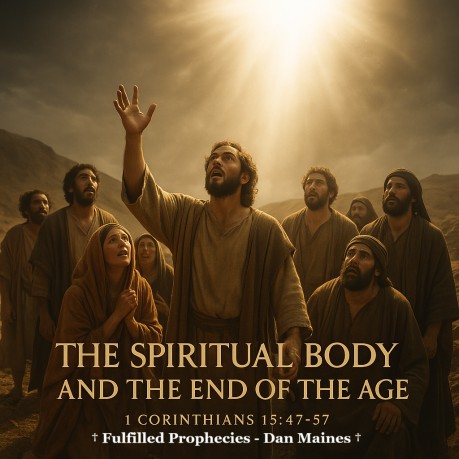
Fulfilled Prophecies † Source Index This image represents the transformation from the natural
body to the spiritual body that Paul described in 1 Corinthians
15:47-57. The figures are first-century believers, standing
beneath a brilliant heavenly light that symbolizes
the power of Christ's resurrection and the fulfillment of the
New Covenant. Their faces show awe and hope, representing
those who were changed, not in physical form, but in
covenantal identity, from the body of death in Adam
to the spiritual body of life in Christ. The man reaching toward the light visually expresses the mystery
of change Paul spoke of: "We shall not all sleep, but
we shall all be changed." This scene captures the moment when
the corruptible (old covenant Israel) put on
incorruption (the New Covenant life), and death
was swallowed up in victory. So this image doesn't depict a future physical resurrection. It
represents the spiritual resurrection and transformation
that took place as Christ's kingdom was fully established, when
believers entered immortality through Him, the fulfillment of the
spiritual body.
By Dan Maines
1 Corinthians 15:47-57
†
The first man was from the earth, Adam, who brought death and
corruption into the world (1 Corinthians 15:47; Romans 5:12; 1
Corinthians 15:22). The second Man, Christ, came from heaven and
brought life and immortality. Paul contrasts the earthy with the
heavenly to show that those in Adam were of the dust, but those in
Christ share His heavenly nature.
† This
passage doesn't describe a change of physical substance but a change
of covenant identity. The natural body refers to the old covenant
body of death, and the spiritual body refers to the new covenant body
of life in Christ (Romans 8:9-11). Under Adam, humanity was bound by
sin and death, but through Christ, believers are made alive in the
Spirit.
† To bear the image of the heavenly
Man means to share His nature, not His flesh. Our transformation
isn't about material composition, but about moving from mortality in
Adam to immortality in Christ, from separation under law to union
through grace (2 Corinthians 3:6-9; 2 Corinthians 5:17).
†
Paul said, We shall not all sleep, but we shall all be changed (1
Corinthians 15:51). The word "mystery" refers to something
once hidden but now revealed in Christ. The change Paul described was
the transition from the old covenant order to the new, from the body
of sin and death under the law to the body of Christ, the church,
filled with His Spirit (Romans 7:4-6; 1 Corinthians 12:12-13;
Galatians 4:4-5).
† The change was
covenantal, not biological. Flesh and blood could not inherit the
kingdom because that old system of the flesh, tied to temple rituals
and sacrifices, was perishable and temporary (Hebrews 8:13). The new
covenant, by contrast, is spiritual and eternal.
†
The Bible never speaks of the end of time but of the time of the end
(Hebrews 9:26; 1 Corinthians 10:11; Romans 8:23). The "time of
the end" was the conclusion of the Mosaic age, when Christ
appeared to remove sin and establish eternal redemption.
†
Paul said, This mortal must put on immortality (1 Corinthians 15:53).
This mortal referred to those still under the law, condemned by sin
and death. When they put on immortality, it meant they entered the
new covenant, where life is eternal in Christ and no longer subject
to death.
† The mystery, therefore, was the
transformation of God's covenant people, from the perishing body of
Adam into the imperishable body of Christ. What had been sown in
weakness was raised in glory (1 Corinthians 15:42-44).
†
Paul said the change would occur at the last trumpet (1 Corinthians
15:52). Jesus spoke of this same trumpet in Matthew 24:31, when He
sent His angels to gather His elect at His coming. That event was
fulfilled in AD 70 when Christ returned in judgment upon Jerusalem,
ending the old covenant and establishing His kingdom in its fullness
(Revelation 11:15).
† The corruptible body of
Israel under the law put on incorruption through the New Covenant,
and death was swallowed up in victory (1 Corinthians 15:54-57). This
was not a physical rising of corpses but a spiritual resurrection
from death in Adam to life in Christ (Ephesians 2:5-6).
†
The sting of death was sin, and the strength of sin was the law (1
Corinthians 15:56). When the law passed away, death lost its power,
and victory was secured through Christ's finished work.
†
Those in Christ have already been raised to newness of life (Romans
6:4-5). We've been transformed into His image, bearing the likeness
of the heavenly Man (Colossians 3:10).
†
Because we live in the New Covenant age, we already possess
immortality. Jesus said, He who believes in Me will live even if he
dies, and everyone who lives and believes in Me will never die (John
11:25-26).
† The resurrection is not
something we are waiting to receive in the future, because Christ has
already overcome death. We now live in the age where death has no
more dominion (Romans 6:9; 2 Timothy 1:10).
†
The transformation is ongoing in the life of every believer as we
walk in the Spirit. Though our outer man is decaying, our inner man
is renewed day by day (2 Corinthians 4:16). The immortal life we have
in Christ is the fruit of His fulfilled promise.
†
Justin Martyr (AD 155, Dialogue with Trypho, Chapter 80) – He spoke
of the resurrection being spiritual and connected to the
transformation of believers into the likeness of Christ.
†
Irenaeus (AD 180, Against Heresies, Book 5, Chapter 13) – He wrote
that those who receive the Spirit are changed into incorruption by
union with Christ.
† Eusebius (AD 325,
Ecclesiastical History, Book 3) – He recorded that the destruction
of Jerusalem marked the close of the old age and the full
establishment of Christ's kingdom.
†
We are not waiting for the end of time or a future resurrection. We
live in the time when death has been defeated, and life in Christ
reigns (Hebrews 12:28).
† Our hope is not in
a transformation of flesh but in the reality that we've already been
made new creations (2 Corinthians 5:17).
† We
now walk in the victory of Christ's finished work, knowing we've been
raised with Him and seated in heavenly places (Ephesians 2:6).
†
The same mystery revealed to Paul is fulfilled in us. We are the
living proof of God's completed redemption, walking as citizens of
His everlasting kingdom.
© Fulfilled Prophecies - Dan
Maines.
† 1
Corinthians 15:47-57; 1 Corinthians 15:22; Romans 5:12; Romans 6:4-9;
Romans 7:4-6; Romans 8:9-11; Romans 8:23; Galatians 4:4-5; 2
Corinthians 3:6-9; 2 Corinthians 4:16; 2 Corinthians 5:17; Ephesians
2:5-6; Colossians 3:10; John 11:25-26; Matthew 24:31; Hebrews 8:13;
Hebrews 9:26; Hebrews 12:28; 1 Corinthians 10:11; Revelation 11:15; 2
Timothy 1:10
† Justin Martyr, Dialogue with
Trypho, Chapter 80
† Irenaeus, Against
Heresies, Book 5, Chapter 13
† Eusebius,
Ecclesiastical History, Book 3
Links