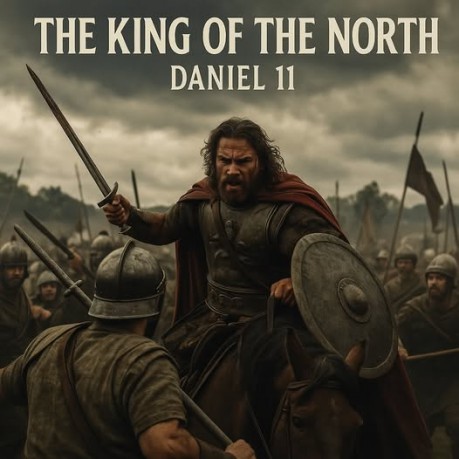
The
King of the North - Daniel 11 Daniel
11:1-4 Daniel 11:5-20 Daniel 11:21-35 Daniel 11:36-39 Daniel 11:40-45 Fulfillment Perspective How It Applies To Us Today † This is the fulfilled
perspective we proclaim at Fulfilled Prophecies † Source Index Optional Preface (for readers
or listeners) Optional Historical
Timeline Precise Primary-Source
References
By Dan Maines
† Daniel records the
angel's message that after the Persian kings, a mighty Greek king
would rise. History identifies this as Alexander the Great. After
his death, his empire was divided into four parts, not to his
descendants but to his generals, fulfilling the prophecy exactly.
†
Historical sources such as Josephus and secular historians confirm
that Alexander's empire was split between Cassander, Lysimachus,
Seleucus, and Ptolemy, aligning with Daniel's fourfold division.
†
Isaiah 46:10 reminds us that God declares the end from the
beginning, showing His sovereignty over these events.
†
Daniel 2:44 reinforces this certainty, declaring that God's kingdom
"will crush and put an end to all these kingdoms, but it will
itself endure forever."
†
The text moves to the conflicts between the Ptolemies (kings of the
South, Egypt) and the Seleucids (kings of the North, Syria). Verses
5-19 detail centuries of warfare, alliances, and betrayals. This is
precisely mirrored in the wars recorded by historians like Josephus
and Polybius.
† Antiochus III (the Great)
is a key King of the North during this section, rising in power and
even defeating Egypt at times. Yet he ultimately dies, fulfilling
the word that "he shall stumble and fall and not be found."
†
Proverbs 21:1 reminds us that "the king's heart is like
channels of water in the hand of the Lord; He turns it wherever He
wishes," demonstrating God's rule over these ancient
struggles.
† Psalm 33:10-11 shows that the
Lord nullifies the plans of nations, but His counsel stands
forever, perfectly matching the rise and fall of these empires.
†
Here Antiochus IV Epiphanes emerges, a Seleucid ruler who fits the
King of the North perfectly. He seized the throne by intrigue,
persecuted the Jews, and desecrated the Temple by offering swine
and setting up an idol of Zeus. The "abomination of
desolation" (v. 31) matches this period. Josephus and 1
Maccabees record these events in detail.
†
Verse 32 speaks of those who "know their God" taking
action. This points to the faithful Maccabees and those who
resisted Antiochus, showing that even in severe persecution, God's
people remained steadfast.
† Hebrews
11:33-34 speaks of those who "shut the mouths of lions,
quenched the power of fire, escaped the edge of the sword,"
echoing the courage of these faithful ones.
†
Jesus later refers to this same "abomination of desolation"
in Matthew 24:15, connecting Daniel's prophecy to events His
first-century audience would recognize.
†
Revelation 6:9-11 gives another picture of faithful witnesses
enduring persecution yet resting in God's justice.
†
Some see a transition here, but the context still fits Antiochus.
He exalted himself above all gods, speaking blasphemies, and
honored a foreign god of war. His arrogance and idolatry match the
historical record.
† Psalm 2:2-4 reminds us
that earthly rulers who oppose God only fulfill His divine plan,
and He laughs at their rebellion.
† Isaiah
14:24-27 declares that the Lord of hosts has sworn that His plan
will stand, no matter the schemes of men.
†
The final movements of the King of the North describe his campaigns
and ultimate end. Antiochus led a final assault into the south but
was turned back. He died in Persia, not in battle but of disease,
with none to help him, just as the prophecy foretells.
†
This precise fulfillment strengthens our faith that God's word
never fails (Numbers 23:19).
† Daniel 7:27
assures that the kingdom and dominion are given to the saints of
the Most High, showing the triumph of God's people even as earthly
rulers fall.
†
Daniel 11 is a stunning prophecy fulfilled in precise historical
detail. From Persian kings to Alexander's rise and fall, through
the wars of the Ptolemies and Seleucids, and culminating in
Antiochus IV, history verifies the vision. This is not future, it
is fulfilled history that strengthens our confidence in God's
sovereignty.
† Luke 21:22 declares, "these
are days of vengeance, so that all things which are written will be
fulfilled," confirming that prophecy has reached completion.
†
Revelation 11:15 proclaims that "The kingdom of the world has
become the kingdom of our Lord and of His Christ, and He will reign
forever and ever," showing Christ's present reign.
†
God rules over the kingdoms of men. The rise and fall of empires,
the schemes of powerful rulers, and the trials of the faithful all
unfold under His hand. Just as He preserved His people through
Antiochus's persecution, He keeps His covenant people today. We
stand in the finished victory of Christ, knowing no earthly power
can overturn His kingdom.
† Philippians
2:9-11 assures that every knee will bow and every tongue confess
that Jesus Christ is Lord, reinforcing the victory already
accomplished.
†
Josephus - Antiquities of the Jews, Book 12
†
1 Maccabees 1-4
† Polybius, Histories
†
Daniel 11 full chapter (NASB)
† Isaiah
46:10; Proverbs 21:1; Psalm 33:10-11; Hebrews 11:33-34; Matthew
24:15; Revelation 6:9-11; Psalm 2:2-4; Numbers 23:19; Isaiah
14:24-27; Daniel 7:27; Luke 21:22; Revelation 11:15; Philippians
2:9-11
† Daniel 11 stands
as one of the clearest demonstrations that biblical prophecy is
rooted in verifiable history. Every major empire and ruler
mentioned is confirmed by ancient records. This sermon explores how
the Lord revealed detailed events centuries before they occurred,
proving His sovereignty and the certainty of His covenant promises.
† 539 BC - Persian Empire
rises under Cyrus.
† 333 BC - Alexander the
Great defeats Persia.
† 323 BC - Alexander
dies; empire divided among Cassander, Lysimachus, Seleucus,
Ptolemy.
† 301-168 BC - Ptolemaic and
Seleucid conflicts dominate the Near East.
†
175-164 BC - Antiochus IV Epiphanes reigns; desecration of the
Jerusalem Temple (167 BC).
† Josephus, Antiquities
of the Jews 12.5.4-12.7.6
† 1 Maccabees
1:10-4:61
† Polybius, Histories 5.67-8.23
†
Diodorus Siculus, Bibliotheca Historica fragments on the Seleucid
wars
Links