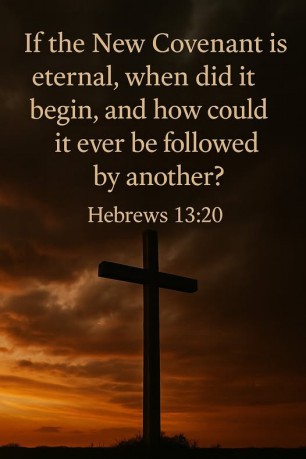
The
New Covenant is called eternal in Hebrews 13:20, meaning it has no
end and cannot be replaced or followed by another. Scripture is clear
about both its beginning and its permanence: It began with the death and
resurrection of Jesus, who said, "This cup, which is poured out
for you, is the new covenant in My blood" (Luke 22:20). His
sacrifice inaugurated it. It was confirmed and fully established
when the Old Covenant system was judged and removed in 70 AD, just as
Hebrews 8:13 said: "But whatever is becoming obsolete and
growing old is about to disappear." The New Covenant is everlasting
because: It was ratified by the blood of the
eternal Son of God. It provides eternal redemption (Hebrews
9:12). It secures an unshakable kingdom
(Hebrews 12:28). It is not like the Old Covenant which
was broken (Jeremiah 31:31-32). So no, it cannot be followed by
another. Any idea of a future covenant replacing it contradicts the
plain language of Hebrews and the completed redemptive work of
Christ.
By Dan Maines
Links