Romans 7:1 † Paul addresses those familiar with the Law,
showing its authority applies only while a person is alive. This sets
up his argument that death with Christ ends the Law's jurisdiction. † The covenant order is clear. The Law bound
Israel until its purpose was fulfilled. Jesus said in Matthew 5:18
that not one letter would pass until all was accomplished. Paul is
declaring that fulfillment has now come. † Josephus (Antiquities 3.12.1) described how
Israel lived under the Law's continual jurisdiction. Paul's point is
radical, that jurisdiction ends with death in Christ. Romans 7:2-3 † Marriage is used as an analogy. Death ends
the legal bond. Likewise, death with Christ ends the binding
authority of the Law. † Jeremiah 31:32 portrays Israel as a wife who
broke covenant with her husband. Paul shows that the old marriage
covenant has ended, releasing believers to belong to Christ. † The Mishnah (Gittin 9:10) details how
marriage bonds were legally broken only by death or divorce. Paul
applies this same legal understanding to the Law itself. Romans 7:4 † Through Christ's death, believers died to the
Law. They are now joined to the risen Christ. Covenant fruit comes
not from the Law but from union with Him. † Isaiah 54:5 declared, "Your husband is
your Maker." Paul applies this to Christ, showing the church's
covenant marriage to Him. † Origen taught that belonging to Christ
fulfills the Law's purpose, moving from written code to Spirit-filled
life. Romans 7:5-6 † The Law exposed sin and produced fruit for
death. In Christ, believers are released to serve in the Spirit. † Ezekiel 36:26-27 promised a new Spirit to
enable obedience. Paul declares this is now reality. † Philo contrasted the written letter with the
living Spirit, saying the Spirit gave vitality. Paul shows the New
Covenant has replaced the old letter completely. Romans 7:7 † Paul defends the Law. It is not sin, but it
reveals sin. The tenth commandment shows the Law exposed inward
desires as sinful, not only outward acts. † Josephus (Antiquities 3.5.5) observed that
the Law restrained visible actions. Paul shows it also condemned the
heart. Romans 7:8-9 † The Law, meant for life, stirred sin. Sin
exploited the commandment to produce greater rebellion. † The Dead Sea Scrolls (1QH Thanksgiving Hymns)
describe the overwhelming power of sin in human flesh. Paul echoes
this by showing how the Law intensified sin's presence. Romans 7:10-11 † Leviticus 18:5 said the one who obeys will
live, but no one kept the Law perfectly. Instead of life, the Law
brought death, because sin used it as a weapon. † The Jewish historian Josephus (Antiquities
13.10.6) shows how Israel believed life was in the Law. Paul
dismantles that assumption. Romans 7:12 † The Law itself was good. The problem was not
the Law but sin in human flesh. † The early church fathers consistently
defended the Law as holy while affirming it was fulfilled in Christ. Romans 7:13 † Sin is revealed in its fullness by exploiting
what is good. The Law was good, but sin turned it into the occasion
for death. Romans 7:14 † The Law is spiritual, reflecting God's
holiness. The problem is human flesh enslaved to sin. † The Qumran community (1QS 3.18-21) admitted
the weakness of flesh in obeying the Law. Paul aligns with this
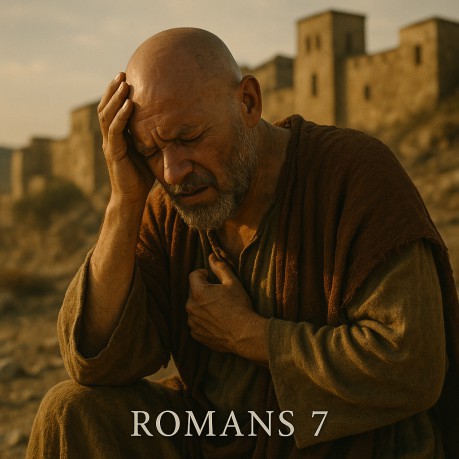
reality. Romans 7:15-16 † This describes the frustration of one under
the Law. The will to do good exists, but the power to carry it out
does not. † This is the universal Jewish struggle before
Christ, confirming that the Law is good but powerless to deliver. Romans 7:17-18 † Sin indwells the flesh, overpowering the
will. This shows why the Law cannot justify. † Philo often spoke of sin as an inner tyrant.
Paul agrees but shows deliverance is only in Christ. Romans 7:19-20 † Paul repeats the dilemma, highlighting the
depth of sin's power. Human will cannot overcome flesh. Romans 7:21-23 † The inner person desires God's law, but sin
in the flesh wars against it. This is the covenant struggle, a mind
delighting in God yet bound by the body of death. † Tacitus (Histories 5.13) observed that Jews
boasted in the Law yet often failed to live by it. Paul confirms that
the Law alone cannot produce obedience. Romans 7:24-25 † The cry of despair highlights the futility of
life under the Law. Deliverance comes only through Christ. † This transition prepares the way for Romans
8, where the Spirit frees from the law of sin and death. How it applies to us today † The Law exposes sin but cannot free from it.
Only Christ delivers. † Legalism today repeats the same error,
seeking righteousness through rules. Paul shows this path only leads
to despair. † True freedom is found in Christ, not in human
effort. We serve God in the Spirit, not in the old letter. † The struggle in Romans 7 reminds us that
without Christ, sin rules. With Him, deliverance and life are
secured. † This is the fulfilled perspective we proclaim at
Fulfilled Prophecies † Source Index Romans 7:1 † Paul addresses those familiar with the Law,
showing its authority applies only while a person is alive. This sets
up his argument that death with Christ ends the Law's jurisdiction. † The covenant order is clear. The Law bound
Israel until its purpose was fulfilled. Jesus said in Matthew 5:18
that not one letter would pass until all was accomplished. Paul is
declaring that fulfillment has now come. † Josephus (Antiquities 3.12.1) described how
Israel lived under the Law's continual jurisdiction. Paul's point is
radical, that jurisdiction ends with death in Christ. Romans 7:2-3 † Marriage is used as an analogy. Death ends
the legal bond. Likewise, death with Christ ends the binding
authority of the Law. † Jeremiah 31:32 portrays Israel as a wife who
broke covenant with her husband. Paul shows that the old marriage
covenant has ended, releasing believers to belong to Christ. † The Mishnah (Gittin 9:10) details how
marriage bonds were legally broken only by death or divorce. Paul
applies this same legal understanding to the Law itself. Romans 7:4 † Through Christ's death, believers died to the
Law. They are now joined to the risen Christ. Covenant fruit comes
not from the Law but from union with Him. † Isaiah 54:5 declared, "Your husband is
your Maker." Paul applies this to Christ, showing the church's
covenant marriage to Him. † Origen taught that belonging to Christ
fulfills the Law's purpose, moving from written code to Spirit-filled
life. Romans 7:5-6 † The Law exposed sin and produced fruit for
death. In Christ, believers are released to serve in the Spirit. † Ezekiel 36:26-27 promised a new Spirit to
enable obedience. Paul declares this is now reality. † Philo contrasted the written letter with the
living Spirit, saying the Spirit gave vitality. Paul shows the New
Covenant has replaced the old letter completely. Romans 7:7 † Paul defends the Law. It is not sin, but it
reveals sin. The tenth commandment shows the Law exposed inward
desires as sinful, not only outward acts. † Josephus (Antiquities 3.5.5) observed that
the Law restrained visible actions. Paul shows it also condemned the
heart. Romans 7:8-9 † The Law, meant for life, stirred sin. Sin
exploited the commandment to produce greater rebellion. † The Dead Sea Scrolls (1QH Thanksgiving Hymns)
describe the overwhelming power of sin in human flesh. Paul echoes
this by showing how the Law intensified sin's presence. Romans 7:10-11 † Leviticus 18:5 said the one who obeys will
live, but no one kept the Law perfectly. Instead of life, the Law
brought death, because sin used it as a weapon. † The Jewish historian Josephus (Antiquities
13.10.6) shows how Israel believed life was in the Law. Paul
dismantles that assumption. Romans 7:12 † The Law itself was good. The problem was not
the Law but sin in human flesh. † The early church fathers consistently
defended the Law as holy while affirming it was fulfilled in Christ. Romans 7:13 † Sin is revealed in its fullness by exploiting
what is good. The Law was good, but sin turned it into the occasion
for death. Romans 7:14 † The Law is spiritual, reflecting God's
holiness. The problem is human flesh enslaved to sin. † The Qumran community (1QS 3.18-21) admitted
the weakness of flesh in obeying the Law. Paul aligns with this
reality. Romans 7:15-16 † This describes the frustration of one under
the Law. The will to do good exists, but the power to carry it out
does not. † This is the universal Jewish struggle before
Christ, confirming that the Law is good but powerless to deliver. Romans 7:17-18 † Sin indwells the flesh, overpowering the
will. This shows why the Law cannot justify. † Philo often spoke of sin as an inner tyrant.
Paul agrees but shows deliverance is only in Christ. Romans 7:19-20 † Paul repeats the dilemma, highlighting the
depth of sin's power. Human will cannot overcome flesh. Romans 7:21-23 † The inner person desires God's law, but sin
in the flesh wars against it. This is the covenant struggle, a mind
delighting in God yet bound by the body of death. † Tacitus (Histories 5.13) observed that Jews
boasted in the Law yet often failed to live by it. Paul confirms that
the Law alone cannot produce obedience. Romans 7:24-25 † The cry of despair highlights the futility of
life under the Law. Deliverance comes only through Christ. † This transition prepares the way for Romans
8, where the Spirit frees from the law of sin and death. How it applies to us today † The Law exposes sin but cannot free from it.
Only Christ delivers. † Legalism today repeats the same error,
seeking righteousness through rules. Paul shows this path only leads
to despair. † True freedom is found in Christ, not in human
effort. We serve God in the Spirit, not in the old letter. † The struggle in Romans 7 reminds us that
without Christ, sin rules. With Him, deliverance and life are
secured. † This is the fulfilled perspective we proclaim at
Fulfilled Prophecies † Source Index
By Dan MainesRomans 7
Or do you not know, brothers and
sisters (for I am speaking to those who know the Law), that the Law
has jurisdiction over a person as long as he lives?
For the married woman is bound
by law to her husband as long as he is alive, but if her husband
dies, she is released from the law concerning the husband. So then,
if while her husband is alive she gives herself to another man, she
will be called an adulteress, but if her husband dies, she is free
from the law, so that she is not an adulteress if she gives herself
to another man.
Therefore, my brothers and
sisters, you also were put to death in regard to the Law through the
body of Christ, so that you might belong to another, to Him who was
raised from the dead, in order that we might bear fruit for God.
For while we were in the flesh,
the sinful passions, which were brought to light by the Law, were at
work in the parts of our body to bear fruit for death. But now we
have been released from the Law, having died to that by which we were
bound, so that we serve in newness of the Spirit and not in oldness
of the letter.
What shall we say then? Is the
Law sin? Far from it! On the contrary, I would not have come to know
sin except through the Law, for I would not have known about coveting
if the Law had not said, "You shall not covet."
But sin, taking an opportunity
through the commandment, produced in me coveting of every kind, for
apart from the Law sin is dead. I was once alive apart from the Law,
but when the commandment came, sin came to life and I died.
and this commandment, which
was to result in life, proved to result in death for me, for sin,
taking an opportunity through the commandment, deceived me, and
through it, killed me.
So then, the Law is holy, and
the commandment is holy and righteous and good.
Therefore did that which is good
become a cause of death for me? Far from it! On the contrary, it was
sin, in order that it might be shown to be sin by bringing about my
death through that which is good, so that through the commandment sin
would become utterly sinful.
For we know that the Law is
spiritual, but I am fleshly, sold into bondage to sin.
For I do not understand what
I am doing, for I am not practicing what I want to do, but I do the
very thing I hate. However, if I do the very thing I do not want to
do, I agree with the Law, that the Law is good.
But now, no longer am I the
one doing it, but sin that dwells in me. For I know that good does
not dwell in me, that is, in my flesh, for the willing is present in
me, but the doing of the good is not.
For the good that I want, I
do not do, but I practice the very evil that I do not want. But if I
do the very thing I do not want, I am no longer the one doing it, but
sin that dwells in me.
I find then the principle
that evil is present in me, the one who wants to do good. For I
joyfully agree with the Law of God in the inner person, but I see a
different law in the parts of my body waging war against the law of
my mind, and making me a prisoner of the law of sin, the law which is
in my body's parts.
Wretched man that I am! Who
will set me free from the body of this death? Thanks be to God
through Jesus Christ our Lord! So then, on the one hand I myself with
my mind am serving the Law of God, but on the other, with my flesh
the law of sin.
† Jeremiah
31:32 – Israel as an unfaithful wife breaking covenant
†
Mishnah, Gittin 9:10 – Marriage bonds ended only by death or
divorce
† Isaiah 54:5 – God as Israel's
husband
† Ezekiel 36:26-27 – New Spirit
replacing the old letter
† Josephus,
Antiquities 3.5.5 – Law restraining visible actions
†
Dead Sea Scrolls, 1QH Thanksgiving Hymns – Confession of human
weakness
† Dead Sea Scrolls, 1QS 3.18-21 –
The weakness of flesh in obeying the Law
†
Leviticus 18:5 – Law promised life if perfectly kept
†
Origen, Commentary on Romans – Christ as fulfillment of Law
†
Philo, Allegorical Interpretation – Sin as an inner tyrant
†
Tacitus, Histories 5.13 – Jewish failure to live by their own Law
†
Chrysostom, Homilies on Romans – On the weakness of flesh under the
Law
Romans 7
Or do you not know, brothers and
sisters (for I am speaking to those who know the Law), that the Law
has jurisdiction over a person as long as he lives?
For the married woman is bound
by law to her husband as long as he is alive, but if her husband
dies, she is released from the law concerning the husband. So then,
if while her husband is alive she gives herself to another man, she
will be called an adulteress, but if her husband dies, she is free
from the law, so that she is not an adulteress if she gives herself
to another man.
Therefore, my brothers and
sisters, you also were put to death in regard to the Law through the
body of Christ, so that you might belong to another, to Him who was
raised from the dead, in order that we might bear fruit for God.
For while we were in the flesh,
the sinful passions, which were brought to light by the Law, were at
work in the parts of our body to bear fruit for death. But now we
have been released from the Law, having died to that by which we were
bound, so that we serve in newness of the Spirit and not in oldness
of the letter.
What shall we say then? Is the
Law sin? Far from it! On the contrary, I would not have come to know
sin except through the Law, for I would not have known about coveting
if the Law had not said, "You shall not covet."
But sin, taking an opportunity
through the commandment, produced in me coveting of every kind, for
apart from the Law sin is dead. I was once alive apart from the Law,
but when the commandment came, sin came to life and I died.
and this commandment, which
was to result in life, proved to result in death for me, for sin,
taking an opportunity through the commandment, deceived me, and
through it, killed me.
So then, the Law is holy, and
the commandment is holy and righteous and good.
Therefore did that which is good
become a cause of death for me? Far from it! On the contrary, it was
sin, in order that it might be shown to be sin by bringing about my
death through that which is good, so that through the commandment sin
would become utterly sinful.
For we know that the Law is
spiritual, but I am fleshly, sold into bondage to sin.
For I do not understand what
I am doing, for I am not practicing what I want to do, but I do the
very thing I hate. However, if I do the very thing I do not want to
do, I agree with the Law, that the Law is good.
But now, no longer am I the
one doing it, but sin that dwells in me. For I know that good does
not dwell in me, that is, in my flesh, for the willing is present in
me, but the doing of the good is not.
For the good that I want, I
do not do, but I practice the very evil that I do not want. But if I
do the very thing I do not want, I am no longer the one doing it, but
sin that dwells in me.
I find then the principle
that evil is present in me, the one who wants to do good. For I
joyfully agree with the Law of God in the inner person, but I see a
different law in the parts of my body waging war against the law of
my mind, and making me a prisoner of the law of sin, the law which is
in my body's parts.
Wretched man that I am! Who
will set me free from the body of this death? Thanks be to God
through Jesus Christ our Lord! So then, on the one hand I myself with
my mind am serving the Law of God, but on the other, with my flesh
the law of sin.
† Jeremiah
31:32 – Israel as an unfaithful wife breaking covenant
†
Mishnah, Gittin 9:10 – Marriage bonds ended only by death or
divorce
† Isaiah 54:5 – God as Israel's
husband
† Ezekiel 36:26-27 – New Spirit
replacing the old letter
† Josephus,
Antiquities 3.5.5 – Law restraining visible actions
†
Dead Sea Scrolls, 1QH Thanksgiving Hymns – Confession of human
weakness
† Dead Sea Scrolls, 1QS 3.18-21 –
The weakness of flesh in obeying the Law
†
Leviticus 18:5 – Law promised life if perfectly kept
†
Origen, Commentary on Romans – Christ as fulfillment of Law
†
Philo, Allegorical Interpretation – Sin as an inner tyrant
†
Tacitus, Histories 5.13 – Jewish failure to live by their own Law
†
Chrysostom, Homilies on Romans – On the weakness of flesh under the
Law
Links