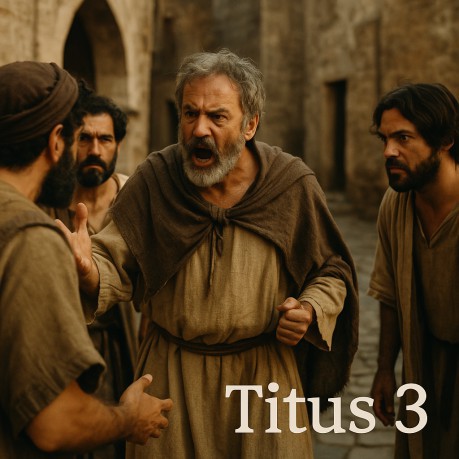
Titus 3 Titus 3:1 † Believers were to live in submission to
governing authorities, not in rebellion. Their obedience showed that
the gospel didn't produce chaos but good citizenship and good
works. Titus 3:2 † God's people were to avoid slander and
quarrels. Instead, they were to be marked by gentleness and
consideration. This reflected the character of Christ and stood in
contrast to the harshness of the world. Titus 3:3 † Paul reminds them of their past. Before
Christ, they too were foolish and enslaved to sin. Remembering their
own past fostered humility and patience toward others. Titus 3:4-5 † Salvation came not by works but by God's
mercy. His kindness appeared in Christ, who brought renewal through
the Spirit. The washing of regeneration points to the cleansing work
of the gospel. Titus 3:6 † The Spirit was given abundantly through
Christ. This gift brought transformation and life, fulfilling the
promises of the prophets. Titus 3:7 † Justification is by grace, not works. Through
Christ, believers were made heirs of eternal life, inheriting the
promises of God. Titus 3:8 † Paul wanted Titus to teach confidently. Sound
doctrine leads to good works, which are beneficial for both the
church and society. Titus 3:9 † Foolish debates and disputes about the Law
distracted from Christ. Titus was to avoid them, keeping the focus on
the gospel. Titus 3:10-11 † Persistent divisive people were to be
rejected after warnings. Division reveals a corrupt heart, and such
people condemned themselves by their actions. Titus 3:12 † Paul gives travel instructions, showing the
real historical context of this letter. His ministry was still
active, and he wanted Titus to join him when relieved. Titus 3:13 † Paul urged Titus to support fellow workers
like Zenas and Apollos. The mission of the gospel was shared, and
practical support was essential. Titus 3:14 † Believers were to be productive in doing good
works, meeting needs around them. This was the fruit of faith and a
testimony to the gospel. Titus 3:15 † Paul closes with greetings and a blessing of
grace. The fellowship of believers was central, binding them together
in the love of Christ. Application For Us Today † Titus 3 reminds us that godly living is not
about rebellion or empty arguments but about humble obedience, good
works, and grace. The world still watches how we live, and our
conduct can either honor or dishonor the gospel. † Paul's warning about foolish controversies
applies directly to our time. Debates over genealogies or speculative
myths parallel the endless futurist predictions and denominational
squabbles of today. They're useless and distract from the truth. † The reminder of salvation by mercy, not
works, remains central. We are heirs by grace, and that grace calls
us to good works that bless others and demonstrate the reality of
Christ's kingdom. † The call to reject divisive people still
applies. Those who persist in stirring division and rejecting truth
must be marked and avoided so the church remains healthy. † This chapter also reminds us of the
importance of supporting one another in the mission. Just as Titus
was told to supply Zenas and Apollos, we too must support faithful
workers today. † This is the fulfilled perspective we proclaim at
Fulfilled Prophecies † Source Index
By Dan Maines
Remind them to be subject to
rulers, to authorities, to be obedient, to be ready for every good
deed.
† Josephus (Wars of the Jews 2.17.10)
describes how zealots resisted Roman rule, bringing destruction on
the nation. Paul's instruction separated Christians from such
rebellion, marking them as peacemakers.
To slander no one, not to be
contentious, to be gentle, showing every consideration for all
people.
†
Philo (On the Virtues 51) emphasized gentleness and kindness as the
highest virtues, aligning with Paul's instruction to believers.
For we too were once foolish,
disobedient, deceived, enslaved to various lusts and pleasures,
spending our life in malice and envy, hateful, hating one another.
†
Seneca (Letters 95.30) confessed the universal struggle with envy and
malice in Roman society. Paul connects that reality to the
transformation brought by the gospel.
But when the kindness of God our
Savior and His love for mankind appeared, He saved us, not on the
basis of deeds which we did in righteousness, but in accordance with
His mercy, by the washing of regeneration and renewing by the Holy
Spirit.
† The Dead Sea Scrolls (1QS
4.20-21) spoke of a cleansing by the Spirit and renewal, showing that
this hope was deeply rooted in Jewish expectation, fulfilled in
Christ.
Whom He richly poured out upon us
through Jesus Christ our Savior.
† Justin Martyr
(Dialogue with Trypho 39) affirmed that the outpouring of the Spirit
was the fulfillment of Old Testament prophecy, echoing Paul's
declaration.
So that being justified by His
grace we would be made heirs according to the hope of eternal life.
† Irenaeus (Against Heresies
3.18.7) likewise taught that believers became heirs of eternal life
through God's grace, not through the works of the Law.
This statement is trustworthy; and
concerning these things I want you to speak confidently, so that
those who have believed God will be careful to engage in good deeds.
These things are good and beneficial for people.
† Pliny the Younger
(Letters 10.96) described Christians as people who bound themselves
to live moral lives and avoid wrongdoing. Their good deeds confirmed
Paul's instructions.
But avoid foolish controversies
and genealogies and strife and disputes about the Law, for they are
useless and worthless.
† Josephus (Antiquities 13.10.6)
describes Jewish sects constantly disputing about the Law, producing
division rather than truth. Paul's warning echoes this real danger.
Reject a divisive person after
a first and second warning, knowing that such a person has deviated
from the truth and is sinning, being self-condemned.
†
Clement of Rome (1 Clement 46) rebuked those who caused divisions in
the church, warning that such people set themselves against Christ.
When I send Artemas or Tychicus
to you, make every effort to come to me at Nicopolis, for I have
decided to spend the winter there.
†
Eusebius (Church History 3.4) preserves the tradition of Paul's later
journeys, confirming that his ministry extended beyond Rome's first
imprisonment.
Diligently help Zenas the lawyer
and Apollos on their way so that nothing is lacking for them.
† Jerome (On
Illustrious Men 53) records Apollos as a powerful preacher,
confirming his prominence in the early church.
Our people must also learn to
engage in good deeds to meet pressing needs, so that they will not be
unproductive.
† Aristides (Apology
15) praised Christians for caring for the poor and needy, showing how
they lived out Paul's instructions.
All who are with me greet you.
Greet those who love us in the faith. Grace be with you all.
† Matthew
16:27-28 - Christ's appearing in that generation
†
1 Corinthians 15:54-57 - Christ's victory over death
†
Acts 20:28-30 - warning about false teachers entering the church
†
Josephus, Wars of the Jews 2.17.10 - zealots rebelling against Rome
†
Philo, On the Virtues 51 - gentleness and kindness as virtues
†
Seneca, Letters 95.30 - envy and malice in Roman life
†
Dead Sea Scrolls, 1QS 4.20-21 - cleansing by the Spirit in this age
†
Justin Martyr, Dialogue with Trypho 39 - Spirit outpoured through
Christ
† Irenaeus, Against Heresies 3.18.7 -
heirs of eternal life by grace
† Pliny the
Younger, Letters 10.96 - Christians bound to live moral lives
†
Josephus, Antiquities 13.10.6 - disputes among Jewish sects about the
Law
† Clement of Rome, 1 Clement 46 - rebuke
of divisive people in the church
† Eusebius,
Church History 3.4 - Paul's later journeys beyond Rome
†
Jerome, On Illustrious Men 53 - Apollos as a powerful preacher
†
Aristides, Apology 15 - Christians caring for the poor and needy
Links