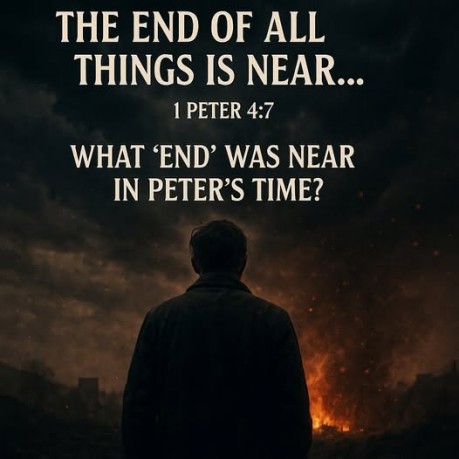
I
believe the end Peter referred to was the imminent end of the Old
Covenant age, not the end of the physical world. This aligns
perfectly with Jesus' prophecies about the destruction of Jerusalem
and the temple in that generation (Matthew 24:2, 34; Luke 21:22). Here is the context and supporting
scriptural alignment: Jesus said the end would come after the
gospel was preached to all nations (Matthew 24:14). Paul later
affirms this was fulfilled in his day (Colossians 1:23, Romans
10:18). Peter was writing before the
destruction of Jerusalem in 70 AD, warning that the time of judgment
was at hand for that generation (1 Peter 4:17 – "it is time
for judgment to begin with the household of God"). This end was also linked to the fiery
trial they were experiencing (1 Peter 4:12), which corresponds with
the tribulation Jesus said would come before Jerusalem's fall
(Matthew 24:21). Peter had heard Jesus say "this
generation will not pass away until all these things take place"
(Matthew 24:34), and he believed Jesus meant what He said. So, "the end of all things"
refers to: The end of the Old Covenant world,
centered in Jerusalem and the temple. The end of the age (Matthew 24:3) that
Jesus warned about. The culmination of the prophetic
timeline leading to the kingdom fully transitioning to the New
Covenant. It was near because Peter lived in the
last days (Acts 2:16-17, Hebrews 1:1-2), and the time was quickly
approaching for God's judgment to fall on Israel as Jesus prophesied.
By Dan Maines
Links