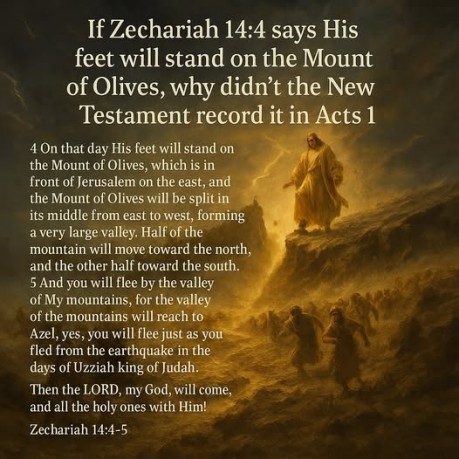
If
Zechariah 14:4 says His feet will stand on the Mount of Olives, why
didn't the New Testament record it in Acts 1? What if it did happen literally and
symbolically? Jesus ascended from the Mount of Olives (Acts 1:12),
but before that, He stood there often, teaching, weeping, and
pronouncing judgment on Jerusalem (Luke 19:41-44, Matthew 24).
There's even a well-worn footpath still visible today, testifying
that His feet did indeed stand there. The splitting of the mountain
represents the opening of a way of escape (Luke 21:21). His presence
brought judgment on the Old Covenant and salvation for the faithful
remnant. So yes, Zechariah 14:4-5 was fulfilled
literally, spiritually, and historically, just like so much prophecy. Why do so many still believe He will
return and stand on the Mount of Olives? Because they ignore the time statements
and treat apocalyptic language like it's GPS prophecy. Zechariah 14
uses symbolic imagery to describe the judgment and deliverance that
took place in the first century. Jesus already stood on the Mount of
Olives, physically, repeatedly and even ascended from there (Acts
1:12). The mountain splitting is symbolic of a path of escape for
believers, just like He told them in Luke 21:21, "flee to the
mountains." They expect a future event because they
misunderstand the nature of His return, it was not to set foot on
dirt again, but to bring judgment against apostate Jerusalem, just as
He said in Matthew 24:34, "this generation will not pass away
until all these things take place." The idea of a future return to a
literal mountain comes from reading prophetic poetry like it's a
weather forecast, instead of seeing its fulfillment in covenantal
judgment and kingdom transition.
By Dan Maines
Links