Satan's
Little Season (SLS) The 1000 years is symbolic Part 1 of 4 As a preterist, I believe Revelation 20
is highly symbolic and follows the pattern of recapitulation seen
throughout the book. It is not in strict chronological order after
Revelation 19 or the fall of Jerusalem in chapter 18. Instead,
Revelation 20 steps back to give a symbolic overview of Christ's
victory and the Church's spiritual reign. Let's break it down using Scripture and logic. Revelation 20:2-3 says,
"And
he took hold of the dragon, the serpent of old, who is the devil and
Satan, and bound him for a thousand years, and he threw him into the
abyss, and shut it and sealed it over him, so that he would not
deceive the nations any longer..."
This binding is not
physical imprisonment but a restraint from his former power to
deceive the nations and stop the gospel. This fits with what Paul
said in Colossians 1:6 and 1:23, that the gospel "has come to
you, just as in all the world... proclaimed in all creation under
heaven." Satan was bound from stopping this global mission. The binding began with Christ's victory at the cross and
resurrection. Jesus said in Luke 10:18,
"I was watching
Satan fall from heaven like lightning."
That fall
(Revelation 12:9) is the beginning of his binding, not some later
event after AD 70. Revelation 20:4 says,
"Then I saw thrones, and they sat
on them, and judgment was given to them. And I saw the souls of those
who had been beheaded... and they came to life and reigned with
Christ for a thousand years."
These are the first century
martyrs. They reign spiritually with Christ. Paul tells believers in
Ephesians 2:6 that God "raised us up with Him, and seated us
with Him in the heavenly places in Christ Jesus." That reigning
began in the first century, before Jerusalem fell. Revelation 20:7-9 says,
"When
the thousand years are completed, Satan will be released... and will
come out to deceive the nations... to gather them together for the
war... and they came up on the broad plain of the earth and
surrounded the camp of the saints and the beloved city..."
The
"camp of the saints" and the "beloved city" are
not physical Jerusalem, which was already called "Sodom and
Egypt" in Revelation 11:8. The real city God loves is New
Jerusalem, the Church. This attack is not a physical siege. It is a symbolic picture of
global persecution. It is the same event seen earlier in Revelation
11:7,
"When they have finished their testimony, the
beast... will make war with them, and overcome them and kill
them."
And in Revelation 13:7,
"It was also given
to him to make war with the saints and to overcome them, and
authority was given to him over every tribe, people, language, and
nation."
This war against the saints began during Nero's
persecution and climaxed in the Roman Jewish war. Satan's "release"
corresponds to that short but intense season of persecution,
deception, and chaos. Revelation 20:9 says,
"...and
fire came down from heaven and devoured them."
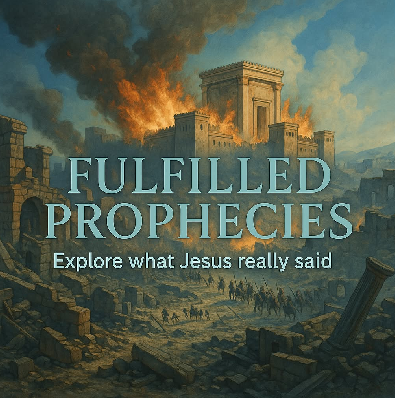
This is
symbolic language for divine judgment, just like in Revelation 18:8
when God judged Babylon (Jerusalem):
"Because the Lord God
who judges her is strong... she will be burned up with fire."
This
fiery judgment is the same judgment as the fall of
Jerusalem. The recapitulated vision in chapter 20 simply re-tells it
from a cosmic and spiritual perspective. Summary: Revelation 20 is symbolic
and recapitulates earlier events rather than following a
strict chronological sequence after Revelation 19. The 1000 years represents
the Church age that began with Christ’s victory at the
cross and resurrection, during which Satan was bound from deceiving
the nations. Satan’s binding allowed
the gospel to spread freely, as seen in Colossians 1:6, 23,
and symbolized his loss of power to stop God’s global mission. The saints began reigning
spiritually with Christ before AD 70, as seen in Revelation
20:4 and Ephesians 2:6. The "little season"
is symbolic of Satan’s brief release, corresponding to
Nero’s persecution and the chaos leading up to Jerusalem’s fall. The attack on the “camp
of the saints” is not physical but a picture of global
persecution against the Church, echoed in Revelation 11 and 13. The fire from heaven
represents divine judgment on Jerusalem in AD 70, just as
described in Revelation 18:8. Revelation 20 retells the same judgment from
a cosmic, spiritual perspective, affirming Christ’s victory and
Satan’s final defeat.
Part 1 of 4
https://www.facebook.com/share/p/1JKccJU1nF/ Part 2 of 4
https://www.facebook.com/share/p/1Y3reopyWZ/ Part 3 of 4
https://www.facebook.com/share/p/18w85ttNVL/ Part 4 of 4
https://www.facebook.com/share/p/1AZCvKysJR/
By Dan Maines1. The 1000
years is symbolic and begins before the fall of Jerusalem
2. The
saints began reigning before AD 70
3. The
"little season" already happened
4. The fire
from heaven is God's judgment in AD 70
Links