The
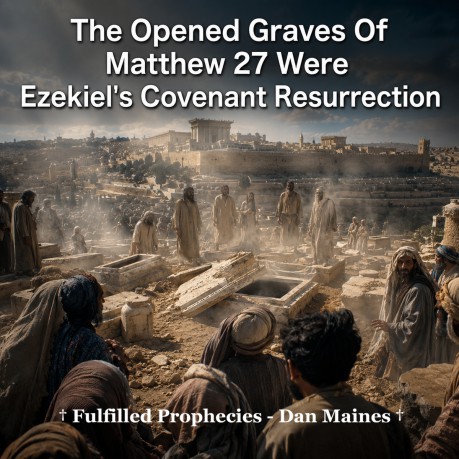
Opened Graves Of Matthew 27 Were Ezekiel's Covenant Resurrection Introduction
Ezekiel 37:11-14 Matthew
27:51 Matthew
27:52-53 Isaiah
26:19 John
5:24-25
Ephesians 2:4-6
Romans 6:3-5 Romans
11:15 Historical References How It Applies To Us
Today Q & A Appendix † This is the fulfilled
perspective we proclaim at Fulfilled Prophecies. † Source Index
By Dan Maines
†
Matthew 27:52-53 has puzzled many Bible students because it appears
to describe a literal resurrection of numerous Old Testament saints.
Yet Scripture interprets Scripture. The language Jesus' audience
would have recognized comes directly from Ezekiel 37, where God used
opened graves and restored life as prophetic imagery for the
restoration of covenant Israel, not the resurrection of individual
corpses. When read within its Old Testament context, Matthew 27
becomes one more fulfillment of God's promise to restore His covenant
people through Christ.
Then
He said to me, "Son of man, these bones are the entire house of
Israel; behold, they say, 'Our bones are dried up and our hope has
perished. We are completely cut off.' Therefore prophesy and say to
them, 'This is what the Lord God
says: "Behold, I am going to open your graves and cause you to
come up out of your graves, My people; and I will bring you into the
land of Israel. Then you will know that I am the Lord,
when I have opened your graves and caused you to come up out of your
graves, My people. And I will put My Spirit within you and you will
come to life, and I will place you on your own land. Then you will
know that I, the Lord,
have spoken and done it," declares the Lord.'"
†
God identifies the vision before explaining the symbolism. The dry
bones are the whole house of Israel, making this a prophecy of
covenant restoration, not individual bodily resurrection. (Hosea
6:1-2)
†
The opening of graves represents God bringing His covenant people out
of their national death and separation from Him. (Isaiah 26:19)
†
The promise of His Spirit points directly to the New Covenant
established through Christ. (Joel 2:28-32; Acts 2:16-21)
And
behold, the veil of the temple was torn in two from top to bottom;
and the earth shook and the rocks were split.
†
Matthew records the torn veil, the earthquake, the split rocks, and
the opened graves as one continuous event. Together they announce the
end of the Old Covenant order and the inauguration of the New
Covenant. (Hebrews 9:8-10; Hebrews 10:19-20)
†
The tearing of the veil signified that access to God was no longer
through the temple, preparing the reader to understand the covenant
significance of everything that follows. (Matthew 23:38; Hebrews
10:19-22)
†
These signs fulfilled the prophetic expectation that God would shake
the old covenant order before establishing His unshakable kingdom.
(Haggai 2:6-7; Hebrews 12:26-28)
Also
the tombs were opened, and many bodies of the saints who had fallen
asleep were raised; and coming out of the tombs after His
resurrection, they entered the holy city and appeared to many.
†
Matthew intentionally uses the same covenant resurrection imagery
found in Ezekiel. His Jewish audience already understood the
symbolism of opened graves. (Ezekiel 37:12-13)
†
The focus is Jerusalem, the holy city, because this was the center of
the Old Covenant that was passing away. (Hebrews 8:13)
†
Christ's resurrection began the fulfillment of God's promise to
restore His covenant people from death into life. (Romans 11:15)
†
Matthew specifically says they came out of the tombs after Christ's
resurrection, preserving Christ's place as the firstfruits and the
preeminent One in God's redemptive plan. (1 Corinthians 15:20-23)
†
Matthew never says these saints were glorified, immortal, or
permanently living on earth. He simply states that they appeared to
many, leaving the focus on the covenant significance rather than
satisfying later speculation. (Luke 24:27)
†
The emphasis of the passage is not on individual biographies, but on
God's visible testimony that the promised covenant restoration had
begun through His Messiah. (John 5:24-25)
Your dead
will live;
Their corpses will rise.
You who lie in the
dust, awake and shout for joy,
For your dew is as the dew of the
dawn,
And the earth will give birth to the departed spirits.
†
Isaiah also speaks of resurrection using prophetic language
describing God's restoration of His covenant people after judgment.
(Isaiah 25:6-9)
†
The imagery of awakening from the dust is consistent with the
prophets' description of Israel's restoration. (Daniel 12:1-3)
†
Matthew's account fits naturally within this established prophetic
pattern. (Romans 9:24-26)
"Truly,
truly, I say to you, the one who hears My word, and believes Him who
sent Me, has eternal life, and does not come into judgment, but has
passed out of death into life.
Truly, truly, I say to you, a
time is coming and even now has arrived, when the dead will hear the
voice of the Son of God, and those who hear will live.
†
Jesus declared that resurrection life had already begun during His
earthly ministry. (John 11:25-26)
†
Those who believed had already passed from death into life before the
destruction of Jerusalem. (Ephesians 2:1-6)
†
This fulfills the prophets' promise that God would raise His covenant
people through the Messiah. (Ezekiel 36:26-27)
But
God, being rich in mercy, because of His great love with which He
loved us, even when we were dead in our wrongdoings, made us alive
together with Christ (by grace you have been saved), and raised us up
with Him, and seated us with Him in the heavenly places in Christ
Jesus,
†
Paul applies resurrection language to believers who were spiritually
made alive with Christ. (Romans 6:4-5)
†
Believers were raised with Christ into the blessings of the New
Covenant. (Colossians 2:12-13)
†
This fulfills Ezekiel's promise that God would raise His covenant
people and place His Spirit within them. (Ezekiel 37:14)
Or
do you not know that all of us who have been baptized into Christ
Jesus have been baptized into His death? Therefore we have been
buried with Him through baptism into death, so that, just as Christ
was raised from the dead through the glory of the Father, so we too
may walk in newness of life. For if we have become united with Him in
the likeness of His death, certainly we shall also be in the likeness
of His resurrection,
†
Paul explains that believers participate in Christ's resurrection
through union with Him, showing that resurrection is a present
covenant reality for those in Christ. (Colossians 2:12-13)
†
Being raised with Christ fulfills God's promise to bring His covenant
people from death into life through the New Covenant. (Ezekiel
37:14)
†
Resurrection language consistently describes the believer's
participation in Christ's life, not merely a future expectation.
(Ephesians 2:5-6)
For if
their rejection proves to be the reconciliation of the world, what
will their acceptance be but life from the dead?
†
Paul uses resurrection language to describe Israel's restoration,
demonstrating that covenant resurrection remained a biblical theme
throughout the New Testament. (Ezekiel 37:12-14)
†
"Life from the dead" reflects the fulfillment of God's
promise to restore His covenant people through Christ rather than
introducing a different definition of resurrection. (Hosea 6:1-2)
†
This confirms that Matthew's resurrection imagery belongs within the
broader prophetic theme of covenant restoration. (Romans 9:24-26)
†
Josephus records numerous extraordinary signs surrounding the years
leading to Jerusalem's destruction, demonstrating that first-century
Jews understood prophetic symbolism connected with covenant judgment
and restoration.
†
The Old Testament prophets repeatedly used resurrection, graves, dry
bones, and restored life as covenant imagery describing the
restoration of Israel rather than individual bodily resurrection.
†
Matthew wrote to a Jewish audience already familiar with Ezekiel's
prophecy, making the connection between the two passages natural and
expected.
†
Jewish literature before and during the first century frequently used
resurrection language as a metaphor for Israel's national
restoration, demonstrating that Matthew's readers were already
familiar with this prophetic imagery.
† We
should always allow the Old Testament to define the prophetic
language used in the New Testament.
†
Scripture becomes much clearer when we recognize covenant
resurrection imagery instead of assuming every reference describes
physical resurrection.
†
Christ fulfilled God's promise by bringing His people out of covenant
death into everlasting life through the New Covenant.
†
We should allow Scripture to interpret Scripture instead of building
doctrine from one difficult passage while ignoring its Old Testament
foundation.
†
Keeping Matthew 27 connected to Ezekiel 37 protects us from reading
later theological assumptions back into a first-century Jewish
text.
†
Christ fulfilled every promise God made concerning the restoration of
His covenant people, giving believers confidence that His promises
are trustworthy.
Q:
Does Ezekiel 37 explain Matthew 27:52-53?
A:
Yes. God explicitly identifies the vision as the whole house of
Israel, showing that opened graves symbolize covenant restoration.
(Ezekiel 37:11-14)
Q:
Did Jesus teach resurrection had already begun?
A:
Yes. Jesus said the hour "now is" when the dead would hear
His voice and live. (John 5:24-25)
Q:
Why were the saints seen in the holy city?
A:
Because Jerusalem was the center of the covenant that Christ came to
fulfill before its passing. (Matthew 27:53; Hebrews 8:13)
Q:
Were these glorified, immortal bodies?
A:
Matthew never says they were glorified or immortal. He simply records
that they appeared to many. The passage should be understood in light
of Ezekiel's covenant resurrection imagery rather than assumptions
imported from later theology. (Ezekiel 37:11-14; Matthew 27:52-53)
Q:
Why did they come out only after Christ's resurrection?
A:
Because Christ is the firstfruits. Matthew intentionally preserves
Christ's preeminence by showing that everything begins with His
resurrection. (1 Corinthians 15:20-23)
Q:
What do the opened graves mean?
A: The
opened graves symbolize God's covenant restoration of His people,
just as Ezekiel 37 explains. God identified the opened graves as
representing "the whole house of Israel," showing that the
imagery points to Israel being brought out of covenant death and into
new covenant life through Christ, not simply to individual bodily
resurrection. Matthew intentionally uses this prophetic language to
show that God's promised restoration had begun through the Messiah.
(Ezekiel 37:11-14; Matthew 27:52-53; Ephesians 2:4-6)
©
Fulfilled Prophecies - Dan Maines.
†
Matthew 27:51-53, Ezekiel 37:11-14, Isaiah 26:19, John 5:24-25,
Ephesians 2:4-6, Romans 6:3-5, Romans 11:15
†
Josephus, The Wars of the Jews; Josephus, Antiquities of the Jews;
Rabbinic Jewish writings on Israel's restoration imagery
Links