The
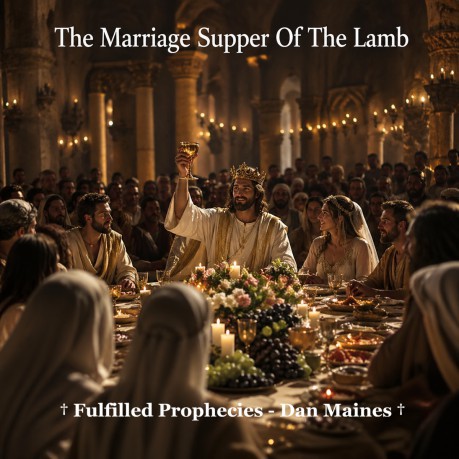
Marriage Supper Of The Lamb Introduction † The Marriage
Supper of the Lamb is not a future event waiting to happen, it was a
covenantal fulfillment that took place when Christ united Himself
with His people at the end of the Old Covenant age (Revelation
19:7-9). † The language
of marriage runs throughout Scripture, showing God as the husband of
Israel, and Christ as the bridegroom coming for His bride (Isaiah
54:5, Hosea 2:19, John 3:29). † This
marriage was delayed until the Old Covenant system was judged and
removed, which happened in AD 70, clearing the way for the full union
of Christ and His church (Hebrews 8:13). Revelation
19:7-9 Then he
said to me, "Write: 'Blessed are those who are invited to the
wedding feast of the Lamb.'" And he *said to me, "These are
the true words of God."
† The marriage
of the Lamb has come, this is stated as a present reality, not a
distant future event, showing fulfillment in John's time (Revelation
1:1, Revelation 22:10). † His wife has
made herself ready, the bride is the covenant people of God, prepared
through faith and obedience, not an individual but a corporate body
(Ephesians 5:25-27). † The fine
linen represents the righteous acts of the saints, showing that the
bride was already being formed and purified before the destruction of
Jerusalem (Revelation 7:14). † Blessed are
they that are invited, this refers to those called into the New
Covenant, both Jew and Gentile, united in Christ (Matthew 22:2-10).
Matthew 22:2-10 † The king
sent his armies and burned their city, this is a direct reference to
the destruction of Jerusalem in AD 70, which cleared the way for the
marriage to be fulfilled (Luke 21:20-22). † The original
invited guests rejected the invitation, representing unbelieving
Israel who refused Christ (John 1:11). † The
invitation then went to all, both bad and good, showing the inclusion
of the Gentiles into the marriage feast (Acts 13:46-48). † The wedding
was filled with guests, showing the success and completion of God's
covenant plan in gathering His people (Ephesians 2:14-16). Matthew
24:34 † This locks
the timing of the marriage, the judgment, and the gathering into the
first century, removing any future interpretation (Matthew 24:1-33). Hebrews
8:13 † This shows
the Old Covenant was still in the process of passing away, meaning
the marriage could not be fully complete until that system was
removed in AD 70 (Hebrews 9:10). 2
Corinthians 11:2 † This shows
the church was already betrothed before AD 70, but not yet fully
presented, proving the marriage was approaching, not future to us
(Ephesians 5:27). Matthew
25:10 † This ties
the coming of Christ directly to the marriage feast, showing it
happens at His coming, which took place in that generation (Matthew
24:30-31). Luke
13:28-29 † This shows
the gathering into the kingdom as a completed feast reality, tied to
inclusion and exclusion at judgment (Matthew 8:11-12).
Ephesians 5:25-27 † Christ gave
Himself for the church to sanctify it, this shows the process leading
up to the marriage, not something still waiting to happen (Hebrews
9:15). † That he
might present the church to himself, this presentation is the
marriage itself, completed when the Old Covenant was removed (2
Corinthians 11:2). † A glorious
church without spot or wrinkle, this describes the completed bride,
purified and fully united with Christ (Colossians 1:22). † This
presentation aligns with the timing of judgment on Jerusalem, when
the transition of covenants was complete (Matthew 24:34). Revelation
21:2 † The New
Jerusalem is described as a bride, confirming that the bride is not a
physical city but the covenant people of God (Galatians 4:26). † Coming down
out of heaven shows its divine origin, not a future physical descent,
but a present covenant reality (Hebrews 12:22-24). † Made ready
as a bride, again confirming the completed preparation of the people
of God (Revelation 19:7). † This is the
same bride in the marriage supper, now fully revealed after judgment
(Revelation 21:9-10). Hebrews
12:22-23 † Notice the
present tense, you are come, not you will come, confirming we are
already in that covenant reality (Ephesians 2:6). Historical References † Josephus
recorded the destruction of Jerusalem in AD 70, describing the
burning of the city exactly as Jesus foretold, confirming the timing
of the marriage feast (Wars of the Jews, Book 6). † Eusebius
wrote that the church recognized the judgment on Jerusalem as the
fulfillment of Christ's prophecies, marking the transition into the
established kingdom (Ecclesiastical History, Book 3). † Irenaeus
spoke of the church as the bride of Christ, already being prepared
and gathered, showing early understanding of the marriage imagery
(Against Heresies, Book 4). How It Applies To Us
Today † We are not
waiting for the marriage, we are living in it, fully united with
Christ as His bride (2 Corinthians 5:17). † Our identity
is not future, it is present, we are part of the completed New
Covenant people (Ephesians 2:19). † We live in
the joy of the marriage supper now, enjoying fellowship with Christ
and His body (Revelation 3:20). † This gives
us assurance, we are not awaiting union, we already have it, and we
walk in that reality daily (Romans 8:1). Q & A Appendix Q:
When did the Marriage Supper of the Lamb take place? Q:
Who is the bride of Christ? Q:
Is the Marriage Supper still future? Q:
What does the fine linen represent? Q:
What ended before the marriage could be complete? Q:
What does this mean for believers today? Q:
Who were originally invited to the marriage feast? Q:
What does it mean that the city was burned? Q:
What is the significance of the bride being made ready? Q:
Are we still waiting to enter the marriage feast? Q:
What does the shutting of the door represent? Q:
How do we know the feast is not a physical future event? Q:
What does it mean to sit down in the kingdom? Q:
What is the connection between the coming of Christ and the
marriage? Q:
Why is the bride described as a city? Q:
What does it mean that many are called but few are chosen? Q:
How does this relate to the New Covenant? Q:
What is the main message of the Marriage Supper of the Lamb? † This is the fulfilled
perspective we proclaim at Fulfilled Prophecies † Source Index † Revelation
19:7-9, Matthew 22:2-10, Matthew 24:34, Hebrews 8:13, 2 Corinthians
11:2, Matthew 25:10, Luke 13:28-29, Ephesians 5:25-27, Revelation
21:2, Hebrews 12:22-23 † Josephus,
Wars of the Jews Book 6, Eusebius Ecclesiastical History Book 3,
Irenaeus Against Heresies Book 4
By Dan Maines
Let's
rejoice and be glad and give the glory to Him, because the marriage
of the Lamb has come, and His bride has prepared herself." It
was given to her to clothe herself in fine linen, bright and clean;
for the fine linen is the righteous acts of the saints.
"The
kingdom of heaven is like a king who held a wedding feast for his
son. And he sent his slaves to call those who had been invited to the
wedding feast, and they were unwilling to come. Again he sent other
slaves, saying, 'Tell those who have been invited, "Behold, I
have prepared my dinner; my oxen and my fattened cattle are all
butchered and everything is ready. Come to the wedding feast!"'
But they paid no attention and went their separate ways, one to his
own farm, another to his business, and the rest seized his slaves and
treated them abusively, and then killed them. Now the king was angry,
and he sent his armies and destroyed those murderers and set their
city on fire. Then he *said to his slaves, 'The wedding feast is
ready, but those who were invited were not worthy. So go to the main
roads, and invite whomever you find there to the wedding feast.'
Those slaves went out into the streets and gathered together all whom
they found, both bad and good; and the wedding hall was filled with
dinner guests.
Truly I
say to you, this generation will not pass away until all these things
take place.
When He
said, "A new covenant," He has made the first obsolete. But
whatever is becoming obsolete and growing old is about to disappear.
For
I am jealous for you with a godly jealousy; for I betrothed you to
one husband, to present you as a pure virgin to Christ.
But while
they were on their way to buy the oil, the groom came, and those who
were ready went in with him to the wedding feast; and the door was
shut.
In
that place there will be weeping and gnashing of teeth when you see
Abraham, Isaac, Jacob, and all the prophets in the kingdom of God,
but yourselves being thrown out. And they will come from east and
west, and from north and south, and will recline at the table in the
kingdom of God.
Husbands,
love your wives, just as Christ also loved the church and gave
Himself up for her, so that He might sanctify her, having cleansed
her by the washing of water with the word, that He might present to
Himself the church in all her glory, having no spot or wrinkle or any
such thing; but that she would be holy and blameless.
And I saw
the holy city, new Jerusalem, coming down out of heaven from God,
prepared as a bride adorned for her husband.
But
you have come to Mount Zion and to the city of the living God, the
heavenly Jerusalem, and to myriads of angels, to the general assembly
and church of the firstborn who are enrolled in heaven, and to God,
the Judge of all, and to the spirits of the righteous made perfect,
A:
It took place in connection with the destruction of Jerusalem in AD
70, when the Old Covenant ended and the bride was fully united with
Christ (Revelation 19:7-9; Matthew 22:7).
A:
The bride is the corporate body of believers, both Jew and Gentile,
united in Christ (Ephesians 5:25-27; Galatians 3:28).
A:
No, Scripture shows it as a near and imminent event in the first
century, fulfilled in that generation (Revelation 1:1; Matthew
24:34).
A:
It represents the righteous acts of the saints, showing the prepared
and purified state of the bride (Revelation 19:8).
A:
The Old Covenant system had to be removed, which happened in AD 70,
allowing the full union of Christ and His bride (Hebrews 8:13;
Matthew 22:7).
A:
It means we are already in union with Christ, living as His bride in
the New Covenant reality (2 Corinthians 5:17; Ephesians 2:19).
A:
The original invitation went to Israel, but many rejected it, so the
invitation was extended to others (Matthew 22:3-7; Acts 13:46).
A:
It refers to the destruction of Jerusalem in AD 70, which was
judgment on those who rejected the invitation (Matthew 22:7; Luke
21:20-22).
A:
It shows the church was being prepared during the transition period
before AD 70, reaching completion at the end of the Old Covenant age
(Revelation 19:7; Ephesians 5:27).
A:
No, those in Christ have already entered into that covenant union and
fellowship (Hebrews 12:22-23; Ephesians 2:6).
A:
It represents the closing of the Old Covenant system and the finality
of judgment on unbelieving Israel (Matthew 25:10; Luke 13:25).
A:
The language is covenantal and symbolic, consistent with prophetic
imagery, and tied to first century fulfillment (Revelation 1:1; John
4:21-24).
A:
It refers to entering into covenant fellowship with God alongside all
His people, not a physical banquet (Luke 13:28-29; Matthew 8:11).
A:
The marriage feast occurs at His coming, which Jesus said would
happen in that generation (Matthew 25:10; Matthew 24:34).
A:
Because it represents a corporate people, the New Jerusalem, not a
literal structure (Revelation 21:2; Galatians 4:26).
A:
It shows that not all who were invited responded in faith, especially
within Israel (Matthew 22:14; Romans 9:6).
A:
The marriage marks the full establishment of the New Covenant after
the Old Covenant passed away (Hebrews 8:13; Hebrews 12:28).
A:
It reveals the completed union between Christ and His people,
fulfilled in the first century and experienced now by believers
(Revelation 19:7-9; 2 Corinthians 5:17).
©
Fulfilled Prophecies - Dan Maines.
Links