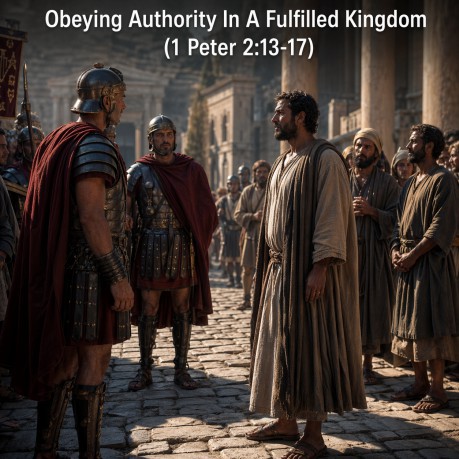
Obeying Authority In A
Fulfilled Kingdom (1 Peter 2:13-17) Introduction † When Peter wrote this, he wasn't speaking
into a peaceful time, he was writing to believers living under the
Roman system that would soon judge that generation (1 Peter 1:1,
Matthew 24:34) † This instruction sits right in the middle of
a soon ending covenant age, where judgment was about to fall on
Jerusalem, yet believers were told to live honorably among the
nations (1 Peter 2:12, Luke 21:20-22) † From the fulfilled perspective, this isn't
about blind obedience for all time, it's about conduct during the
transition from the old covenant world into the fully established
kingdom of Christ (Hebrews 12:26-28) 1 Peter 2:13 † This was written while Caesar ruled, and yet
Peter tells them to submit, not because Caesar was righteous, but for
the Lord's sake, showing that their conduct pointed back to God
(Romans 13:1-2) † Submission here isn't worship or allegiance,
it's outward order so the gospel wouldn't be slandered before the
judgment that was coming on that generation (Matthew 24:9-14) † Jesus Himself taught this balance when He
said to render to Caesar what is Caesar's, while still belonging
fully to God (Matthew 22:21) † This submission also kept believers from
being swept up in the Jewish revolt against Rome, which directly led
to the destruction Jesus warned about in that generation (Luke
21:20-22, Matthew 24:15-16) 1 Peter 2:14 † Government had a purpose, even under Rome, to
restrain evil and maintain order, and God used even pagan systems to
accomplish His purposes (Daniel 2:21) † At the same time, those same authorities
would soon persecute the church, showing that their authority was
limited and temporary (Revelation 13:7) † This fits the fulfilled timeline, because
those governing powers were part of the system God used leading up to
the judgment of Jerusalem in AD 70 (Luke 21:12, Luke 21:31) 1 Peter 2:15 † Their conduct mattered, because accusations
were being made against believers, and their lives were meant to
expose those accusations as false (1 Peter 2:12) † This ties directly to Jesus' teaching to let
your light shine before men so they may see your good works (Matthew
5:16) † In that generation, this was critical,
because the gospel was going out to all nations before the end came
(Matthew 24:14) 1 Peter 2:16 † They were free in Christ, not bound to the
old covenant system anymore, yet that freedom wasn't an excuse to
live lawlessly (Galatians 5:13) † This shows the balance of the fulfilled
kingdom, freedom from the law, yet still living in righteousness by
the Spirit (Romans 8:2-4) † Their identity wasn't tied to Rome or Israel
anymore, but to Christ, and that defined how they lived among all
authorities (Philippians 3:20) 1 Peter 2:17 † This sums it up, honor toward people, love
toward believers, fear toward God, and proper respect toward rulers,
each in its place (Romans 12:10) † Fear is only directed toward God, not toward
earthly rulers, showing the clear limit of governmental authority
(Matthew 10:28) † Even the king is honored, not worshiped,
reinforcing that Christ alone is Lord (Acts 17:7) † Peter separates fear and honor on purpose,
fear belongs only to God, while honor is given to the king, that
alone proves government is never ultimate (1 Peter 2:17, Ecclesiastes
12:13) Historical References † Josephus records the unrest and rebellion
leading up to AD 70, showing why believers were called to live
differently and not be caught up in revolt (Wars of the Jews, Book
2-5) † Tacitus describes the hostility toward
Christians under Roman rule, confirming the need for wise and
blameless conduct (Annals 15.44) † Eusebius notes that believers fled Jerusalem
before its destruction, showing they weren't resisting Rome but
recognizing God's judgment unfolding (Ecclesiastical History 3.5) † Clement of Alexandria speaks of believers
living distinctly from the surrounding culture, reinforcing that
their conduct was intentional and visible during that time (Stromata,
Book 4) How It Applies To Us Today † We're not under the old covenant world
anymore, but the principle still stands, we live in a way that
reflects Christ, not rebellion for its own sake (Philippians 2:15) † Government still has a role, but it's not
ultimate, Christ is, and our loyalty is to Him above all (Colossians
1:18) † We obey our government today, period, we are
called to live under authority, not in opposition to it (1 Peter
2:13-15, Romans 13:1-2) † If someone breaks the law, they should expect
consequences, including punishment, because governing authorities
exist to enforce order (Romans 13:3-4) † Our conduct still silences ignorance today,
just like it did then, because people are watching how we live (Titus
2:7-8) † We honor authority, but we never give it what
belongs to God, because Christ alone has all authority now (Matthew
28:18, Revelation 1:5) † Refusing all authority is not a biblical
position, believers are called to be subject, not rebellious, so the
testimony of Christ remains blameless (Titus 3:1-2) † The same principle applies now, honor,
respect, and lawful obedience in everything, because order in society
still serves God's purpose (Ecclesiastes 12:13, Matthew 22:21) Q & A Appendix Q Does this mean we must obey government no
matter what? Q Are we still required to obey government
today? Q What happens if we break the law? Q Does obedience mean agreement with everything
government does? Q Is rejecting all government authority
biblical? † This is the fulfilled perspective we proclaim at
Fulfilled Prophecies † Source Index † 1 Peter 2:13-17, Romans 13:1-4, Matthew
22:21, Matthew 24:9-14, Matthew 24:34, Luke 21:20-22, Matthew
24:15-16, Luke 21:12-22, Luke 21:31, Matthew 5:16, Galatians 5:13,
Romans 8:2-4, Philippians 3:20, Romans 12:10, Matthew 10:28, Acts
17:7, Ecclesiastes 12:13, Philippians 2:15, Colossians 1:18, Titus
2:7-8, Matthew 28:18, Revelation 1:5, Titus 3:1-2 † Josephus, Wars of the Jews, Book 2-5;
Tacitus, Annals 15.44; Eusebius, Ecclesiastical History 3.5; Clement
of Alexandria, Stromata, Book 4
By Dan Maines
Submit yourselves for the
Lord's sake to every human institution, whether to a king as the one
in authority,
or to governors as sent by him
for the punishment of evildoers and the praise of those who do right.
For such is the will of God,
that by doing right you silence the ignorance of foolish people.
Act as free people, and do not
use your freedom as a covering for evil, but use it as bond-servants
of God.
Honor all people, love the
brotherhood, fear God, honor the king.
A We are commanded to obey
governing authorities and live under their laws, Romans 13:1-2 and 1
Peter 2:13-15.
A Yes, that command has not changed, we
are to be subject to governing authorities in our daily lives (Titus
3:1-2).
A
There are real consequences, including punishment, because
authorities are established to enforce order (Romans 13:3-4).
A No, obedience is about order
and conduct, not agreement with every decision (1 Peter 2:15).
A No, scripture clearly teaches
submission to authority, rejecting it contradicts passages like
Romans 13:1 and Titus 3:1.
© Fulfilled Prophecies - Dan
Maines.
Links