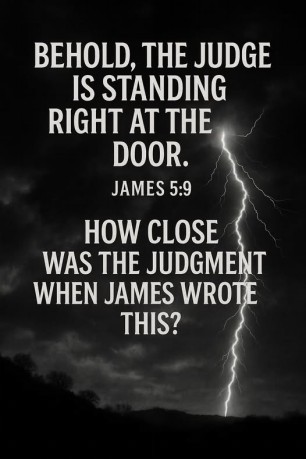
The
phrase "the Judge is standing right at the door" indicates
that judgment was imminent at the time James wrote this. Here's how
close it was: The Greek phrase "ἰδοὺ ὁ
κριτὴς πρὸ τῶν θυρῶν ἕστηκεν"
(behold, the Judge has stood at the doors) uses a perfect tense verb,
implying He had already taken His position to begin judgment. This mirrors Jesus' words in Matthew
24:33, "So you too, when you see all these things, recognize
that He is near, right at the door." That was said in the
context of the judgment on Jerusalem, which happened in 70 AD. James, speaking to the "twelve
tribes who are dispersed abroad" (James 1:1), was warning Jews
under the Old Covenant system that their time was running out. Since James was likely written in the
early to mid 60s AD, the judgment was less than a decade away. When James said the Judge was "right
at the door," he meant judgment was imminent. This aligns
perfectly with the fulfilled view that the destruction of Jerusalem
in 70 AD was the judgment Jesus and the apostles warned about.
By Dan Maines
Links