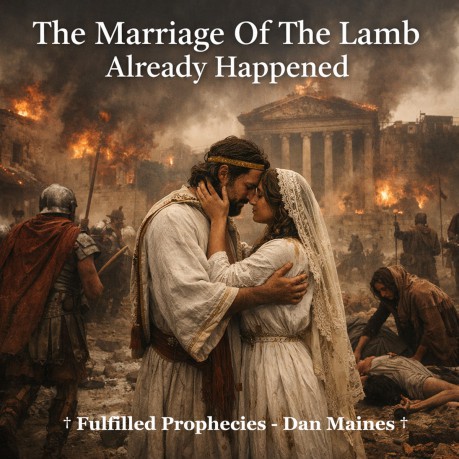
The Marriage Of The Lamb
Already Happened Introduction † The marriage of the Lamb wasn't a future
event thousands of years away. Scripture places it at the time of the
judgment that ended the old covenant order and revealed the fully
established bride of Christ (Matthew 22:7, Hebrews 8:13). † Revelation doesn't leave the timing open
ended. It says these things would shortly come to pass and that the
time was at hand, so the marriage language must be understood in that
first century setting (Revelation 1:1, Revelation 22:10). † Everything in Revelation was written to real
first century churches who were told these events were near, not
thousands of years away (Revelation 1:3, Revelation 22:6-7). † When the harlot city was judged, the bride
was revealed. That's why Revelation 19 and Revelation 21 belong
together. One shows the marriage announced, the other shows the bride
identified (Revelation 18:20-24, Revelation 21:9-10). † Revelation shows two women, the harlot city
and the bride city. One is judged and destroyed, the other is
revealed and established (Revelation 17:1-5, Revelation 21:9-10). Revelation 19:7-9 7 Let us rejoice and be glad and give the glory to Him, because
the marriage of the Lamb has come and His bride has prepared
herself. † The text says the marriage of the Lamb has
come, not that it might come thousands of years later. Revelation's
own time statements require a near fulfillment (Revelation 1:1,
Revelation 22:10). † The fall of Babylon the great happens right
before the marriage announcement, showing the unfaithful city had to
be judged before the bride could be revealed (Revelation 18:2,
Revelation 19:1-7). † The bride had already prepared herself, which
shows a complete people, not something still forming today (Ephesians
5:25-27, Hebrews 12:22-23). † This comes right after the judgment of the
harlot, which means the false city had to be removed before the true
bride stood revealed (Revelation 17:18, Revelation 18:21-24, Matthew
23:37-38). Revelation 21:2, 9-10 2 And I saw the holy city, new Jerusalem, coming down out of
heaven from God, prepared as a bride adorned for her husband. 9 Then one of the seven angels who had the seven bowls full of the
seven last plagues came and spoke with me, saying, Come here, I will
show you the bride, the wife of the Lamb. † The bride isn't left undefined. John is told
he'll be shown the bride, and what he's shown is the new Jerusalem
(Galatians 4:26, Hebrews 12:22-24). † This is covenant language. The new Jerusalem
is God's people, not a future pile of buildings coming down from the
sky (Ephesians 2:19-22, 1 Peter 2:5). † Revelation shows the bride after the judgment
scenes, which fits the timing of the old system passing and the new
standing fully in place (Hebrews 8:13, Hebrews 12:18-24). † Believers had already come to the heavenly
Jerusalem, not were waiting to go there, showing this was already
real, not future (Hebrews 12:22-24). Matthew 22:2-7 2 The kingdom of heaven may be compared to a king who gave a
wedding feast for his son. † Jesus tied the wedding to the destruction of
the city. That alone proves this isn't future to us (Matthew
23:34-36, Luke 21:20-24). † The invited guests were that generation who
rejected Him and killed the messengers sent to them (Matthew
21:33-45, Acts 7:51-52). † The city being burned is exactly what
happened to Jerusalem, and Jesus said it would happen in His
generation (Matthew 24:2, Matthew 24:34). Isaiah 62:4-5 4 It will no longer be said to you, Forsaken, 5 For as a young man marries a virgin, † Marriage language was always about covenant
restoration, not a future ceremony in heaven (Isaiah 54:5-6, Hosea
2:19-20). † What the prophets spoke about is exactly what
we see fulfilled when the bride is revealed in Revelation (Revelation
21:2, Ephesians 5:25-27). Matthew 24:30-34 30 And then the sign of the Son of Man will appear in the sky, and
then all the tribes of the earth will mourn, and they will see the
Son of Man coming on the clouds of the sky with power and great
glory. † The gathering of the elect happens in that
same time frame, and Jesus said it would all happen in that
generation (Matthew 16:27-28, Matthew 23:36). † This gathering lines up with the bride being
brought together into full union with Christ (2 Thessalonians 2:1,
Hebrews 10:25-27). † You can't push this into our future without
ignoring what Jesus clearly said (Matthew 24:34, Revelation 22:6-7). Ephesians 5:25-27 25 Husbands, love your wives, just as Christ also loved the church
and gave Himself up for her, † Christ's goal was to present the church to
Himself as a complete bride (2 Corinthians 11:2, Revelation 19:7-8). † The old covenant was about to disappear, and
once it did, the bride stood complete (Hebrews 8:13, Hebrews 9:8-10). † Revelation shows that completed result, the
bride fully ready (Revelation 19:7). John 3:29 29 He who has the bride is the bridegroom, but the friend of the
bridegroom, who stands and hears him, rejoices greatly because of the
bridegroom's voice. So this joy of mine has been made full. † Jesus was already called the bridegroom in
the first century, so this wasn't something far off (Matthew 9:15,
Mark 2:19-20). † John wasn't pointing to a distant event, he
was pointing to what was happening right then (John 1:29-31, John
3:28-30). † The marriage reached completion when the old
system was judged and removed (Matthew 22:2-7, Revelation 19:1-9). 2 Corinthians 11:2 2 For I am jealous for you with a godly jealousy, for I betrothed
you to one husband, to present you as a pure virgin to Christ. † Paul said they were promised to one husband,
showing the relationship was already in place (Romans 7:4, Ephesians
5:31-32). † Being promised leads to being presented, and
being presented leads to full union. That's exactly what we see
fulfilled in Revelation (Ephesians 5:27, Revelation 19:7). † They weren't waiting thousands of years, they
were being brought into that completed union at the end of that age
(Hebrews 12:22-24, Revelation 21:2). Hebrews 8:13 13 When He said, A new covenant, He has made the first obsolete,
but whatever is becoming obsolete and growing old is about to
disappear. † The old covenant was already fading and about
to disappear in their time (Hebrews 9:8-10, Hebrews 10:1). † The marriage fits right into that timing, old
removed, new fully established (Revelation 21:2, Galatians 4:24-26). † Once the old system was judged, only the
bride remained (Revelation 18:2, Revelation 21:9-10). Historical References † Josephus recorded the destruction of
Jerusalem, including the burning of the city and temple, matching
exactly what Jesus said would happen (Josephus, Wars of the Jews,
Book 6; Matthew 24:2). † Eusebius pointed to that same event as the
fulfillment of Christ's warnings (Eusebius, Ecclesiastical History,
Book 3; Matthew 22:7). † History lines up with Scripture, the old city
fell just as Jesus said, and that is when the bride stands revealed
(Luke 21:20-22, Matthew 24:34). How It Applies To Us Today † We're not waiting for this marriage. It's
already done, and we're living in that finished relationship (Hebrews
12:22-24, Ephesians 2:13-22). † We're not trying to earn our place. In
Christ, we've already come into that union (Romans 8:1, Hebrews
10:14). † Our identity isn't future, it's already
secure in Him (Colossians 2:9-10, Revelation 21:3-4). Q & A Appendex Q How do we know this was near in time? Q Who is the bride? Q Why connect this to AD 70? Q Why do many believe the marriage takes place in
heaven? Q If the marriage already happened, why does
Revelation speak of it as future? Q Was the church already in a relationship with
Christ before AD 70? Q What is the marriage actually describing? Q Are we still waiting to become the bride? Q What does the wedding feast represent? Q Who were the ones that rejected the
invitation? Q What does the burning of the city mean? Q Why is the bride called a city? Q How do we know this isn't a future physical
event? Q What changed after the marriage was complete? Q Does this mean prophecy is still being
fulfilled today? Q What does this mean for believers right now? † This is the fulfilled perspective we proclaim at
Fulfilled Prophecies † Source Index † Revelation 19:7-9; Revelation 21:2, 9-10;
Matthew 22:2-7; Isaiah 62:4-5; Matthew 24:30-34; Ephesians 5:25-27;
John 3:29; 2 Corinthians 11:2; Hebrews 8:13; Hebrews 12:22-24;
Galatians 4:26; Ephesians 2:19-22; Colossians 2:9-10; Romans 8:1 † Josephus, Wars of the Jews, Book 6; Eusebius,
Ecclesiastical History, Book 3
By Dan Maines
8 It was given to her to clothe herself in fine linen,
bright and clean, for the fine linen is the righteous acts of the
saints.
9 Then he said to me, Write: Blessed are those who are
invited to the marriage supper of the Lamb. And he said to me, These
are the true words of God.
10 And he carried me
away in the Spirit to a great and high mountain, and showed me the
holy city, Jerusalem, coming down out of heaven from God,
3 And he sent his slaves to call
those who had been invited to the wedding feast, and they were
unwilling to come.
4 Again he sent other slaves, saying, Tell
those who have been invited, Behold, I have prepared my dinner, my
oxen and my fattened livestock are all butchered and everything is
ready, come to the wedding feast.
5 But they paid no attention
and went their separate ways, one to his own farm, another to his
business,
6 and the rest seized his slaves and mistreated them
and killed them.
7 But the king was enraged, and he sent his
armies and destroyed those murderers and set their city on fire.
Nor will your
land any longer be said to be Desolate,
But you will be called,
My delight is in her,
And your land, Married,
For the LORD
delights in you,
And your land will be married.
So your sons will
marry you,
And as the bridegroom rejoices over the bride,
So
your God will rejoice over you.
31 And He will send forth His angels with a great trumpet
blast, and they will gather together His elect from the four winds,
from one end of the sky to the other.
32 Now learn the parable
from the fig tree, as soon as its branch has become tender and
sprouts its leaves, you know that summer is near,
33 so you too,
when you see all these things, recognize that He is near, right at
the door.
34 Truly I say to you, this generation will not pass
away until all these things take place.
26 so that He might sanctify her,
having cleansed her by the washing of water with the word,
27
that He might present to Himself the church in all her glory, having
no spot or wrinkle or any such thing, but that she would be holy and
blameless.
A
Revelation says these things would shortly come to pass and the time
was at hand, so it can't be pushed thousands of years into the future
(Revelation 1:1, Revelation 22:10).
A The
bride is the new Jerusalem, which Scripture identifies as God's
people in the new covenant (Revelation 21:9-10, Hebrews 12:22-24,
Galatians 4:26).
A
Jesus tied the wedding to the destruction of the city, and He said it
would happen in His generation, which points directly to AD 70
(Matthew 22:7, Matthew 24:34).
A Because they read Revelation as
future and assume heaven is the location, but the text says the bride
comes down out of heaven and that believers had already come to the
heavenly Jerusalem, so it's about covenant reality, not a physical
place (Revelation 21:2, Hebrews 12:22-24).
A It was
future to John, but still near, just like everything else in the book
that was about to happen (Revelation 1:1, Revelation 22:6-7).
A Yes, they were already
promised to Him and He was already called the bridegroom, Revelation
shows the completion of that relationship (John 3:29, 2 Corinthians
11:2, Ephesians 5:25-27).
A
It's the full union of Christ and His people when the old covenant
system was removed and the new stood complete (Hebrews 8:13,
Revelation 19:7, Revelation 21:2).
A
No, the bride was already prepared and revealed, believers now live
in that finished relationship (Revelation 19:7, Hebrews 12:22-24).
A
It represents the joy and completion of the kingdom when God's people
were fully brought into covenant union with Christ (Matthew 22:2-10,
Revelation 19:9).
A That generation of Israel who
rejected Christ and killed the messengers sent to them (Matthew
22:3-6, Matthew 23:34-36).
A
It refers to the destruction of Jerusalem, which Jesus said would
happen in His generation (Matthew 22:7, Luke 21:20-24).
A
Because God's people are described as a dwelling place, a spiritual
house, not a literal building (Ephesians 2:19-22, 1 Peter 2:5).
A Because every time statement in
Revelation says it's near, and Jesus said all these things would
happen in that generation (Revelation 1:1, Matthew 24:34).
A
The old covenant system was gone, and the new covenant stood fully
established with Christ and His people in full union (Hebrews 8:13,
Hebrews 12:22-24).
A No, the marriage shows the
completion of the covenant transition, meaning those prophecies were
fulfilled in that generation (Revelation 19:7, Matthew 24:34).
A
It means we're already part of the bride and living in the finished
kingdom, not waiting for a future event to make it real (Colossians
2:9-10, Ephesians 2:13-22).
© Fulfilled Prophecies - Dan
Maines.
Links