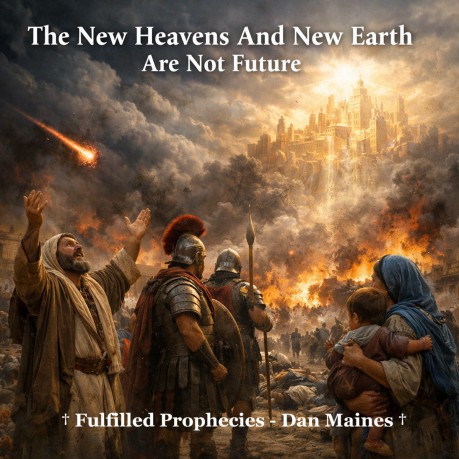
The New Heavens And New Earth
Are Not Future Introduction † Most people have been taught that the new
heavens and new earth are about a future physical planet, but that's
not what scripture teaches when you actually read the context (Isaiah
65:17-20; Revelation 21:1-4). † Isaiah 65 defines what the new heavens and
new earth are, and Revelation 21 is directly quoting and fulfilling
that same prophecy, not introducing something new (Isaiah 65:18;
Revelation 21:2). † When we let scripture interpret scripture, it
becomes clear this is covenant language describing the transition
from the Old Covenant world into the New Covenant world, fulfilled in
their generation (Matthew 24:34-35; Hebrews 8:13). † Scripture itself uses heaven and earth as
covenant language, not just physical creation, showing this is about
covenant structure and relationship (Deuteronomy 30:19; Deuteronomy
31:28). Isaiah 65:17-20 17 "For behold, I create new heavens and a new earth; And the
former things will not be remembered or come to mind. † God is speaking to Israel under the Old
Covenant, not to a distant future audience thousands of years later
(Isaiah 65:1-2). † The "former things" refers to the
Old Covenant order, the system that was about to pass away, not the
physical planet (Hebrews 8:13). † The passage itself defines the new creation
as Jerusalem and her people being transformed, not a new physical
universe (Isaiah 65:18). † Death and sin are still present in this "new
heavens and new earth," proving it is not a future perfect world
(Isaiah 65:20). Isaiah 66:15-16 15 For behold, the LORD will come in fire And His chariots like
the whirlwind, To render His anger with fury And His rebuke with
flames of fire. † Isaiah continues the same prophecy, showing
judgment associated with the new heavens and new earth (Isaiah 65:17;
Isaiah 66:22). † This judgment falls on those remaining in
rebellion, showing this is a covenant transition, not a future
perfect world (Isaiah 66:24). † The context proves this is about the end of
the Old Covenant age and the establishment of the new. Revelation 21:1-4 1 Then I saw a new heaven and a new earth; for the first heaven
and the first earth passed away, and there is no longer any sea. † John is not inventing new language, he's
quoting Isaiah 65, showing fulfillment, not a brand new prophecy
(Isaiah 65:17). † The "first heaven and earth" is the
Old Covenant system, which passed away in judgment on Jerusalem
(Matthew 24:34-35). † The new heavens and new earth are identified
as the New Jerusalem, the covenant people, not a new planet
(Revelation 21:2; Galatians 4:26). † This is covenant language, God dwelling with
His people, exactly what was promised throughout the prophets
(Ezekiel 37:27). † Revelation itself says these things were
about to happen shortly and were near, not thousands of years in the
future (Revelation 1:1-3; Revelation 22:6-10). 2 Peter 3:5-7, 10 5 For when they maintain this, it escapes their notice that by the
word of God the heavens existed long ago and the earth was formed out
of water and by water, 10 But the day of the Lord will come like a thief, in which the
heavens will pass away with a roar and the elements will be destroyed
with intense heat, and the earth and its works will be discovered. † Peter compares the coming judgment to the
flood, which destroyed a world system, not the physical planet itself
(Genesis 6:13). † This shows the language of heaven and earth
passing away is about covenantal judgment, just like in Noah's day (2
Peter 3:6-7). † The "day of the Lord" is a known
Old Testament judgment pattern, fulfilled in the destruction of
Jerusalem in that generation (Matthew 24:34; Luke 21:22). † The "elements" refers to the basic
principles of the Old Covenant system, not physical atoms (Galatians
4:3; Colossians 2:8, 20). Hebrews 12:26-28 26 And His voice shook the earth then, but now He has promised,
saying, "Yet once more I will shake not only the earth, but also
the heaven." † God was about to shake heaven and earth,
clearly identifying a covenantal transition, not the destruction of
the physical universe (Hebrews 12:27). † The things removed were part of the Old
Covenant system, making way for the unshakable kingdom (Hebrews
12:28). † This perfectly aligns with the passing away
of the first heaven and earth in Revelation 21. Historical References † Justin Martyr understood prophetic language
as symbolic and tied to covenant fulfillment, not always literal
cosmic change. † Irenaeus connected the promises of
restoration to the people of God, though later interpretations began
to shift toward literalism. † Eusebius recorded the destruction of
Jerusalem as a divine judgment fulfilling Christ's words, marking the
end of the Old Covenant age. † Josephus gives eyewitness testimony of that
destruction, confirming the historical fulfillment of those
prophecies. How It Applies To Us Today † We are living in the new heavens and new
earth now, in the completed New Covenant where God dwells with His
people (Revelation 21:3). † There's no need to wait for a future world,
the promise has already been fulfilled in Christ (2 Corinthians
1:20). † Our identity is in the New Jerusalem, the
bride, the covenant people, not in a future escape to another planet
(Galatians 4:26). † This should give us confidence and assurance
that every promise of God in Christ has already been fulfilled
(Hebrews 12:28). Q & A Appendix Q If the new heavens and new earth are already
here, why does the physical world still exist? A Because the language is covenantal, not about
the destruction of the physical creation. Hebrews 12:28 shows we
receive a kingdom which cannot be shaken, meaning the change was
covenantal, not cosmic. Q Why does Revelation say the first heaven and
earth passed away? A Jesus defined that in Matthew 24:34-35, tying
heaven and earth passing away to that generation, showing it was the
end of the Old Covenant order. Q What about no more death in Revelation 21:4? A That's covenantal death, separation from God
under the Law. In Christ, that death is removed, as seen in 2 Timothy
1:10 where He abolished death and brought life and immortality to
light through the gospel. Q If this is already fulfilled, why does
Revelation describe such dramatic imagery like fire, destruction, and
shaking? A Because that's standard prophetic judgment
language used throughout the Old Testament for covenant judgment, not
literal cosmic destruction. Isaiah 13:10 speaks of the sun, moon, and
stars going dark in the fall of Babylon, yet the physical universe
remained. The same language is used for Jerusalem's fall (Isaiah
34:4; Matthew 24:29). Q If the new heavens and new earth are
covenantal, why call them "new"? A Because God was establishing a completely new
covenant order, replacing the old one. 2 Corinthians 5:17 says if
anyone is in Christ, he is a new creation. That isn't about a new
planet, it's about a new covenant reality. Hebrews 8:13 says the old
covenant was becoming obsolete and ready to disappear. Q Doesn't Revelation 21 say there is no more sea,
so how can that be symbolic? A The sea is consistently used in scripture as a
symbol of chaos, separation, and the nations in unrest. Isaiah 57:20
says the wicked are like the tossing sea. Removing the sea represents
the removal of chaos and separation under the completed covenant, not
the literal removal of oceans. Q What about the idea that this must be future
because it sounds too perfect? A The language describes covenant perfection, not
the absence of physical problems in the world. Hebrews 12:28 says we
have received an unshakable kingdom now. The perfection is in our
standing with God, not in the condition of the physical world. Q Why do so many people still believe this is
future? A Because the time statements are often ignored
or redefined. Revelation 1:1-3 and 22:6-10 clearly say these things
were about to happen and were near. When those are taken seriously,
the interpretation has to stay in the first century. † This is the fulfilled perspective we proclaim at
Fulfilled Prophecies † Source Index † Isaiah 65:17-20; Isaiah 66:15-16; Revelation
21:1-4; 2 Peter 3:5-7, 10; Hebrews 12:26-28; Hebrews 8:13; Matthew
24:34-35; Luke 21:22; Ezekiel 37:27; 2 Corinthians 1:20; 2 Timothy
1:10; Galatians 4:26; Galatians 4:3; Colossians 2:8, 20; Deuteronomy
30:19; Deuteronomy 31:28 † Justin Martyr, Dialogue with Trypho;
Irenaeus, Against Heresies; Eusebius, Ecclesiastical History;
Josephus, Wars of the Jews
By Dan Maines
18 But be
glad and rejoice forever in what I create; For behold, I create
Jerusalem for rejoicing And her people for gladness.
19 I will
also rejoice in Jerusalem and be glad in My people; And there will no
longer be heard in her The voice of weeping and the sound of
crying.
20 No longer will there be in it an infant who lives
only a few days, Or an old man who does not live out his days; For
the youth will die at the age of one hundred, And the one who does
not reach the age of one hundred Will be thought accursed."
16 For the LORD will execute judgment by fire
And by His sword on all flesh; And those slain by the LORD will be
many.
2
And I saw the holy city, new Jerusalem, coming down out of heaven
from God, prepared as a bride adorned for her husband.
3 And I
heard a loud voice from the throne, saying, "Behold, the
tabernacle of God is among the people, and He will dwell among them,
and they shall be His people, and God Himself will be among them,
4
and He will wipe away every tear from their eyes; and there will no
longer be any death; there will no longer be any mourning, or crying,
or pain; the first things have passed away."
6 through which the world at that time
was destroyed by being flooded with water.
7 But by His word the
present heavens and earth are being reserved for fire, kept for the
day of judgment and destruction of ungodly people.
27 This expression, "Yet once more,"
denotes the removing of those things which can be shaken, as of
created things, so that those things which cannot be shaken may
remain.
28 Therefore, since we receive a kingdom which cannot be
shaken, let us show gratitude, by which we may offer to God an
acceptable service with reverence and awe;
© Fulfilled Prophecies - Dan
Maines.
Links