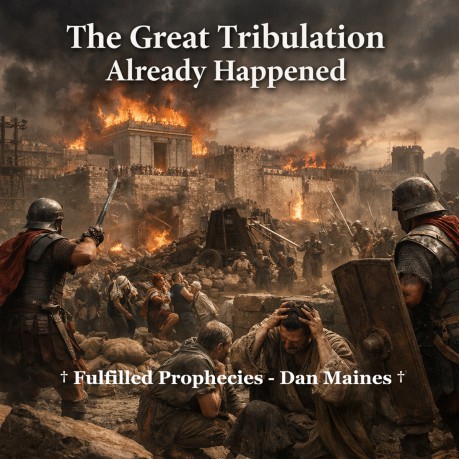
The Great Tribulation Already
Happened Introduction † The Bible doesn't leave the Great Tribulation
as some vague future event, it's defined clearly and placed in a
specific time and covenant context. † When we let Scripture interpret Scripture,
and then compare it with recorded history, it becomes undeniable that
this tribulation already took place in the first century. † We'll look at what Jesus said, what Daniel
prophesied, and what history confirms about the destruction of
Jerusalem. Matthew 23:35 so that upon you will fall the guilt of all the righteous blood
shed on earth, from the blood of righteous Abel to the blood of
Zechariah, the son of Berechiah, whom you murdered between the
sanctuary and the altar. † Jesus places all covenant guilt on that
generation, making their judgment uniquely severe (Matthew 23:35). † This explains why the tribulation was unlike
any other, it was the full weight of covenant judgment. † This matches the unmatched language of
Matthew 24:21. Matthew 23:36 Truly I say to you, all these things will come upon this
generation. † Jesus already declared judgment on that
generation before Matthew 24 even begins, this sets the context
(Matthew 23:36). † The tribulation of Matthew 24 is the direct
continuation of this judgment. † This proves the audience and timing never
changed between chapters. Matthew 24:21 For then there will be a great tribulation, such as has not
occurred since the beginning of the world until now, nor ever will
again. † Jesus says this tribulation would be unlike
anything before it and never repeated again, that immediately rules
out any future global event repeating the same level (Matthew 24:21). † He also places this in the lifetime of His
audience just a few verses later, saying their generation would not
pass until all these things happened (Matthew 24:34). † This isn't open ended or symbolic timing,
it's a direct time statement tied to the disciples standing there
listening to Him. Daniel 12:1 Now at that time Michael, the great prince who stands guard over
the sons of your people, will arise. And there will be a time of
distress such as never occurred since there was a nation until that
time; and at that time your people, everyone who is found written in
the book, will be rescued. † Daniel describes the same event, a time of
trouble unmatched in history, using the same language Jesus later
uses (Daniel 12:1). † Notice this tribulation is tied to your
people, meaning Israel, not the entire globe, it's covenant judgment
on the nation (Daniel 12:1). † Jesus is directly applying Daniel's prophecy
to the events leading up to Jerusalem's destruction, not something
thousands of years later. Matthew 24:15 Therefore when you see the abomination of desolation which was
spoken of through Daniel the prophet, standing in the holy place, let
the reader understand, † Jesus explicitly tells them to look for
Daniel's prophecy being fulfilled in their lifetime, not thousands of
years later (Matthew 24:15). † This proves Matthew 24 and Daniel 12 are not
separate events, they are the same tribulation. † If Daniel's tribulation is fulfilled when
they see it, then it had to happen in their generation. Matthew 24:34 Truly I say to you, this generation will not pass away until all
these things take place. † Jesus locks the timing down, this generation,
not a future one thousands of years removed (Matthew 24:34). † If we take His words plainly, the tribulation
had to occur within about 40 years, and that's exactly what happened
in AD 70. † Changing generation to mean something else is
what creates confusion, but Scripture never redefines the word. Matthew 10:23 But whenever they persecute you in one city, flee to the next; for
truly I say to you, you will not finish going through the cities of
Israel until the Son of Man comes. † Jesus tells His disciples they would not
finish going through Israel before His coming, placing fulfillment in
their lifetime (Matthew 10:23). † This supports the same timing as Matthew 24. † It reinforces that the tribulation and coming
are not future events. Luke 21:20-22 But when you see Jerusalem surrounded by armies, then recognize
that her desolation is near. Then those who are in Judea must flee to
the mountains, and those who are inside the city must leave, and
those who are in the country must not enter the city, because these
are days of punishment, so that all things which have been written
will be fulfilled. † Luke removes all symbolism and tells you
plainly, the tribulation is the Roman army surrounding Jerusalem
(Luke 21:20). † Jesus calls it days of punishment, meaning
covenant judgment for breaking the Law (Leviticus 26:31-33). † He says all things written would be fulfilled
in that event, that includes Daniel 12. Luke 19:43-44 For the days will come upon you when your enemies will put up a
barricade against you, and surround you and hem you in on every side,
and they will level you to the ground and your children within you,
and they will not leave in you one stone upon another, because you
did not recognize the time of your visitation. † Jesus foretells the exact siege conditions
that happened in AD 70 (Luke 19:43-44). † This matches Luke 21 and confirms the
tribulation is the Roman destruction. † This was judgment for rejecting Him. Jeremiah 30:7 Woe, for that day is great, there is none like it; And it is the
time of Jacob's distress, Yet he will be saved from it. † Jeremiah describes the same unmatched trouble
for Jacob, confirming it's Israel focused, not global (Jeremiah
30:7). † This matches Daniel 12:1 and Matthew 24:21
perfectly. † This shows a consistent prophetic theme
fulfilled in the first century. Leviticus 26:31-33 I will also make your cities a waste and bring your sanctuaries to
desolation, and I will not smell your soothing aromas. And I will
make the land desolate so that your enemies who settle in it will be
appalled over it. You, however, I will scatter among the nations, and
I will draw out a sword after you, as your land becomes desolate and
your cities become waste. † This is exactly what happened in AD 70,
cities destroyed, sanctuary desolated, people scattered (Leviticus
26:31-33). † The Great Tribulation wasn't random, it was
covenant curses being fully executed. † This ties Jesus' words directly back to the
Law, showing continuity, not a new future event. Hebrews 8:13 When He said, "A new covenant," He has made the first
obsolete. But whatever is becoming obsolete and growing old is about
to disappear. † The old covenant was about to vanish in their
time, pointing directly to AD 70 (Hebrews 8:13). † This connects the tribulation with the
removal of the old system. † The destruction of the temple completed this
process. 1 Peter 4:7 The end of all things is near; therefore, be of sound judgment and
sober spirit for the purpose of prayer. † Peter says the end was near, not thousands of
years away (1 Peter 4:7). † This aligns with Jesus' timeline and confirms
first century fulfillment. † The end here is the end of the old covenant
system, not the physical planet. Revelation 1:1 The Revelation of Jesus Christ, which God gave Him to show to His
bond-servants the things which must soon take place; and He
communicated them by His angel to His bond-servant John. † Soon means soon, not thousands of years later
(Revelation 1:1). † This confirms Revelation describes the same
first century events. † The tribulation in Revelation matches the
destruction of Jerusalem. Historical References † Josephus recorded famine so severe that
people resorted to cannibalism during the siege of Jerusalem
(Josephus, Wars of the Jews, Book 6). † Over a million Jews perished and the temple
was destroyed, ending the old covenant system (Josephus, Wars of the
Jews, Book 6). † The city was surrounded and crushed by Roman
armies under Titus, exactly as Jesus warned (Luke 21:20). † Josephus wrote that the suffering in
Jerusalem was so great that no other city had ever endured such
misery, confirming Jesus' statement (Josephus, Wars of the Jews, Book
6). † He describes entire families starving, bodies
piling up in the streets, and internal civil war inside the city. † The temple stones were torn apart, fulfilling
Jesus' words that not one stone would be left upon another (Matthew
24:2). † Eusebius recorded that Christians fled
Jerusalem before the destruction, remembering Jesus' warning
(Eusebius, Ecclesiastical History, Book 3). † This shows the early church did not expect a
future tribulation, they recognized it in their generation. † This was the complete end of the covenant
world centered in Jerusalem. How It Applies To Us Today † We're not waiting for a future Great
Tribulation, it's already been fulfilled exactly as Jesus said. † This confirms we can trust every word Christ
spoke, His timing was precise and true. † It frees us from fear driven end times
teaching that constantly pushes judgment into our future. † If the Great Tribulation already happened,
then fear based end times teaching collapses immediately. † We're living in the fulfilled kingdom
reality, not in anticipation of a coming tribulation. † This shifts our focus from fear of
destruction to confidence in fulfillment. Q & A Appendix Q: Was the Great Tribulation worldwide? Q: Could something worse happen in the future? Q: Why was it so severe? Q: What about Revelation, isn't the tribulation
there? Q: Why do people still expect a future
tribulation? Q: Was this really the worst event in history? Q: Is the tribulation tied to the temple? Q: Did the apostles expect it soon? Q: Why can't this be future? Q: Who specifically experienced the Great
Tribulation? Q: What caused the Great Tribulation? Q: Why does Daniel say your people? Q: What does abomination of desolation refer
to? Q: Did Jesus give a sign to escape? Q: Did believers actually escape? Q: What ended at the Great Tribulation? Q: Why was the temple destroyed? Q: Does this mean prophecy is already
fulfilled? Q: What does days of punishment mean? Q: Why do people connect this to the end of the
world? Q: Did the apostles teach a future
tribulation? Q: What does soon take place mean in
Revelation? Q: Is there any prophecy left about a
tribulation? Q: What was rescued in Daniel 12:1? Q: How do we know this was not symbolic only? Q: What role did Rome play? Q: Why is this important to understand? Q: What should believers focus on now? † This is the fulfilled perspective we proclaim at
Fulfilled Prophecies † Source Index † Matthew 23:35-36; Matthew 24:2, 15, 21, 34;
Matthew 10:23; Daniel 12:1; Luke 19:43-44; Luke 21:20-22; Jeremiah
30:7; Leviticus 26:31-33; Hebrews 8:13; 1 Peter 4:7; Revelation 1:1
By Dan Maines
A:
No, it was focused on Israel and Jerusalem as Daniel said, your
people, and Jesus confirmed it in the context of Judea (Daniel 12:1;
Matthew 24:16).
A:
No, Jesus said it would never be equaled again, that rules out any
future tribulation surpassing it (Matthew 24:21).
A:
Because it was covenant judgment, the final end of the old covenant
system centered in the temple (Hebrews 8:13).
A: Revelation was written about things
which must soon take place, placing its fulfillment in the same first
century judgment (Revelation 1:1).
A: Because they ignore Jesus' time
statement and separate Matthew 24 from Daniel 12.
A:
Yes, both Jesus and Josephus confirm it was unmatched and would never
be repeated (Matthew 24:21).
A:
Yes, it centers on the destruction of Jerusalem and the temple system
(Luke 21:20; Hebrews 8:13).
A:
Yes, they repeatedly said it was near and at hand (1 Peter 4:7;
Revelation 1:1).
A:
Because Jesus clearly said it would happen in that generation and
never be repeated (Matthew 24:21, 34).
A: Jesus said it would come upon
that generation, and Luke shows it was those in Judea and Jerusalem
who experienced it (Matthew 23:36; Luke 21:20-22).
A:
It was judgment for rejecting Christ and shedding righteous blood, as
Jesus declared (Matthew 23:35-36).
A:
Because the tribulation was covenant judgment on Israel, not the
entire world (Daniel 12:1).
A: It refers to the Roman armies
surrounding and defiling Jerusalem, as Luke explains plainly (Matthew
24:15; Luke 21:20).
A:
Yes, when they saw Jerusalem surrounded by armies, they were to flee
immediately (Luke 21:20-21).
A:
Yes, early historical records show Christians fled before the
destruction (Luke 21:20-21).
A:
The old covenant system and temple-centered worship came to an end
(Hebrews 8:13).
A:
Because it had become obsolete under the new covenant and was under
judgment (Hebrews 8:13).
A: Yes, Jesus said all things
written would be fulfilled in those days (Luke 21:22).
A:
It refers to covenant judgment for breaking the Law, as warned in the
Old Testament (Luke 21:22; Leviticus 26:31-33).
A: Because they misunderstand covenant
language and assume it refers to the physical planet instead of
Israel's covenant world.
A: No, they consistently said
these events were near in their time (1 Peter 4:7; Revelation 1:1).
A: It means the events were about
to happen in that generation, not thousands of years later
(Revelation 1:1).
A: No, Jesus said it would never
be repeated, meaning it is fully complete (Matthew 24:21).
A:
The faithful remnant written in the book, those who trusted in Christ
(Daniel 12:1).
A:
Because real historical events match the exact details Jesus and the
prophets described (Luke 21:20; Josephus, Wars of the Jews).
A:
Rome was the instrument God used to carry out covenant judgment on
Jerusalem (Luke 19:43-44).
A:
Because it removes confusion about end times and anchors prophecy in
fulfilled history (Matthew 24:34).
A:
Living in the fulfilled kingdom reality Christ established, not
fearing a future tribulation.
© Fulfilled Prophecies - Dan
Maines.
†
Josephus, Wars of the Jews, Book 6; Eusebius, Ecclesiastical History,
Book 3
Links