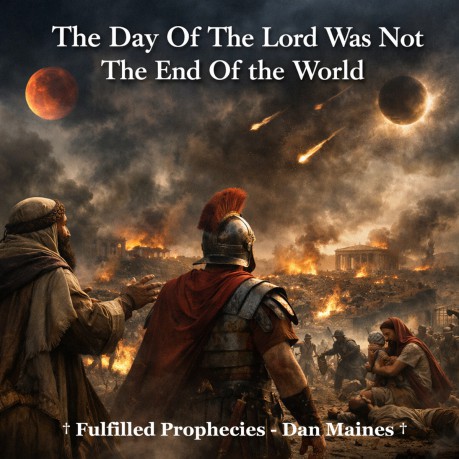
The Day Of The Lord Was Not
The End Of The World Introduction † Most people today hear the day of the Lord
and immediately think of the end of the physical world, but that's
not how the Bible uses the phrase (Isaiah 13:1, Amos 5:18). Isaiah 13:9-10 Behold, the day of the Lord is coming, cruel, with fury and
burning anger, to make the land a desolation; and He will exterminate
its sinners from it. For the stars of heaven and their constellations
will not flash forth their light; the sun will be dark when it rises,
and the moon will not shed its light. † This is clearly called the day of the Lord,
yet it's about the judgment of Babylon, not the end of the world
(Isaiah 13:1, Isaiah 13:17). Ezekiel 32:7-8 When I extinguish you, I will cover the heavens and darken their
stars; I will cover the sun with a cloud, and the moon will not give
its light. All the shining lights in the heavens I will darken over
you and will set darkness on your land, declares the Lord God. † This is about Egypt being judged, yet it uses
the exact same cosmic language (Ezekiel 32:2, Ezekiel 32:11). Joel 2:10-11 The earth quakes before them; the heavens tremble. The sun and the
moon grow dark, and the stars lose their brightness. The Lord utters
His voice before His army; surely His camp is very great, for strong
is he who carries out His word. The day of the Lord is indeed great
and very awesome, and who can endure it? † Joel describes the day of the Lord with the
same language of darkness and shaking (Joel 2:1, Joel 2:2). Amos 5:18-20 Woe to you who are longing for the day of the Lord! For what
purpose is the day of the Lord for you? It will be darkness and not
light; as when a man flees from a lion, and a bear meets him, or he
enters a house and leans his hand against the wall, and a snake bites
him. Will not the day of the Lord be darkness instead of light, even
gloom with no brightness in it? † Israel thought the day of the Lord would be
good for them, but it was actually judgment against them (Amos 5:21,
Amos 5:27). Zephaniah 1:14-15 The great day of the Lord is near, near and coming very quickly;
listen, the day of the Lord, the warrior cries out bitterly there. A
day of wrath is that day, a day of trouble and distress, a day of
destruction and desolation, a day of darkness and gloom, a day of
clouds and thick darkness. † This day of the Lord was specifically against
Jerusalem, not the entire world (Zephaniah 1:4, Zephaniah 1:12). Isaiah 34:4 All the host of heaven will wear away, and the sky will be rolled
up like a scroll; all their host will wither like a leaf falling from
the vine, or fruit falling from the fig tree. † This sounds like the end of the universe, yet
it's about the judgment of Edom (Isaiah 34:5, Isaiah 34:6). † Scripture shows multiple distinct Days of the
Lord in the Old Testament, not one single event, including Babylon,
Egypt, Edom, Israel, and Jerusalem (Isaiah 13:1, Ezekiel 30:3, Isaiah
34:5, Amos 5:18, Zephaniah 1:4). Matthew 24:29-34 But immediately after the tribulation of those days the sun will
be darkened, and the moon will not give its light, and the stars will
fall from the sky, and the powers of the heavens will be shaken. And
then the sign of the Son of Man will appear in the sky, and then all
the tribes of the earth will mourn, and they will see the Son of Man
coming on the clouds of the sky with power and great glory. And He
will send forth His angels with a great trumpet and they will gather
together His elect from the four winds, from one end of the sky to
the other. Now learn the parable from the fig tree: when its branch
has already become tender and puts forth its leaves, you know that
summer is near. So also, you too, when you see all these things,
recognize that He is near, right at the door. Truly I say to you,
this generation will not pass away until all these things take place. † Jesus uses the exact same language found in
Isaiah, Ezekiel, Joel, and the prophets (Isaiah 13:10, Joel 2:10). † He also says it was near and at the doors,
reinforcing the immediate time frame (Matthew 24:33, James 5:8). Historical References † Josephus records the Roman siege and the
complete destruction of the temple, exactly as Jesus foretold
(Matthew 24:2). How it applies to us today † We don't need to fear a future
end-of-the-world scenario, Jesus already fulfilled what He said
(Matthew 24:34). Q & A Appendix Q How many Day of the Lord events were there? Q Does the day of the Lord always mean the end of
the world? Q Why does Jesus use cosmic language in Matthew
24? Q When were these things fulfilled? Q If the language sounds literal, shouldn't we
take it literally? † This is the fulfilled perspective we proclaim at
Fulfilled Prophecies † Source Index † Isaiah 13:9-10; Ezekiel 32:7-8; Joel 2:10-11;
Amos 5:18-20; Zephaniah 1:14-15; Isaiah 34:4; Matthew 24:29-34; Acts
2:16-20; 1 Thessalonians 5:2-3; 2 Thessalonians 1:6-10
By Dan Maines
†
When we actually read the Old Testament, we see that the day of the
Lord was consistently about God coming in judgment against nations
(Isaiah 13:1, Ezekiel 30:3).
† The language
is dramatic, cosmic, and powerful, but it was never describing the
destruction of the planet, it was describing the fall of kingdoms
(Isaiah 34:5, Ezekiel 32:2).
† If we let
scripture interpret scripture, we'll see that Jesus used that same
language in Matthew 24, and He said it would happen in their
generation (Matthew 24:34, Luke 21:22).
† The sun, moon,
and stars going dark is symbolic language for the fall of a nation,
not literal cosmic collapse (Isaiah 13:1, Isaiah 13:19).
†
If this language meant the end of the universe, the world would've
ended when Babylon fell, but it didn't (Isaiah 13:17, Isaiah 13:22).
†
God wasn't turning off the literal universe, He was ending Egypt's
power and glory (Ezekiel 32:12, Ezekiel 32:15).
†
This proves the language is prophetic imagery for national judgment,
not physical destruction (Ezekiel 32:16, Ezekiel 30:3).
†
Peter later applies Joel to his own time, showing it wasn't thousands
of years in the future (Acts 2:16-20, Acts 2:33).
†
Again, this is covenant judgment language, not the destruction of the
physical world (Joel 2:17, Joel 2:27).
† This proves the day of the Lord
wasn't a single end-of-world event, it was repeated judgments (Amos
5:18, Isaiah 13:1).
† The focus is always
covenant accountability, not global annihilation (Amos 3:2, Amos
5:24).
†
It uses the same language of darkness and destruction, yet it was
fulfilled in real historical judgment (Zephaniah 1:17, Zephaniah
1:18).
† This directly connects Old Testament
judgment language to what Jesus later warned about Jerusalem
(Zephaniah 1:2, Matthew 23:36).
†
The same cosmic imagery is used again for a local, historical
judgment (Isaiah 34:8, Isaiah 34:10).
† This
confirms that this language is symbolic and consistent throughout the
prophets (Isaiah 13:10, Ezekiel 32:7).
† That's at
least five separate Days of the Lord, all fulfilled in history, not
the end of the physical world (Isaiah 13:17, Ezekiel 30:10, Isaiah
34:8, Amos 5:27, Zephaniah 1:18).
† The New
Testament continues this same pattern and places its fulfillment in
the first century, not our future (Acts 2:16-20, 1 Thessalonians
5:2-3, Matthew 24:34).
†
That means He's speaking of judgment, not the end of the physical
world (Isaiah 34:4, Ezekiel 32:7).
† He
clearly says all these things would happen in their generation, not
thousands of years later (Matthew 24:34, Luke 21:32).
†
The coming of the Son of Man on the clouds is judgment language taken
from Daniel 7:13, not a physical descent to earth (Daniel 7:13-14,
Psalm 104:3).
† The tribes of the land
mourning points to Israel, not the entire planet (Zechariah 12:10-12,
Matthew 23:37).
† This was fulfilled in the
destruction of Jerusalem in AD 70, exactly as Jesus said (Luke 21:22,
Matthew 23:36).
† He describes signs, famine,
internal conflict, and massive loss of life during the war (Luke
21:20, Luke 21:23).
† Eusebius wrote that
believers fled Jerusalem before its destruction, just as Jesus
instructed (Matthew 24:16).
† Tacitus
confirms the devastation of Judea and the overwhelming Roman victory
(Luke 21:24).
† It should build our trust
in His words, because everything happened exactly when He said it
would (John 14:29).
† It reminds us that God
judges covenant unfaithfulness, and He keeps His promises (Amos 3:2,
Luke 21:22).
A
Scripture shows at least five distinct Day of the Lord judgments in
the Old Testament, Babylon, Egypt, Edom, Israel, and Jerusalem
(Isaiah 13:1, Ezekiel 30:3, Isaiah 34:5, Amos 5:18, Zephaniah 1:4).
In the New Testament, there is one climactic Day of the Lord tied to
the judgment Jesus placed in His generation (Acts 2:16-20, 1
Thessalonians 5:2-3, Matthew 24:34).
A No, scripture shows it was
repeatedly used for judgment on nations like Babylon, Egypt, Edom,
and Israel (Isaiah 13:1, Ezekiel 32:2, Isaiah 34:5, Amos 5:18).
A Because He's using the same prophetic
language already established in the Old Testament (Isaiah 13:10, Joel
2:10).
A
Jesus said it would happen in their generation, which was fulfilled
in the destruction of Jerusalem in AD 70 (Matthew 24:34, Luke 21:22).
A No, because the Old
Testament already defines this language as symbolic for national
judgment (Isaiah 13:10, Ezekiel 32:7, Isaiah 34:4).
© Fulfilled Prophecies - Dan
Maines.
†
Josephus, Wars of the Jews
† Eusebius,
Ecclesiastical History
† Tacitus, Histories
Links