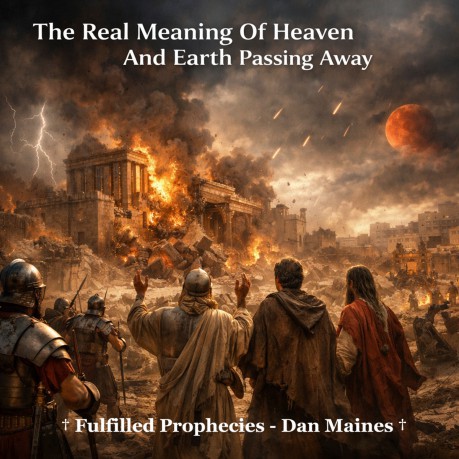
The Real Meaning Of Heaven
And Earth Passing Away Introduction † Most people read heaven and earth passing
away and assume the physical universe is going to be destroyed, but
that's not how Scripture consistently uses that language. † In the Bible, heaven and earth is often
covenant language, referring to a world order, a structured system
between God and a people (Isaiah 51:15-16). † Jesus wasn't predicting the end of the
planet, He was declaring the end of the Old Covenant world, and He
clearly said it would happen in that generation (Matthew 24:34). † If we ignore how the Old Testament defines
these terms, we'll completely misunderstand what Jesus was saying. Isaiah 51:15-16 † This passage defines heaven and earth in
covenant terms, establishing the heavens and founding the earth is
directly tied to God establishing a people, Zion (Isaiah 51:16). † God isn't describing physical creation here,
He's describing forming a covenant world where He says, You are My
people (Isaiah 51:16). † That means heaven and earth can represent a
covenant structure, a relational world between God and Israel
(Deuteronomy 32:1). † Moses even calls heaven and earth as
witnesses against Israel, showing this language is used in a covenant
courtroom sense, not a cosmic one (Deuteronomy 31:28). Isaiah 13:9-10 † This is describing the fall of Babylon, yet
it uses cosmic language, proving that heaven and earth language is
symbolic of covenantal or national judgment, not literal cosmic
collapse (Isaiah 13:10). † This establishes the pattern Jesus is using,
the same prophetic language applied to Israel's judgment in His
generation (Matthew 24:29). Matthew 24:34-35 † Jesus places a time limit, this generation,
meaning His audience would see the fulfillment (Matthew 24:34). † If heaven and earth meant the physical
universe, then everything would've ended in the first century, but it
didn't, so the meaning must be covenantal. † Jesus is declaring the end of the Old
Covenant system, temple, priesthood, sacrifices, all of it would pass
away (Hebrews 8:13). Hebrews 8:13 † This was written before AD 70, showing the
Old Covenant was already in the process of disappearing, confirming
the timing Jesus gave (Hebrews 8:13). † At the same time, He contrasts that with His
words, which would remain and establish the New Covenant (Hebrews
12:26-28). † This connects directly to the destruction of
Jerusalem in AD 70, which Jesus described in detail earlier in the
chapter (Luke 21:20-22). † That event marked the complete removal of the
Old Covenant world, exactly as He said. † This also matches the broader biblical
pattern, the word of God stands forever even when covenant worlds
pass away (Isaiah 40:8). Isaiah 40:8 † Jesus is echoing this exact truth, heaven and
earth pass, but His word remains, showing covenant replacement, not
cosmic destruction (Matthew 24:35). † The Law and the Prophets were until John,
then the kingdom was preached, marking the transition already
underway (Luke 16:16). † No first century listener would've understood
this as the literal end of the universe, this was standard prophetic
language for covenant judgment. Hebrews 12:26-28 † Hebrews explains exactly what the shaking of
heaven and earth means, it's the removal of things that can be
shaken, meaning the Old Covenant system (Hebrews 12:27). † The phrase yet once more shows this was a
final covenant transition, not something that would keep happening
over and over (Hebrews 12:26). † The things that were made refers to the
temple system, priesthood, sacrifices, everything tied to the Old
Covenant order (Hebrews 9:10). † What remains is the unshakable kingdom, the
New Covenant reality established in Christ (Hebrews 12:28). † This proves beyond question that heaven and
earth passing away is about covenant removal, not the destruction of
the physical universe. Haggai 2:6-7 † Haggai was already using heaven and earth
shaking language before Jesus spoke in Matthew 24, so the phrase
didn't automatically mean the end of the physical universe. † The shaking here points to covenant upheaval,
God was announcing a major redemptive transition, not the destruction
of the planet (Haggai 2:6). † Hebrews 12 quotes this very passage and
explains its meaning as the removal of things that could be shaken so
that what cannot be shaken would remain (Hebrews 12:26-28). † That means Haggai 2 is directly tied to the
passing of the Old Covenant order and the establishment of the
unshakable kingdom of Christ. † The old temple system was temporary, but
Christ brought in what would remain, so the shaking was covenantal,
not cosmic. † This makes Haggai 2 one of the clearest
bridges between the prophets and the New Testament teaching on heaven
and earth passing away. † This proves heaven and earth passing away is
about covenant transition, not cosmic destruction. 2 Peter 3:10-13 † Peter uses the same prophetic language as
Isaiah, describing covenant judgment, not the destruction of the
physical universe (Isaiah 34:4). † The elements melting refers to the basic
principles of the Old Covenant system, not physical atoms, the same
word is used this way elsewhere (Galatians 4:3). † The new heavens and new earth is the New
Covenant order already established in Christ, not something future
(Revelation 21:1-2). † If heaven and earth passed, why do we still
see them, because the language is covenantal, not physical,
describing the passing of a system, not the planet (Isaiah 51:16). Historical References † Flavius Josephus recorded the complete
destruction of Jerusalem and the temple in AD 70, showing the end of
the Old Covenant system. † Eusebius of Caesarea wrote that the church
understood these events as the fulfillment of Jesus' prophecy. † Tacitus confirmed the massive destruction and
collapse of the Jewish world in that time. † The temple stood at the center of Israel's
covenant world, when it was destroyed, that entire heaven and earth
system collapsed with it. How It Applies To Us Today † We're not waiting for heaven and earth to
pass away, it already happened in the covenant sense when the Old
Covenant ended. † We're living in the New Covenant world where
Christ reigns and His kingdom cannot be shaken (Hebrews 12:28). † This removes fear-based theology and replaces
it with confidence in what Christ has already fulfilled. † It calls us to live in the reality of the
kingdom now, not waiting for something future that Scripture already
says happened. Q & A Appendix Q: If heaven and earth passed away, why are we
still here? Q: What exactly ended in AD 70? Q: What is the new heaven and new earth? Q: Why does this matter? Q: What did Jesus mean when He said heaven and
earth would pass away? Q: Does this mean the physical earth will never
be destroyed? Q: How do we know this was fulfilled in AD 70? Q: Why is the temple so important to this
topic? Q: What replaces the Old Covenant heaven and
earth? † This is the fulfilled perspective we proclaim at
Fulfilled Prophecies † Source Index † Isaiah 51; Isaiah 13; Matthew 24; Hebrews 12;
Hebrews 8; Haggai 2; 2 Peter 3; Deuteronomy 31; Deuteronomy 32; Luke
21; Luke 16; Galatians 4; Isaiah 40; Revelation 21 † Flavius Josephus; Eusebius of Caesarea;
Tacitus
By Dan Maines
For I am the Lord your God,
who stirs up the sea so that its waves roar; the Lord of hosts is His
name. I have put My words in your mouth and have covered you with the
shadow of My hand, to establish the heavens, to found the earth, and
to say to Zion, You are My people.
Behold, the day of the Lord
is coming, cruel, with fury and burning anger, to make the land a
desolation; and He will exterminate its sinners from it. For the
stars of heaven and their constellations will not flash forth their
light; the sun will be dark when it rises, and the moon will not shed
its light.
Truly I say to you, this
generation will not pass away until all these things take place.
Heaven and earth will pass away, but My words will not pass away.
When He said, A new covenant,
He has made the first obsolete. But whatever is becoming obsolete and
growing old is ready to disappear.
The grass withers, the flower
fades, but the word of our God stands forever.
And His voice shook the
earth then, but now He has promised, saying, Yet once more I will
shake not only the earth, but also the heaven. And this expression,
Yet once more, denotes the removing of those things which can be
shaken, as of created things, so that those things which cannot be
shaken may remain. Therefore, since we receive a kingdom which cannot
be shaken, let us show gratitude, by which we may offer to God an
acceptable service with reverence and awe.
For this is what the Lord of
hosts says: Once more, in a little while, I am going to shake the
heavens and the earth, the sea also and the dry land. And I will
shake all the nations; and they will come with the treasures of all
nations; and I will fill this house with glory, says the Lord of
hosts.
But the day of the Lord will
come like a thief, in which the heavens will pass away with a roar
and the elements will be destroyed with intense heat, and the earth
and its works will be burned up. Since all these things are to be
destroyed in this way, what sort of people ought you to be in holy
conduct and godliness, looking for and hastening the coming of the
day of God, because of which the heavens will be destroyed by
burning, and the elements will be dissolved with intense heat! But
according to His promise we are looking for new heavens and a new
earth, in which righteousness dwells.
A: Because it's covenant language,
not physical destruction, it refers to the Old Covenant world ending
(Isaiah 51:16, Matthew 24:35).
A:
The temple, sacrifices, priesthood, and the entire Old Covenant
system (Hebrews 8:13).
A:
The New Covenant order where Christ reigns and righteousness dwells
(2 Peter 3:13, Revelation 21:1-2).
A:
Because it shows Jesus fulfilled everything He said in that
generation, exactly as promised (Matthew 24:34).
A: He was speaking about
the Old Covenant world, the system centered on the temple,
priesthood, and law, which passed away in that generation (Matthew
24:34-35, Hebrews 8:13).
A: The focus of these passages
isn't the physical planet, it's covenant transition, Scripture
consistently uses this language for judgment on a covenant world, not
the end of creation (Isaiah 13:10, Isaiah 51:16).
A:
Jesus tied it to that generation, and history confirms the temple and
entire system were destroyed in AD 70, exactly as He said (Matthew
24:34, Luke 21:20-22).
A: Because it was the center of the Old
Covenant world, once it was destroyed, that entire heaven and earth
system was gone (Hebrews 9:10, Hebrews 8:13).
A: The New Covenant kingdom in Christ,
which cannot be shaken and will never pass away (Hebrews 12:28, Luke
17:20-21).
© Fulfilled Prophecies - Dan
Maines.
Links