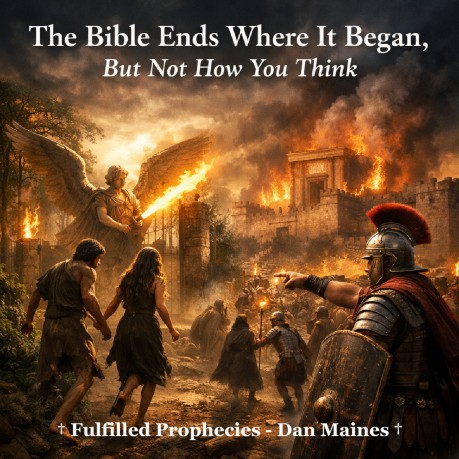
The
Bible Ends Where It Began, But Not How You Think Introduction † Most people
read Genesis and Revelation and assume it's about going back to a
garden, but that's not what the text actually teaches. Supporting Scripture Isaiah
59:2 † This shows
clearly that separation from God was never about location, it was
about sin creating a barrier between man and God (Isaiah 59:2). Hebrews
10:19-20 † This
directly shows access has been restored, what was once restricted is
now open through Christ (Hebrews 10:19-20). Genesis
3:24 † The man
wasn't just removed from a place, he was cut off from access to the
tree of life, which represents life in the presence of God (Genesis
3:24). The Barrier Continues
Through Israel † The same
pattern shows up in Israel, access to God was restricted, only the
high priest could enter, and only once a year, showing the barrier
was still standing (Hebrews 9:7). Revelation 22:14
Blessed are those who wash their robes, so that they will have the
right to the tree of life, and may enter the city by the gates. † This isn't
about going back to Eden, this is about restored access, the right to
the tree of life is given again (Revelation 22:14). The Fulfillment In That
Generation † Jesus said
all things would be fulfilled in that generation, including the
removal of the old system that kept access restricted (Matthew
24:34). Revelation
21:22 † This
confirms there is no longer any system restricting access, God
Himself is directly present with His people (Revelation 21:22). Historical References † Josephus
records the destruction of the temple in AD 70, confirming the end of
the old covenant system and its barriers. How It Applies To Us
Today † We're not
waiting to get back to Eden, we already have access to God right now
through Christ (Hebrews 4:16). Q & A Appendix Q
If this isn't a return to Eden, why does Revelation use garden
imagery? Q
What was actually lost in Genesis? Q
When was access fully restored? Q
Why is there still death if the tree of life is accessible? Q
If access is already restored, why does Revelation say outside are
the dogs and sorcerers? Q
Does this mean the tree of life is symbolic? Q
If the curse is removed, why do we still see suffering? Q
What replaced the temple if it's gone? Q
How do we know this isn't future? Q
What does it mean to wash their robes? Q
Why mention gates if this isn't a literal city? Q
Is the New Jerusalem a physical place? Q
How does this connect to Adam and Christ? Q
What does entering the city mean for us now? Source Index † Genesis
3:24; Revelation 22:14; Isaiah 59:2; Hebrews 10:19-20; Revelation
21:22
By Dan Maines
†
The issue in the beginning wasn't just about a place, it was about
access, man didn't just lose the garden, he lost access to God.
†
If we read this through the fulfilled perspective, we'll see that the
entire story is about covenantal separation and restored access, not
a return to dirt, trees, and location.
†
Adam wasn't just placed in a garden, he was given responsibility in
God's presence, and when he failed, access was lost, setting the
pattern that Israel would later repeat (Genesis 2:15; Hosea 6:7).
†
Adam failed in a role that Israel was later called to fulfill as a
kingdom of priests, and both failures resulted in restricted access
(Genesis 2:15; Exodus 19:6).
But your
wrongdoings have caused a separation between you and your God,
And
your sins have hidden His face from you so that He does not hear.
†
This is the same condition Adam entered after the fall, not just
outside a garden, but outside the presence of God (Genesis 3:24).
Therefore,
brothers and sisters, since we have confidence to enter the holy
place by the blood of Jesus, by a new and living way which He
inaugurated for us through the veil, that is, through His flesh,
†
The veil represents the same barrier seen from Eden to the temple,
and now that barrier has been removed (Exodus 26:31-33).
So He
drove the man out; and at the east of the Garden of Eden He stationed
the cherubim and the flaming sword which turned every direction to
guard the way to the tree of life.
†
The cherubim weren't decorative, they were guardians of access, just
like the cherubim over the mercy seat in the tabernacle, showing
restricted access to God's presence (Exodus 25:18-22).
†
From that moment forward, humanity lived outside of covenant access,
not just outside of a garden, but outside of fellowship with God
(Isaiah 59:2).
†
Adam failed in his role before God, and just like him, Israel later
failed in their priestly responsibility, and both resulted in
restricted access (Hosea 6:7; Exodus 19:6).
†
The garden itself functioned like a sanctuary, and the cherubim
guarding it match the imagery later used in the tabernacle and
temple, showing this was always about access to God's presence
(Genesis 3:24; Exodus 26:31-33).
†
The veil in the temple functioned the same way as the cherubim,
guarding access to God's presence (Exodus 26:31-33).
†
This proves the issue was never location, it was access, and that
access was covenantally restricted until it was fulfilled.
†
Even when sacrifices were offered, they couldn't fully open the way,
they were reminders that access wasn't yet complete (Hebrews 10:1-3).
†
Notice the language, right to the tree, not relocation to a garden,
this is covenant language of restored standing before God (Ephesians
2:18).
†
The gates are open, meaning the barrier is gone, what was once
guarded is now accessible through Christ (Hebrews 10:19-20).
†
Through Him we now have direct access to God, not through a system,
but through Christ Himself (Ephesians 3:12; John 10:9).
†
There is no longer any curse separating man from God, showing the
full reversal of what happened in the beginning (Revelation 22:3).
†
When the temple was destroyed in AD 70, the final physical symbol of
separation was removed, showing full access had been established.
†
This is why Revelation shows no temple, because access is no longer
restricted, God dwells with His people (Revelation 21:22).
†
The destruction of the temple didn't just end a building, it ended
the last standing barrier between man and God.
†
With the temple gone, there is no longer any earthly system mediating
access, proving that the way to God is fully open.
I saw no
temple in it, for the Lord God the Almighty and the Lamb are its
temple.
†
This is the final contrast to Eden, no guarded entrance, no barrier,
full and open access to God.
†
Eusebius wrote that the church understood these events as the
fulfillment of Jesus' prophecy concerning that generation.
†
Tacitus also confirms the fall of Jerusalem, showing this wasn't
symbolic imagination, it was real historical judgment.
†
There's no barrier standing between us and God, the way to the tree
of life has been opened.
†
This changes everything, we're not striving to regain something lost
in the future, we're living in what has already been restored.
†
We're not outside the garden trying to get back in, we're in the
presence of God because the way has already been opened.
†
The story doesn't end with man returning to a garden, it ends with
full access to God restored, exactly what was lost in the beginning.
A
Because it's showing restored access in familiar language, not a
literal return to a physical garden, the tree of life represents life
with God, not geography (Revelation 22:2; John 17:3).
A
Access to God's presence and life, not just a location, man was
driven out from the presence of the Lord (Genesis 3:24; Isaiah 59:2).
A
Through Christ and the removal of the old covenant system,
culminating in the destruction of the temple in that generation
(Hebrews 10:19-20; Matthew 24:34).
A
Because the tree of life represents covenant life in God's presence,
not biological immortality, it's about restored relationship with
God, not escaping physical death (Revelation 22:14; John 17:3).
A
Because it's describing covenant distinction, not physical location,
those outside are those not in Christ, not those standing outside a
literal city (Revelation 22:15; Ephesians 2:12-13).
A
Yes, it's a symbol of life in God's presence, just like in Genesis,
it wasn't about eating fruit for biological immortality, it
represented access to life from God (Genesis 3:22; John 17:3).
A
Because the curse in context was covenant separation from God, not
the removal of all physical hardship, the separation has been removed
through Christ (Revelation 22:3; Romans 8:1).
A
God's people are now His dwelling place, access is no longer tied to
a building but to Christ and His body (Ephesians 2:19-22; Revelation
21:22).
A
Because Jesus said all these things would happen in that generation,
and Revelation was written about things that must shortly take place
(Matthew 24:34; Revelation 1:1).
A
It means being cleansed through Christ, not a future ritual, but
present covenant standing in Him (Revelation 7:14; 1 Corinthians
6:11).
A
Gates represent access and entry, showing that what was once closed
is now open, it's covenant language, not architecture (Revelation
21:25; Hebrews 10:19-20).
A
No, it's described as the bride, the people of God, showing it's
about a covenant community, not a physical city (Revelation 21:2,
9-10; Galatians 4:26).
A
Adam lost access through disobedience, Christ restored access through
obedience, reversing what was lost (Romans 5:18-19; 1 Corinthians
15:22).
A
It means having access to God through Christ right now, not waiting
to enter a future place (Hebrews 12:22-24; Ephesians 2:18).
†
Josephus, Wars of the Jews; Eusebius, Ecclesiastical History;
Tacitus, Histories
Links