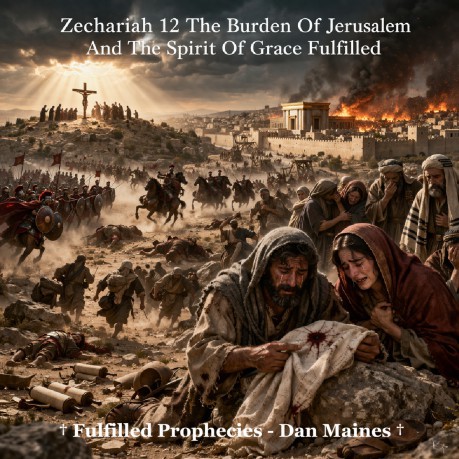
Zechariah 12 The Burden Of
Jerusalem And The Spirit Of Grace Fulfilled Introduction † Zechariah 12 speaks about the burden placed
upon Jerusalem, the conflict surrounding her, and the outpouring of
the Spirit that leads to mourning and recognition of the One who was
pierced. This isn't about some distant future, it's about the first
century climax where Christ was rejected, pierced, and then revealed
through judgment and fulfillment. † The chapter moves from physical conflict to
spiritual awakening, showing us the transition from the Old Covenant
system centered in Jerusalem to the New Covenant reality established
through Christ. † This is fulfilled in the events leading up to
AD 70, where Jerusalem became the center of both rejection and
judgment, and where the truth about Christ was made undeniable. Scripture Zechariah 12:1 † This establishes God's authority over
creation and man, reminding us that what follows is certain and
sovereignly decreed (Genesis 2:7, Isaiah 42:5). † The burden is a heavy prophetic message, not
a blessing but a warning tied to Israel's coming judgment (Malachi
1:1). Zechariah 12:2 † Jerusalem became a point of conflict among
surrounding nations, especially during the Roman siege leading to AD
70 (Luke 21:20). † The cup of staggering shows confusion and
judgment, not victory, this is God turning Jerusalem into a source of
turmoil (Jeremiah 25:15-16). Zechariah 12:3 † This was fulfilled when Rome and surrounding
forces came against Jerusalem, bringing destruction rather than
deliverance (Matthew 24:2). † Jerusalem wasn't protected here, it became
the center of judgment, exactly as Christ warned (Luke 19:43-44). Zechariah 12:4 † God is describing the collapse of military
strength and human confidence during the siege (Deuteronomy
28:28-29). † The madness and blindness point to the chaos
that overtook the city internally, even before Rome fully destroyed
it, as recorded by Josephus. Zechariah 12:5 † There was a false confidence among the
leaders, believing God was still with Jerusalem despite their
rejection of Christ (John 11:48). † This mirrors their misplaced trust in the
temple and city instead of the Messiah (Jeremiah 7:4). Zechariah 12:6 † This reflects the internal destruction within
Jerusalem, factions devouring each other during the siege (Mark
13:12). † The fire imagery shows judgment spreading
from within, not external victory. Zechariah 12:7 † God shows no favoritism toward Jerusalem's
elite, judgment comes evenly (Romans 2:11). † The leveling of status reveals the end of the
old system of privilege tied to the city. Zechariah 12:8 † This points to the strengthening of the
faithful remnant, not the rebellious city (Romans 9:27). † Those who believed in Christ were spiritually
strengthened, even as the physical city fell (Philippians 4:13). Zechariah 12:9 † This doesn't mean Jerusalem escapes, but that
God is controlling the outcome of the nations involved (Isaiah
10:5-7). † Rome itself would later face judgment,
showing God's sovereignty over all nations. Zechariah 12:10 † This is directly fulfilled in Christ being
pierced and later recognized (John 19:34-37). † The mourning shows repentance among those who
came to understand what they had done (Acts 2:36-37). † The Spirit of grace marks the transition into
the New Covenant, where forgiveness and understanding are given
(Hebrews 8:10-12). Zechariah 12:11 † This mourning reflects national sorrow, tied
to both recognition of sin and the devastation of judgment (Luke
23:48). † The historical reference connects this grief
to known tragedies in Israel's past. Zechariah 12:12-14 † This shows individual repentance, not just
national, each family recognizing their guilt (Romans 14:12). † The separation highlights personal
accountability before God. † This was fulfilled in the early church as
individuals responded to the gospel message (Acts 2:41). Historical References † Josephus records the internal chaos, famine,
and destruction within Jerusalem during the Roman siege, confirming
the madness and devouring described. † Eusebius notes that believers in Christ fled
Jerusalem before its destruction, showing the preservation of the
faithful remnant. † Tacitus describes the overwhelming
devastation and collapse of the city, aligning with the prophetic
judgment. How It Applies To Us Today † This shows us that rejecting Christ brings
judgment, not protection, no system or tradition can replace Him
(Acts 4:12). † It reminds us that true repentance is
personal, not just collective, each of us must recognize the One who
was pierced (Romans 10:9-10). † It teaches us that God fulfills His word
exactly when He says He will, not thousands of years later, but in
the generation He declared (Matthew 24:34). † It confirms that we now live in the reality
of the Spirit of grace, not waiting for it, but walking in it (2
Corinthians 5:17). Q & A Appendix Q When was the piercing fulfilled Q When did the mourning take place Q Is this about a future Jerusalem Q What is the Spirit of grace Q Who are the ones who were saved † This is the fulfilled perspective we proclaim at
Fulfilled Prophecies † Source Index † Zechariah 12 † Josephus, Wars of the Jews; Eusebius,
Ecclesiastical History; Tacitus, Histories
By Dan Maines
The pronouncement of the word
of the Lord concerning Israel. The Lord who stretches out the
heavens, lays the foundation of the earth, and forms the spirit of a
person within him declares,
Behold, I am going to make
Jerusalem a cup that causes staggering to all the surrounding
peoples, and when the siege is against Jerusalem, it will also be
against Judah.
And it will come about on
that day that I will make Jerusalem a heavy stone for all the
peoples, all who lift it will be severely injured. And all the
nations of the earth will be gathered against it.
On that day, declares the
Lord, I will strike every horse with bewilderment and his rider with
madness; but I will watch over the house of Judah, while I strike
every horse of the peoples with blindness.
Then the leaders of Judah
will say in their hearts, The inhabitants of Jerusalem are a strength
to me through the Lord of armies, their God.
On that day I will make the
leaders of Judah like a firepot among pieces of wood and a flaming
torch among sheaves, so they will consume on the right and on the
left all the surrounding peoples, while the inhabitants of Jerusalem
again live on their own sites in Jerusalem.
The Lord also will save the
tents of Judah first, so that the glory of the house of David and the
glory of the inhabitants of Jerusalem will not be magnified above
Judah.
On that day the Lord will
defend the inhabitants of Jerusalem, and the one who is feeble among
them on that day will be like David, and the house of David will be
like God, like the angel of the Lord before them.
And on that day I will seek
to destroy all the nations that come against Jerusalem.
And I will pour out on the
house of David and on the inhabitants of Jerusalem the Spirit of
grace and of pleading, so that they will look at Me whom they
pierced; and they will mourn for Him, like one mourning for an only
son, and they will weep bitterly over Him like the bitter weeping
over a firstborn.
On that day there will be
great mourning in Jerusalem, like the mourning of Hadadrimmon in the
plain of Megiddo.
The land will mourn,
every family by itself; the family of the house of David by itself
and their wives by themselves; the family of the house of Nathan by
itself and their wives by themselves; the family of the house of Levi
by itself and their wives by themselves; the family of the Shimeites
by itself and their wives by themselves; all the families that
remain, every family by itself and their wives by themselves.
A
It was fulfilled in the crucifixion of Christ, John 19:34-37
A
It began in the first century when people realized Jesus was the
Messiah, Acts 2:36-37
A
No, it was fulfilled in the events leading to AD 70, Luke 21:20-22
A
It is the New Covenant work of the Spirit bringing understanding and
forgiveness, Hebrews 8:10-12
A
The remnant who believed in Christ and followed His warnings, Romans
9:27
© Fulfilled Prophecies - Dan
Maines.
Links