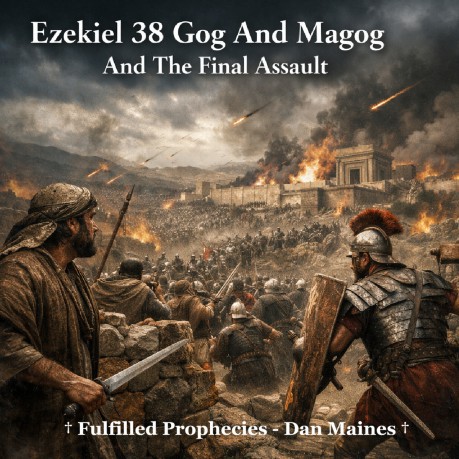
Ezekiel 38 Gog And Magog And
The Final Assault Introduction † Ezekiel 38 describes a great enemy rising
against God's restored people, but this isn't a future end-of-world
battle, it's covenantal judgment language pointing to the final
conflict surrounding Israel before her judgment was completed
(Ezekiel 38:8) † The language is symbolic and apocalyptic,
just like Revelation, showing a massive gathering of nations against
God's people, which we see fulfilled in the Roman siege leading up to
AD 70 (Luke 21:20) † This chapter isn't about modern nations or a
distant future war, it's about the last great opposition before the
Old Covenant system was completely removed and the kingdom fully
established (Hebrews 12:27-28) Ezekiel 38:1-3 † Gog represents a symbolic enemy leader, not a
specific modern nation, just like Pharaoh or Babylon were used as
types of opposition against God (Ezekiel 29:3) † The gathering of names like Meshech and Tubal
points to known hostile regions surrounding Israel, showing a
coalition of enemies rather than a single identity (Genesis 10:2) † God declaring I am against you shows this
isn't about the enemy's success, it's about God's sovereign judgment
over those who oppose His covenant people (Isaiah 13:6-9) Ezekiel 38:8-9 † The phrase latter years doesn't mean
thousands of years later, it refers to the last days of that covenant
age, the same period Jesus spoke of in Matthew 24:34 † Israel being regathered and dwelling securely
fits the first-century restoration under Christ, not a modern
political state (John 11:51-52) † The overwhelming army like a cloud matches
the Roman armies surrounding Jerusalem, exactly as Jesus warned (Luke
21:20) Ezekiel 38:10-12 † The idea of unwalled villages shows a false
sense of security, Israel thought they were safe because of their
covenant identity, but judgment was already decreed (Jeremiah 7:4) † The enemy coming for spoil reflects Rome's
destruction and plundering of Jerusalem in AD 70 (Matthew 24:2) † This isn't about a peaceful modern nation
being invaded, it's about first-century Jerusalem thinking it was
secure while rejecting Christ (1 Thessalonians 5:3) Ezekiel 38:18-20 † This is classic prophetic judgment language,
not literal global destruction, the same kind used when Babylon fell
(Isaiah 13:10) † The shaking of the land represents the
collapse of the Old Covenant system, not the physical end of the
planet (Hebrews 12:26-27) † Every wall falling points directly to
Jerusalem's destruction in AD 70 when the temple and city were torn
down (Luke 19:44) Ezekiel 38:21-23 † Internal conflict, pestilence, and
destruction all match the historical record of Jerusalem's fall,
where factions fought each other inside the city (Josephus, Wars of
the Jews, Book 5) † Fire and brimstone imagery shows divine
judgment, not literal weather events, just like Sodom and Gomorrah
(Genesis 19:24) † God making Himself known to the nations was
fulfilled as the Old Covenant ended and the gospel spread to all
nations (Matthew 28:19) Historical References † Josephus records that during the siege of
Jerusalem, the city was filled with internal violence, famine, and
destruction, matching Ezekiel's imagery of chaos and judgment (Wars
of the Jews 5.1-6) † Tacitus describes the overwhelming Roman
force and the devastation of Jerusalem, confirming the scale of the
invasion described symbolically in Ezekiel 38 (Histories 5.13) † Eusebius records that believers recognized
these events as fulfillment of prophecy and fled Jerusalem before its
destruction (Ecclesiastical History 3.5) How It Applies To Us Today † This shows us that God keeps His word exactly
when He says He will, judgment came in their generation just as Jesus
said (Matthew 24:34) † We don't need to fear future Gog and Magog
wars, that misunderstanding comes from ignoring the time statements
and covenant context † Christ's kingdom is already established, and
we're living in it now, not waiting for a future battle to bring it
in (Colossians 1:13) † The destruction of Jerusalem proves that
rejecting Christ has real consequences, but it also confirms that
redemption has already been accomplished † We can have confidence that everything Jesus
promised has been fulfilled, and we're not waiting for unfinished
prophecy Q & A Appendix Q When was Ezekiel 38 fulfilled? Q Who is Gog in Ezekiel 38? Q Is this a future war involving modern
nations? Q What does the shaking of the land mean? Q Why does it sound like global destruction? † This is the fulfilled perspective we proclaim at
Fulfilled Prophecies † Source Index † Ezekiel 38 † Josephus, Wars of the Jews Book 5; Tacitus,
Histories 5.13; Eusebius, Ecclesiastical History 3.5
By Dan Maines
And the word of the Lord came
to me saying, Son of man, set your face toward Gog of the land of
Magog, the prince of Rosh, Meshech, and Tubal, and prophesy against
him and say, This is what the Lord God says: Behold, I am against
you, Gog, prince of Rosh, Meshech, and Tubal
After many days you will be
summoned. In the latter years you will come into the land that is
restored from the sword, whose inhabitants have been gathered from
many nations to the mountains of Israel which had been a continual
place of ruins, but its people were brought out from the nations, and
they are living securely, all of them. You will go up, you will come
like a storm, you will be like a cloud covering the land, you and all
your troops, and many peoples with you
This is what the Lord God
says: It will come about on that day, that thoughts will come into
your mind and you will devise an evil plan, and you will say, I will
go up against the land of unwalled villages. I will go against those
who are at rest, who live securely, all of them living without walls
and having no bars or gates, to capture spoils and to seize plunder,
to turn your hand against the waste places which are now inhabited,
and against the people who are gathered from the nations, who have
acquired livestock and property, who live at the center of the world
And it will come about on
that day, when Gog comes against the land of Israel, declares the
Lord God, that My fury will mount up in My anger. In My zeal and in
My blazing wrath I declare that on that day there will certainly be a
great earthquake in the land of Israel, and the fish of the sea, the
birds of the sky, the animals of the field, all the creeping things
that creep on the earth, and all the people who are on the face of
the earth will quake at My presence, and the mountains will be thrown
down, the steep pathways will collapse, and every wall will fall to
the ground
And I will call for a sword
against him on all My mountains, declares the Lord God, every man's
sword will be against his brother. With plague and with bloodshed I
will enter into judgment with him, and I will rain on him and on his
troops, and on the many peoples who are with him, a torrential rain,
hailstones, fire, and brimstone. So I will magnify Myself, sanctify
Myself, and make Myself known in the sight of many nations, and they
will know that I am the Lord
A
It was fulfilled in the events leading up to and including the
destruction of Jerusalem in AD 70 (Luke 21:20-22)
A
Gog represents a symbolic enemy leader over a coalition of nations,
fulfilled in the Roman forces and surrounding nations involved in
Jerusalem's destruction (Ezekiel 38:3, Luke 21:20)
A No, the time indicators place it in
the last days of the Old Covenant age, fulfilled in the first century
(Ezekiel 38:8, Matthew 24:34)
A
It represents the removal of the Old Covenant system, not the
destruction of the physical earth (Hebrews 12:26-28)
A
Because prophetic language uses cosmic imagery to describe covenantal
judgment, just like in Isaiah and other prophets (Isaiah 13:10)
© Fulfilled Prophecies - Dan
Maines.
Links